
I might be oversimplifying things, but the government, be it local or national, can be the country’s biggest obstacle when it comes to sustainable transport solutions.
I was at 350 Pilipinas’s event, “Life with LEVs,” last Friday with other environmental and mobility advocates, retailers, public servants, and other LEV users. I was excited to attend because the topics intersected between climate justice and urban mobility; timely topics, as the Philippines is about to enter another ultra-hot, dry season.
But I left with more doubt than clarity.
Notes from the Event

The first panel discussion was generally insightful, as each panelist gave salient points within their realm of understanding and expertise on LEVs and climate mitigation and adaptation.
Sarah Aguja, a Grab delivery rider and content creator known as Sasapaprika, shared how her pedal-assist e-bike helps her manage the demanding “dinner rush” deliveries around Makati. While navigating congested streets and meeting customer expectations can be challenging, the e-bike allows her to keep up with deliveries without relying on a motorcycle or car.
Joshua Gan of Exion Cycles echoed this perspective, noting that “maganda ang kalye natin for cars” (our roads are nice for cars), and pointing out that road infrastructure remains safe and convenient only for a chosen few. He stressed the need for clear government policy to support sustainable transport solutions, adding that the current controversy surrounding LEV registration creates uncertainty around vehicles that could help move cities toward cleaner mobility.
From the government side, Annmarie Marquinez of Quezon City’s Green Transport Division cited the city’s Safe Cycling Ordinance, which recognizes bicycles and e-bikes as legitimate transport. Meanwhile, DOTr’s Rowin Alpuerto said cycling infrastructure still needs improvement nationwide, emphasizing the need to properly implement the EVIDA Law and institutionalize active transport. He mentioned that a steering committee will be created by the end of March 2026.
The discussion derailed for a bit, as the panelists did not directly talk about the environmental benefits of LEVs. However, it was the second set of speakers that threw me off.
The speakers for the afternoon were Alberto Quimpo from the QC Government, Jan Karlo Reyes from LTO, and Andy Ulgado from DoE. Unfortunately, the latter could not attend physically and sent a video (says much about his dedication to promoting LEVs). The audio wasn’t clear, so I couldn’t really take down notes.
But the conversation with Quimpo and Reyes went downhill really fast.
Reyes explained that light electric vehicles (LEVs) under 50 kg cannot currently be registered because they are not classified as vehicles intended for public highways. He noted that LTO’s mandate is to register vehicles, issue licenses, and enforce existing laws, while acknowledging that the adoption of LEVs aligns with national objectives. This raised a question from the audience: if these vehicles cannot be registered, does that effectively mean they are barred from using national highways?
Quimpo did not contribute much to the discussion either. He expressed support for the registration of LEVs and the “harmonization of policies” that would include them, but then said he believes that LEVs aren’t meant to be on national roads unless they remain confined to bike lanes so as not to inconvenience motorists.
The irony is glaringly obvious. The LTO currently does not register most LEVs because they are not classified as vehicles intended for public highways, and yet these same vehicles are expected to comply with regulations that assume they operate within the formal transport system. We’re left with a confusing situation where LEVs are promoted as viable modes of transport, yet not clearly accommodated within existing regulations.
Who’s On Our Side for Sustainable Transport Solutions?

Given my notes from the event, I became disengaged from the discussion towards the afternoon. It was supposed to highlight “how LEVs are increasingly shaping commuting, livelihoods, and last-mile delivery services in urban communities and opportunities for integrating renewable energy sources into LEV infrastructure development.”
But what were we talking about in detail? The regulation and potential ban of LEVs along national highways. The second set of speakers was completely misaligned with the objectives of the event, making some of us wonder if the national government cares about the public.
The shift to LEVs is one of the clearer sustainable transport solutions, evidenced by the United Nations SDG 11.2:
By 2030, provide access to safe, affordable, accessible and sustainable transport systems for all, improving road safety, notably by expanding public transport, with special attention to the needs of those in vulnerable situations, women, children, persons with disabilities and older persons.
Furthermore, the Comprehensive Roadmap for the Electric Vehicle Industry (CREVI) states that the Philippines must “build an electric vehicle (EV) industry and transition away from fossil-fuel transport.” But with how the government is working at the moment, it feels we’re taking several steps backward.
Yes, we want LEVs to be more affordable and accessible, but how can you make that possible if you will force the public to register the LEVs, even when LTO won’t register these vehicles? How can we push for a cleaner, greener way of city travel if we can’t even use them on public roads? How much will this cost the Filipino people, who are already struggling to make ends meet?
Does the government really have our best interests in mind?
But If The Government Fails, We Fail
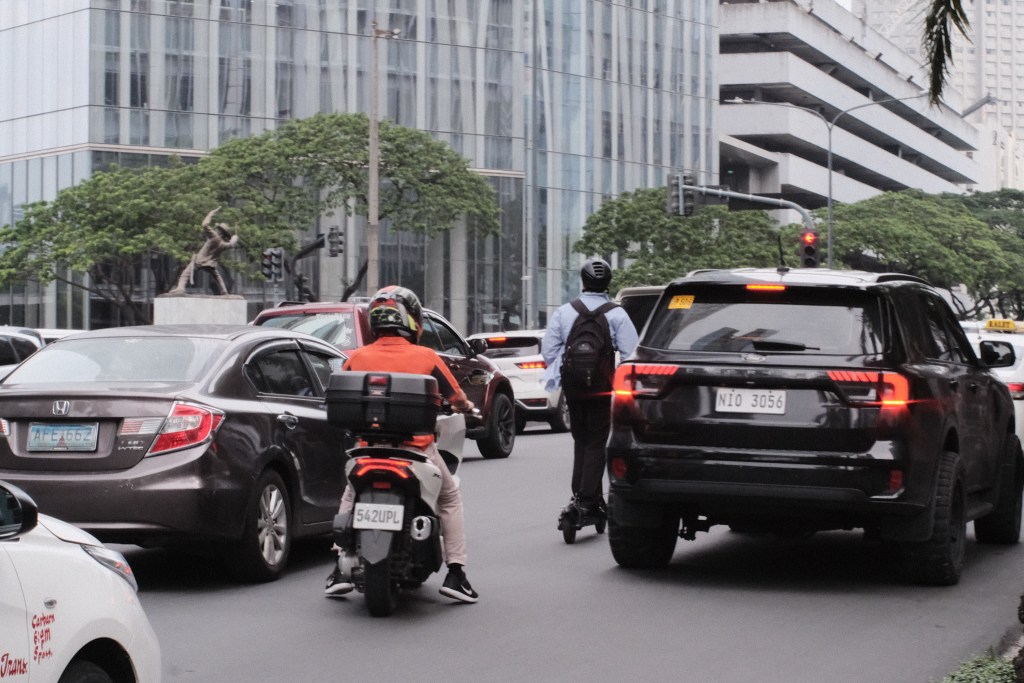
It’s easy to frame the government as the villain in conversations about sustainable transport. After all, much of the frustration around LEVs comes from unclear policies, regulatory contradictions, and the persistent dominance of car-centric road design.
But the reality is more complicated than that.
Governments hold enormous power over how transport systems evolve. They’re responsible for maintaining our road and transport infrastructure and setting policies that shape urban mobility. Because of this, sustainable transport solutions cannot scale without government support.
We can continue using our bikes and LEVs on EDSA and other national roads. Businesses like Exion Cycles can innovate and expand their business. Advocates and organizations can push for change. But these efforts can only go so far if the government continues to design our roads for cars and implement laws that stifle mobility.
These misaligned policies create uncertainties for every single road user; even local governments struggle to position their programs with national policy.
This matters even more in the context of the climate crisis, which, unfortunately, took a back seat during the event. Transport is a major contributor to greenhouse gas emissions, and transitioning away from fossil-fuel dependence requires clear government support. The small changes matter most: Safer streets for active transport, accessible public transit, and policies that make low-carbon mobility accessible and affordable.
LEVs are part of a broader ecosystem of solutions that can help people move around cities without relying on motorcycles or cars. When the conversation shifts from enabling these solutions to restricting them, it risks slowing down the very transition we urgently need.
That is why government alignment matters so much.
And in the middle of a climate crisis, delays come with real consequences. We have 85 seconds till midnight on the Doomsday Clock, till all is too late. If the government fails to support the transition to sustainable transport, it is not just policy that fails.
All of us do.


Leave a Reply