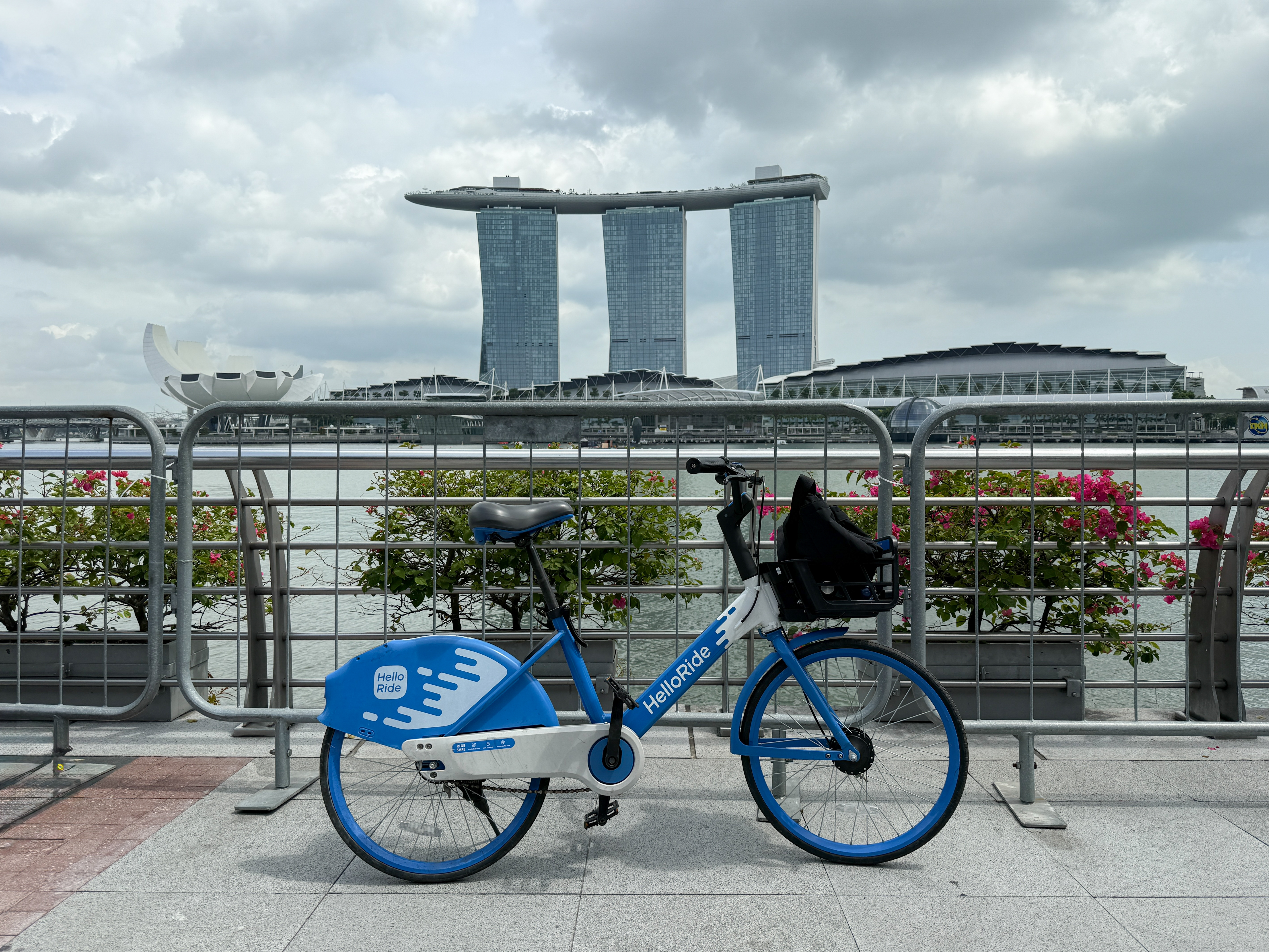
Is Singapore actually bike friendly?
I had the opportunity to visit the Lion City for the New Year with family. Cycling in Singapore wasn’t part of the agenda. But since there were ride-sharing apps, I figured I might as well give it a shot. Here’s what I learned from biking around the country during my week-long stay.

Researching about cycling in Singapore
Before flying out, I did some research to learn more about what it’s like cycling in Singapore. Apparently, the Land Transport Authority has a very comprehensive guide on the do’s and don’ts.
There’s a lot to unpack but the gist of it is that you pretty much behave like a pedestrian on the sidewalk (or a car when on the road). Given that Singapore is a developed country, I expected accessible sidewalks to be the standard.
But if there’s anything I learned from my time in Taipei, it’s that biking around pedestrians isn’t fun—even if it’s much safer than mingling with motor vehicles.
According to the local rules, helmet usage isn’t mandatory provided you stay off the road. I brought two helmets—one for me and another for my cousin—to be safe.


Say hello to Hello Ride and Anywheel
I originally thought of bringing my Cranston folding bike. But I didn’t want to complicate things with the additional hassle of flying with a bicycle.
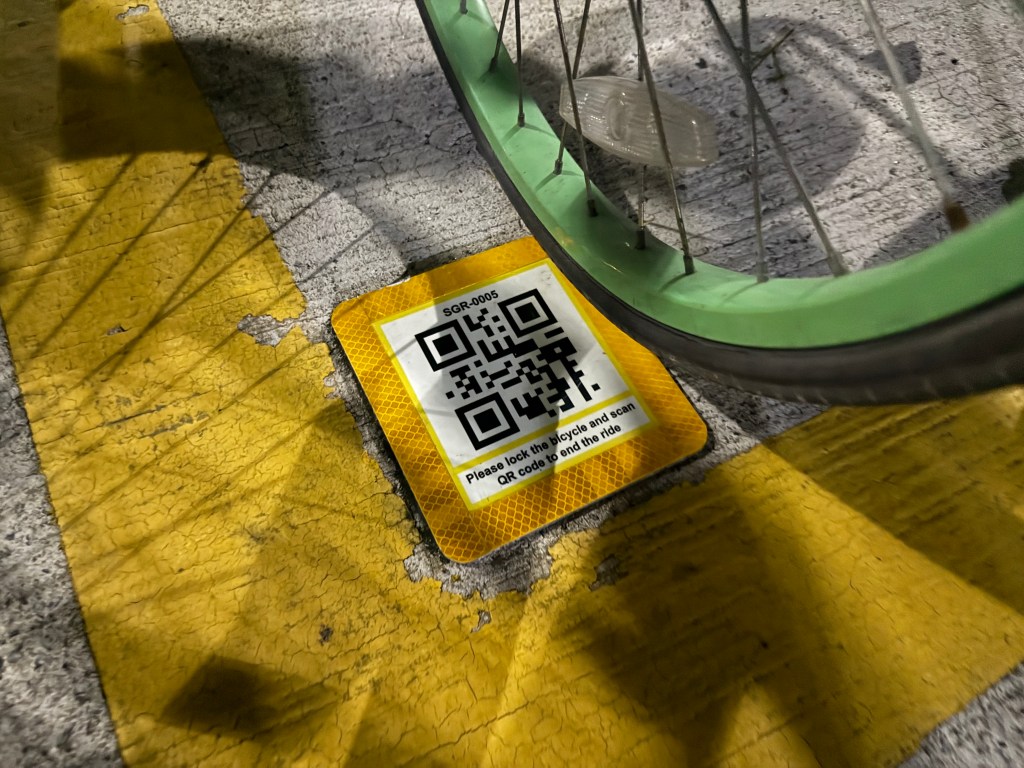
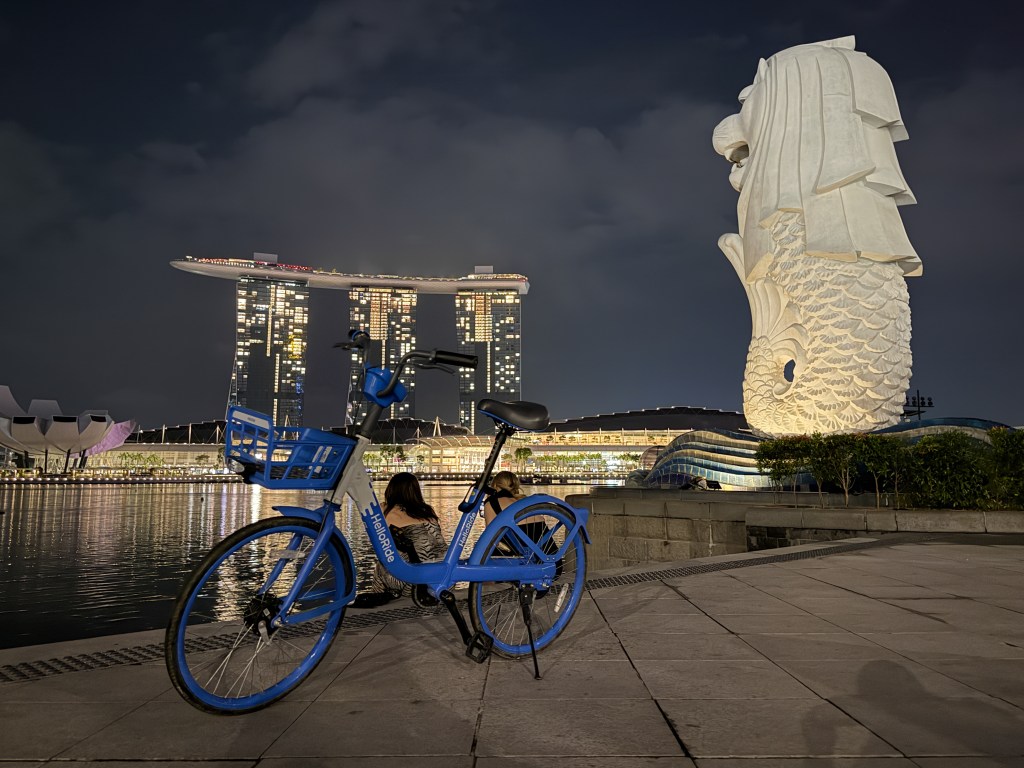
Thankfully, there were two options for ride-sharing apps: Hello Ride and Anywheel. Using them is simple if you want to go cycling in Singapore.
You can top up your wallet using your credit card, Apple Pay, or the other payment methods in the app. Alternatively, there are the HelloPass bundles.
I went with the 7 Days Unlimited option where the first 30 minutes of any ride is free. This meant all I had to do was park the bike within the time limit, end the ride and start a new one, and I won’t be charged.
Parking hubs were sufficient in the city center. Finding a bike isn’t hard, and it’s possible to plan the next stop to keep the ride free. I just had to set a timer on my phone so I don’t forget to look for the next stop.
For some reason, the sign-up for Hello Bike was buggy after I arrived, so my cousins used Anywheel instead to go cycling in Singapore. It works similarly to Hello Ride and they even share the same parking hubs, except the bikes were green instead of blue.

Night ride to Sentosa
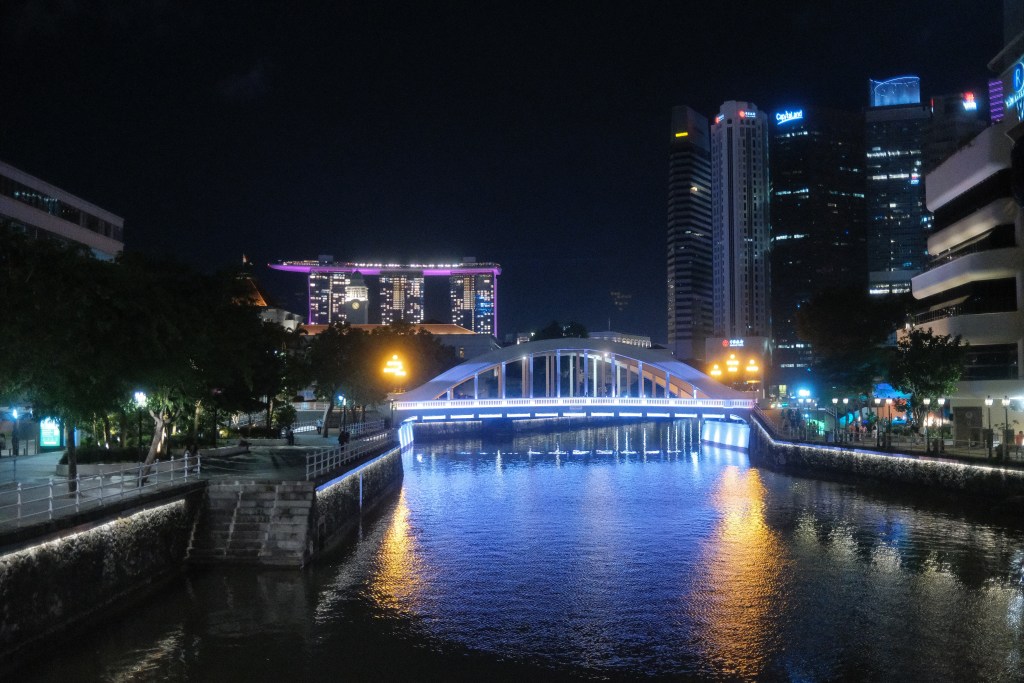
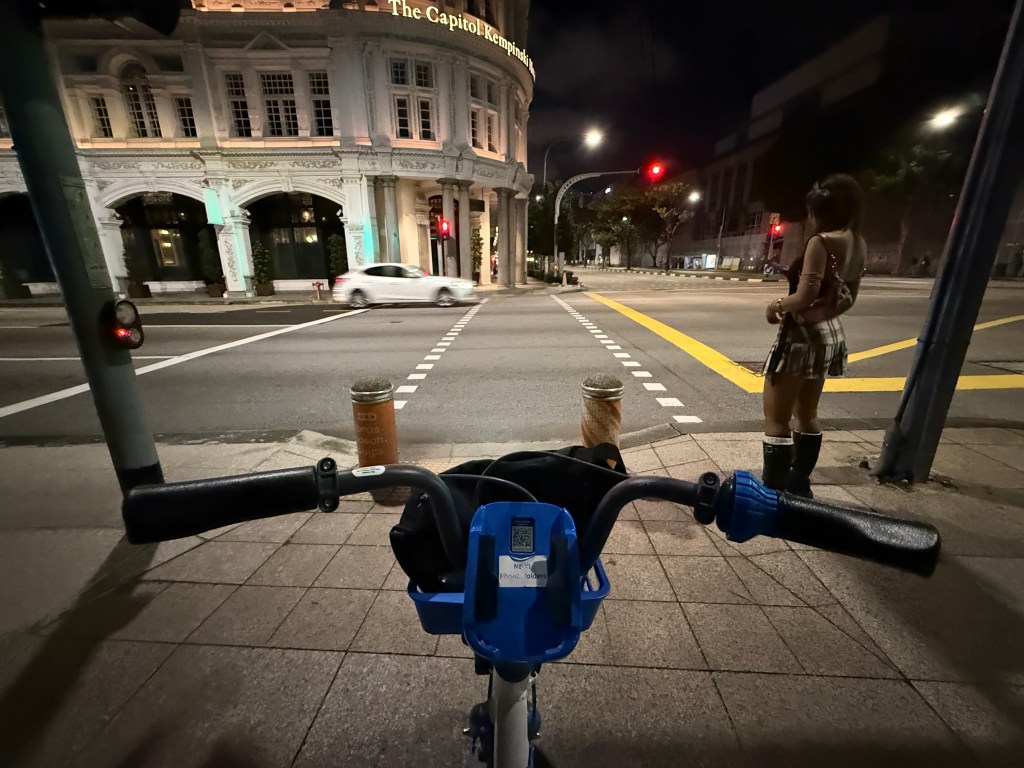
I didn’t plan on cycling in Singapore on Day One so the spontaneity made the first ride even more memorable. After arriving at the hotel and checking in by 6pm, I went to Suntec with my cousin for dinner at a mall that felt too close to home.
Since we still had some energy and nothing was planned the next morning, we might as well bike late into the night like kids going out to play. I didn’t have any specific attraction in mind, so I figured a short ride to Sentosa (8.5km away) would be fun.
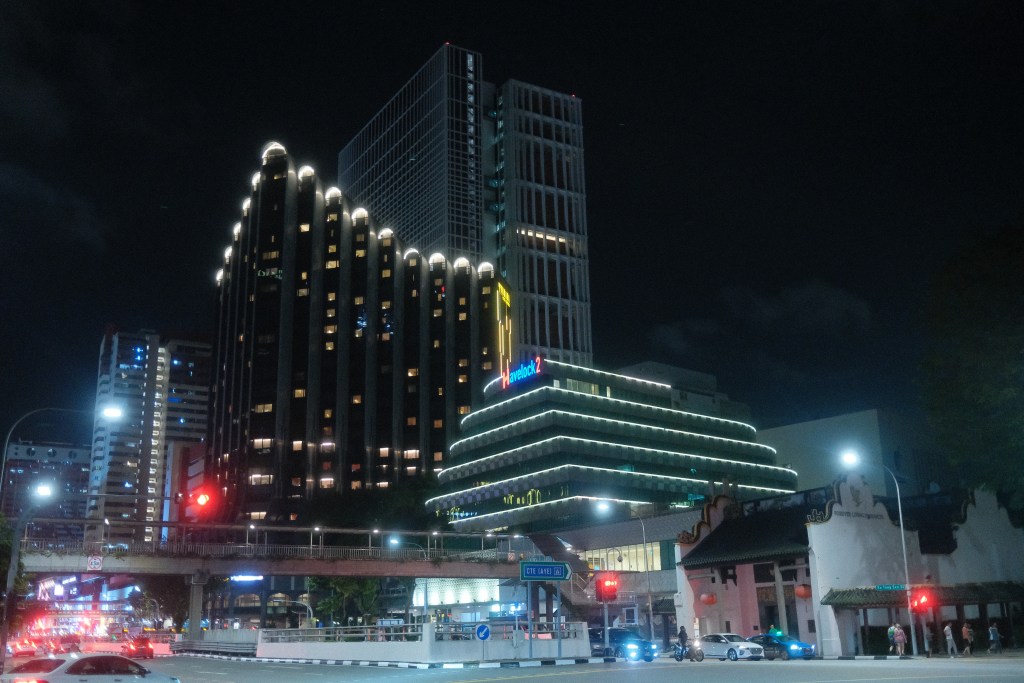
Cycling in Singapore felt liberating, especially with the night life unfolding as we pedaled our way on New Bridge Road. However, the glimmer of the city grew dimmer the farther we were from the center.
Things were starting to get inconvenient. The sidewalk was narrow and no longer well-lit, and there were barely any signs of life on Kampong Bahru Road.
Most frustrating was how practically every intersection had a stoplight that took almost two minutes to go green, and there were many of that. It was especially bad when turning right or at wide, multi-lane roads with zipper lanes.

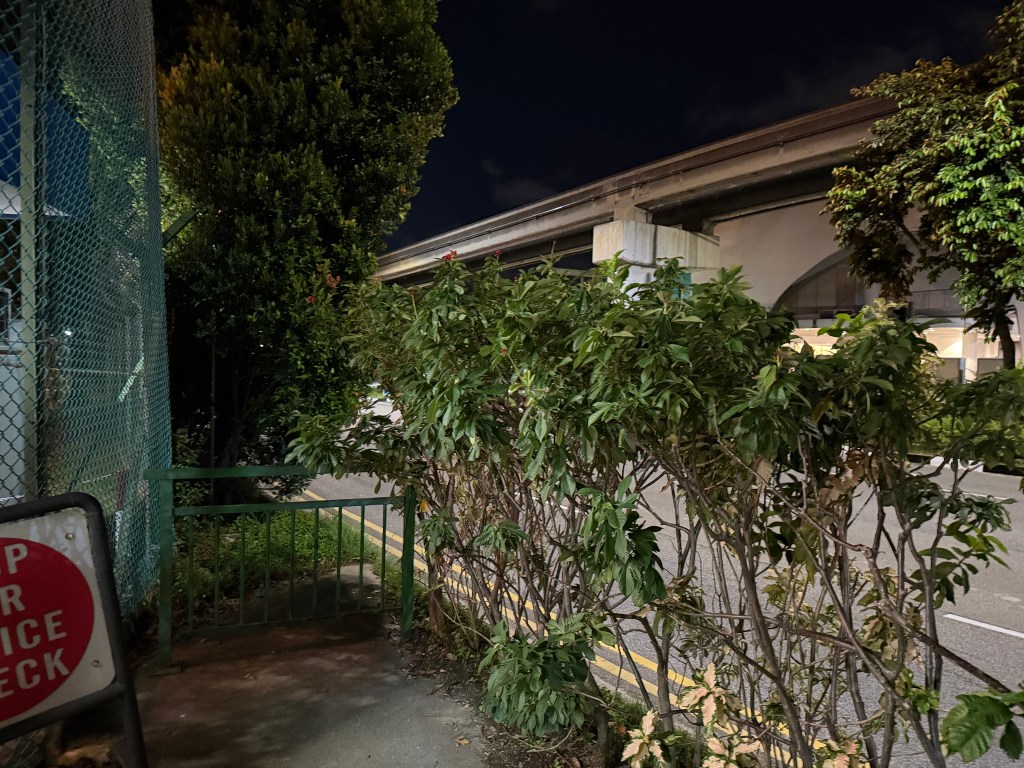
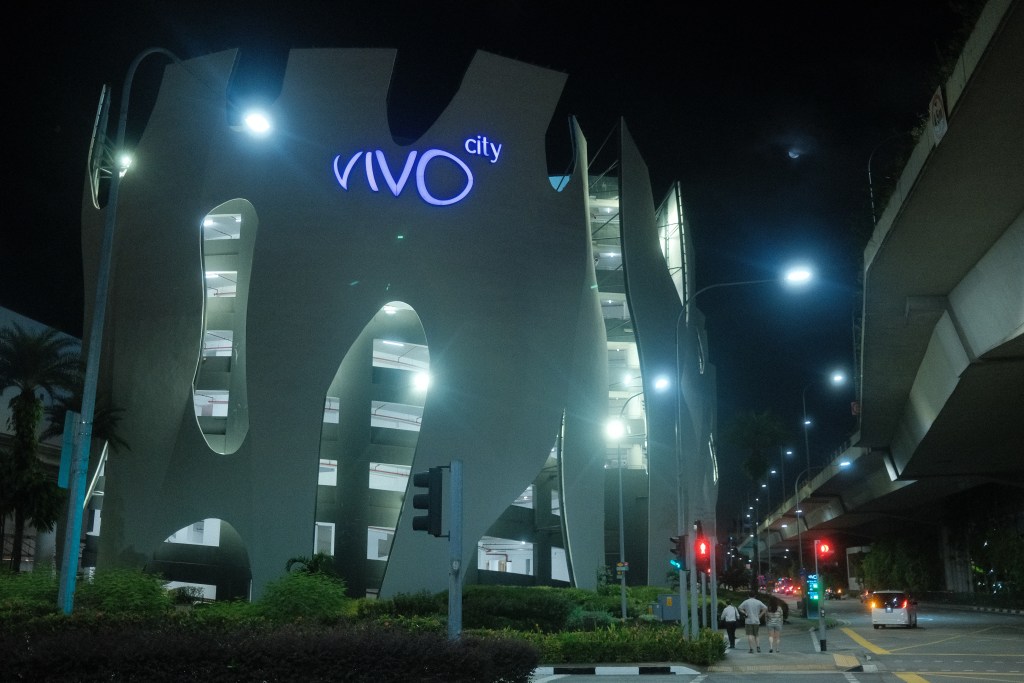


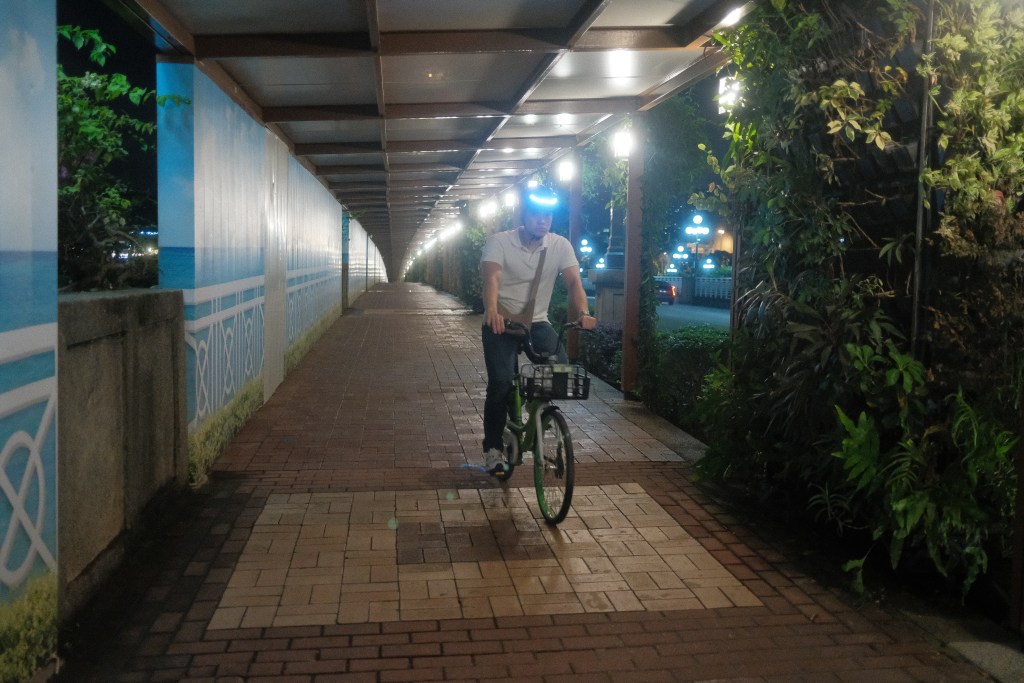

Upon reaching West Coast Highway, we were supposed to be near Sentosa. But getting to the island playground was anything but straightforward.
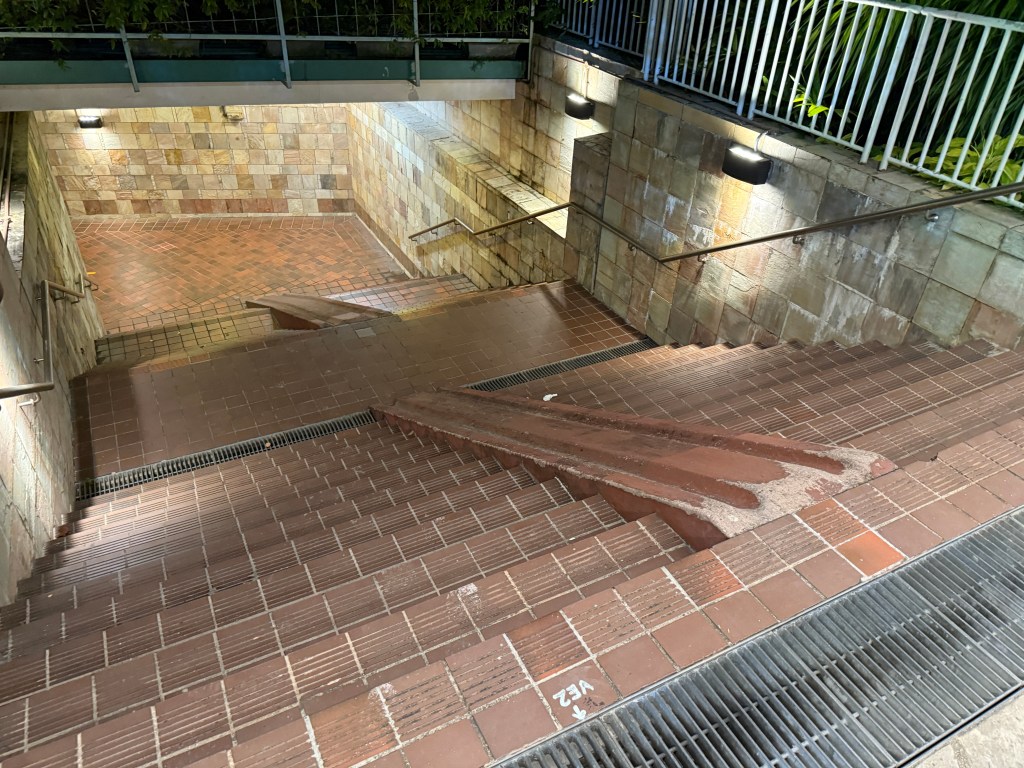
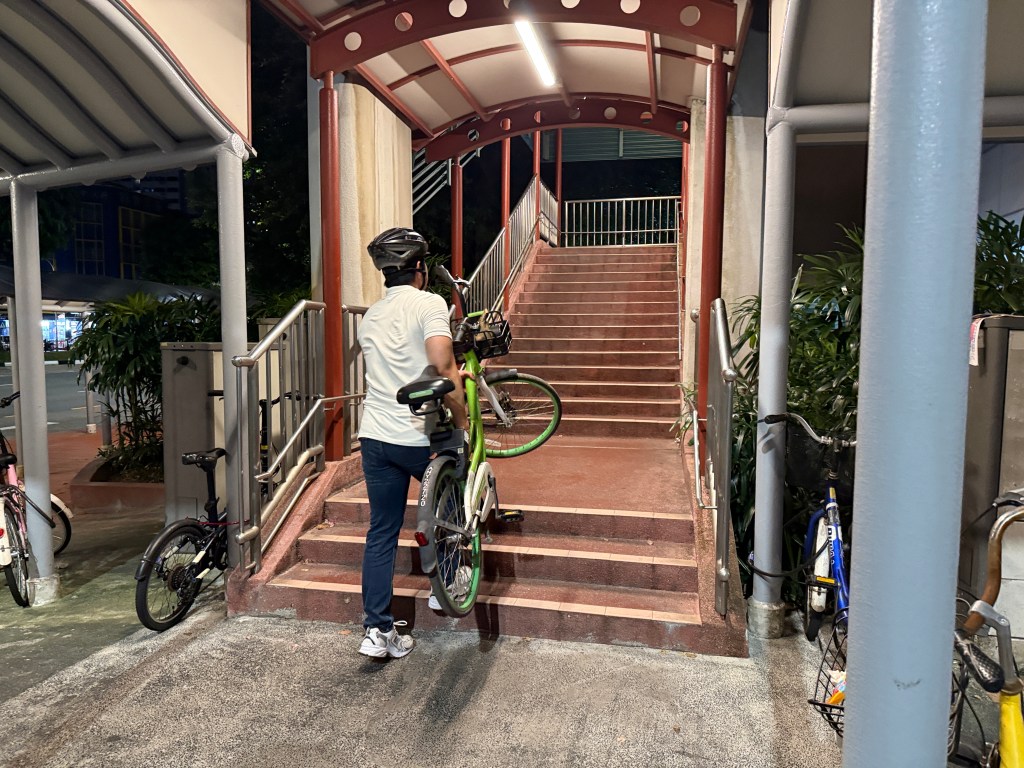
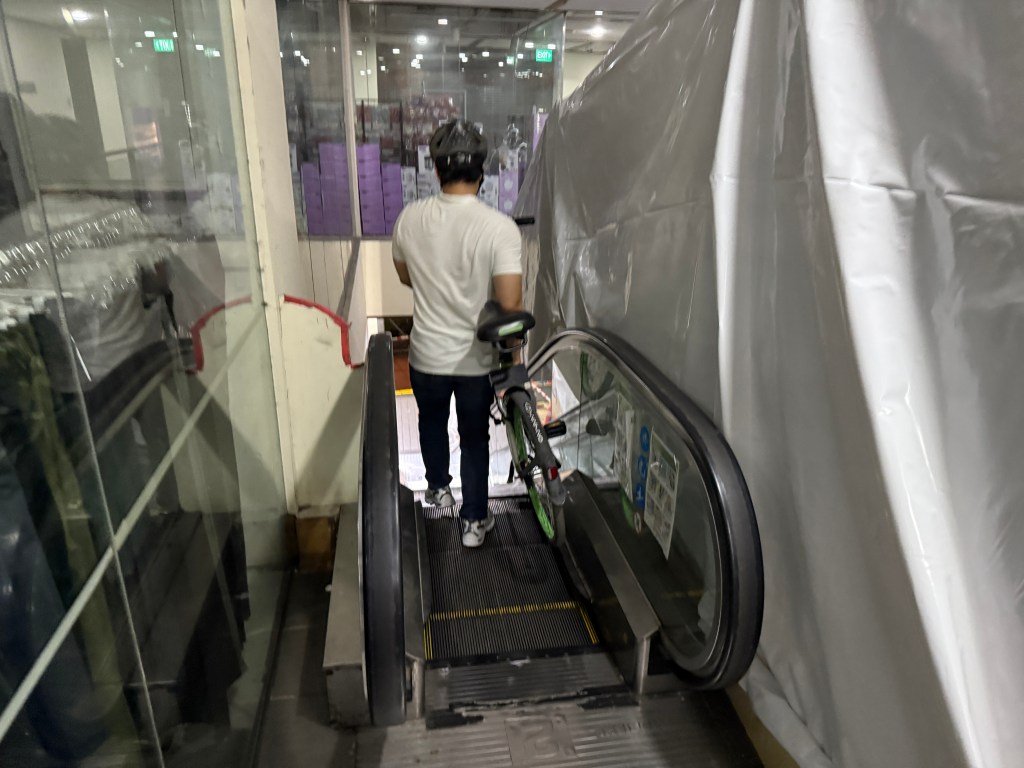
Apparently, only one side of Sentosa Gateway was accessible to people, so we had to backtrack and cross the road by Vivo City. The dedicated cycling path seemed nice, until I realized we had to dismount and go through an underpass (just like Ayala Avenue) to continue forward.
Things didn’t get any better. The roads of Sentosa felt more like an extended driveway for cars. Sure, there were sidewalks but walking there doesn’t look enjoyable. If anything, tourists would be better off being shuttled in a golf cart.
We were supposed to park near the golf course. Turns out the app uses a similar map icon for car parks and the ride-sharing hubs. Because of this, we extended and got charged $1 for exceeding 30 minutes.
It was already past midnight and we still had to go back. We slogged through the unlit sidewalks of Kampong Bahru Road and made a wrong turn, ending up at the Singapore General Hospital. After getting back on track, we were on New Bridge Road again.

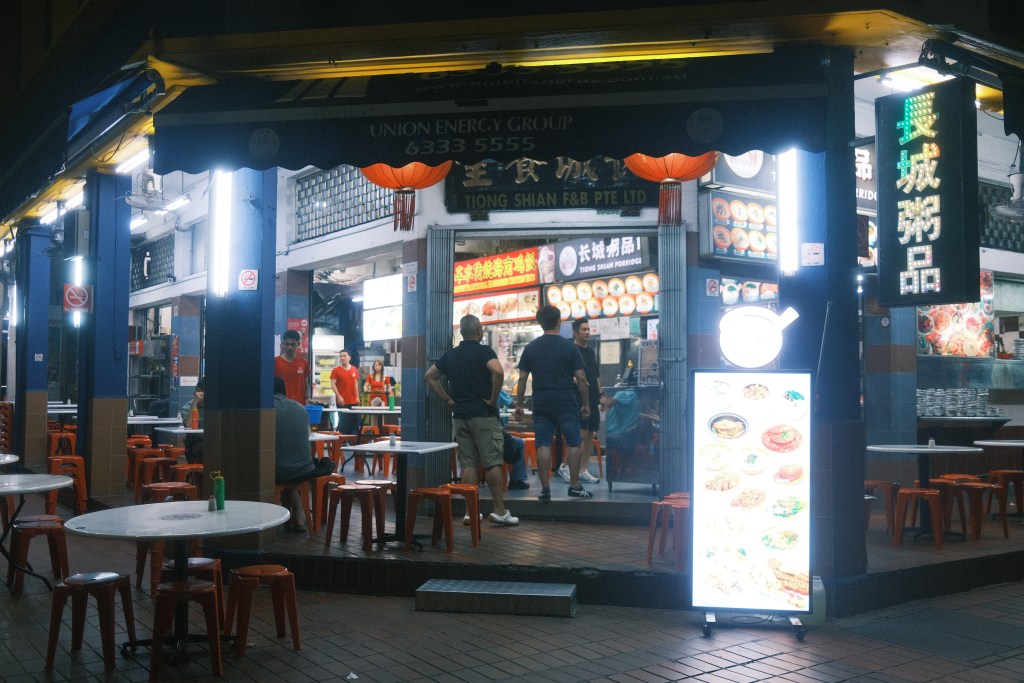
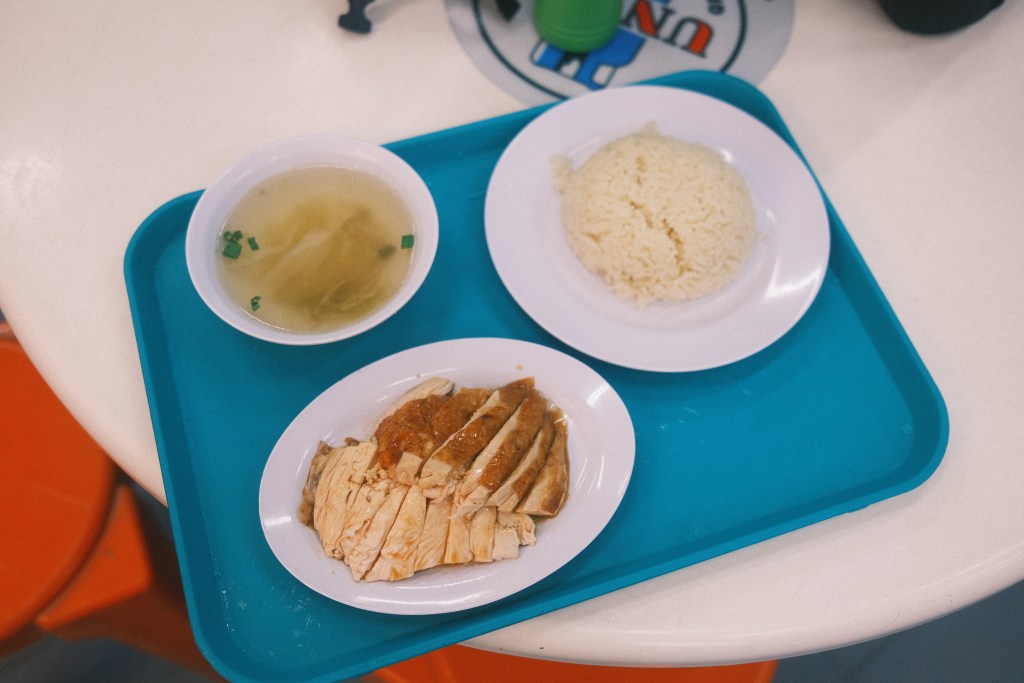
Turns out the hawker place we had passed was still open, so that was the perfect time to rest and have a late night meal. The food was half the price of our dinner at Suntec, but it was so much better.
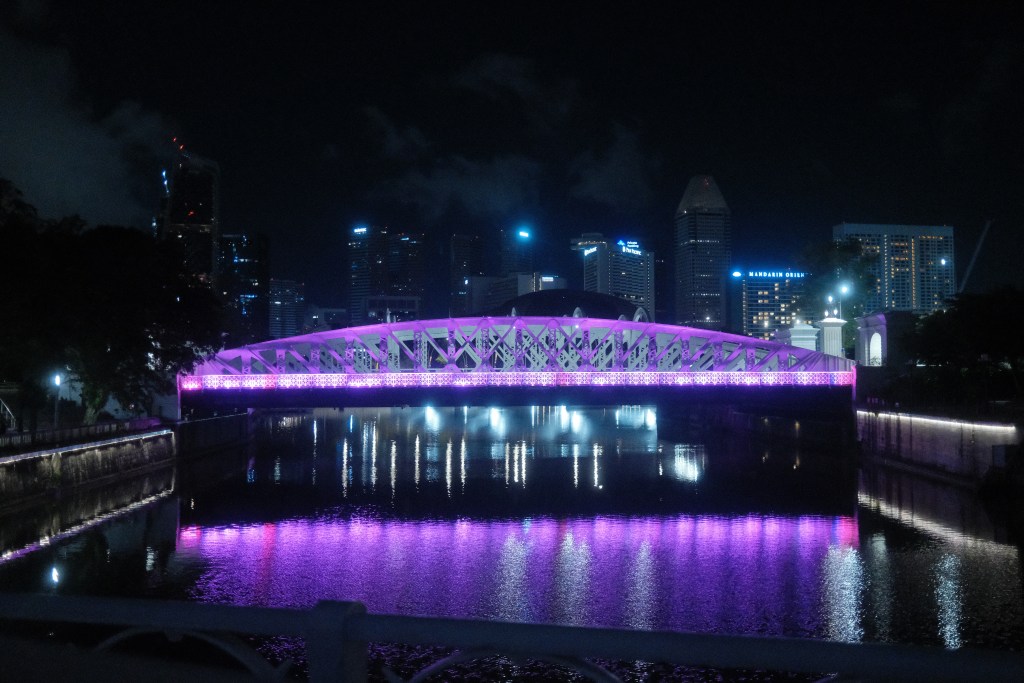
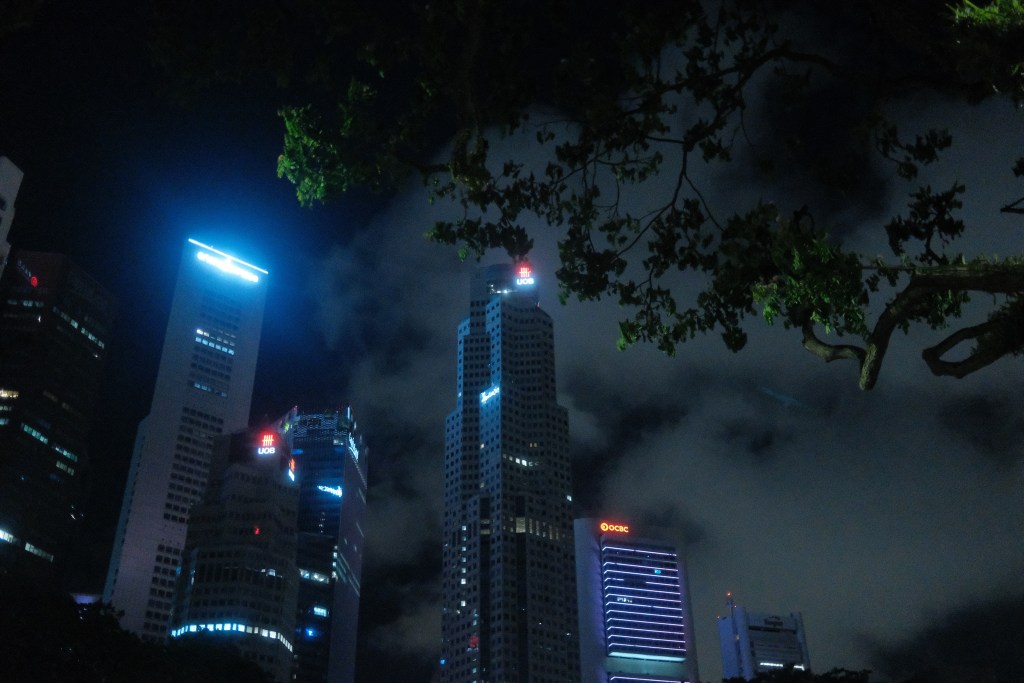
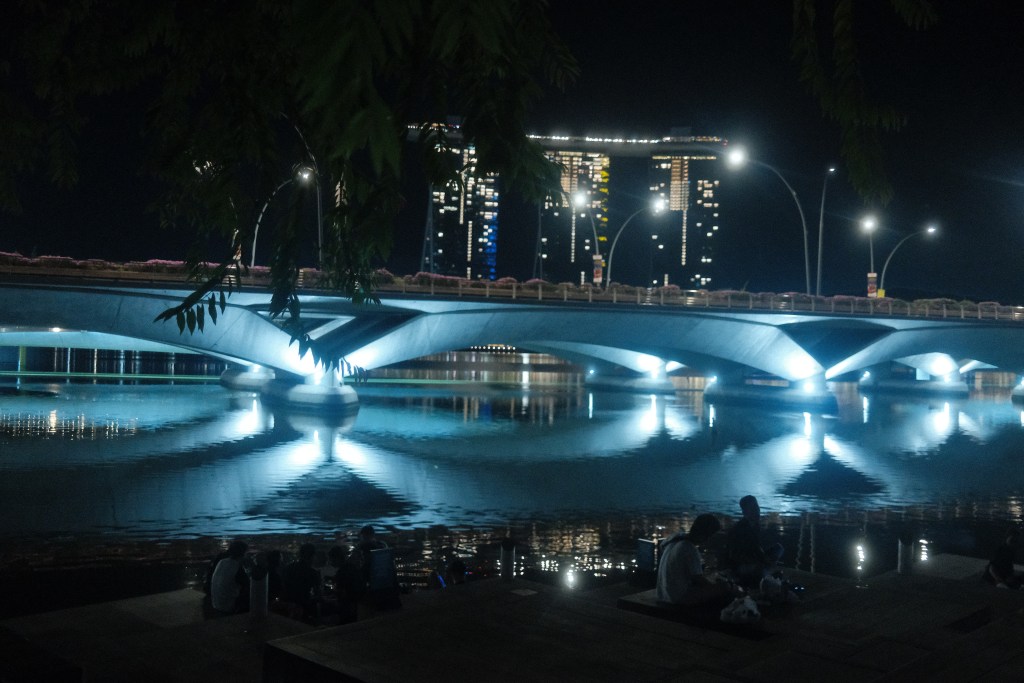
For the last stretch going home, we took a different route for a change of scenery. Passing through Esplanade Park reminded me of how it was like cycling in Intramuros with the wide open space, free from motor vehicles.
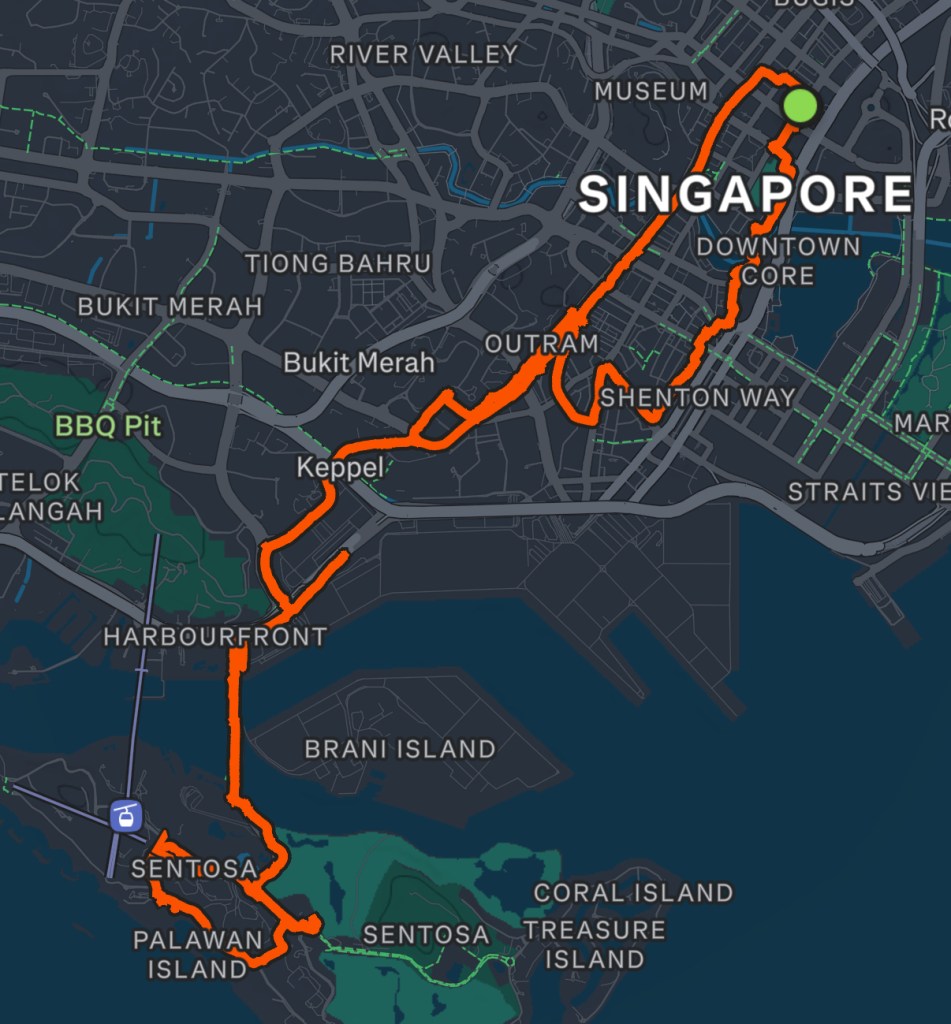
We started at 10pm and finally arrived at the hotel at 2:30am after biking for only 23km. It was just the first day and I had a good grasp of what cycling in Singapore is like.
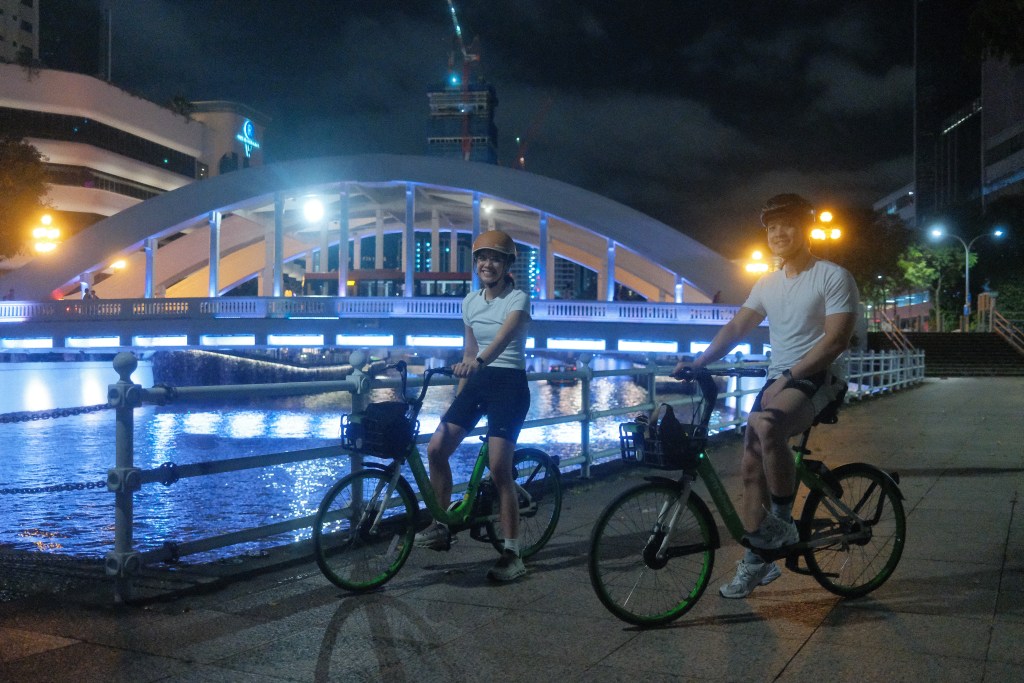
Sightseeing around Marina Bay



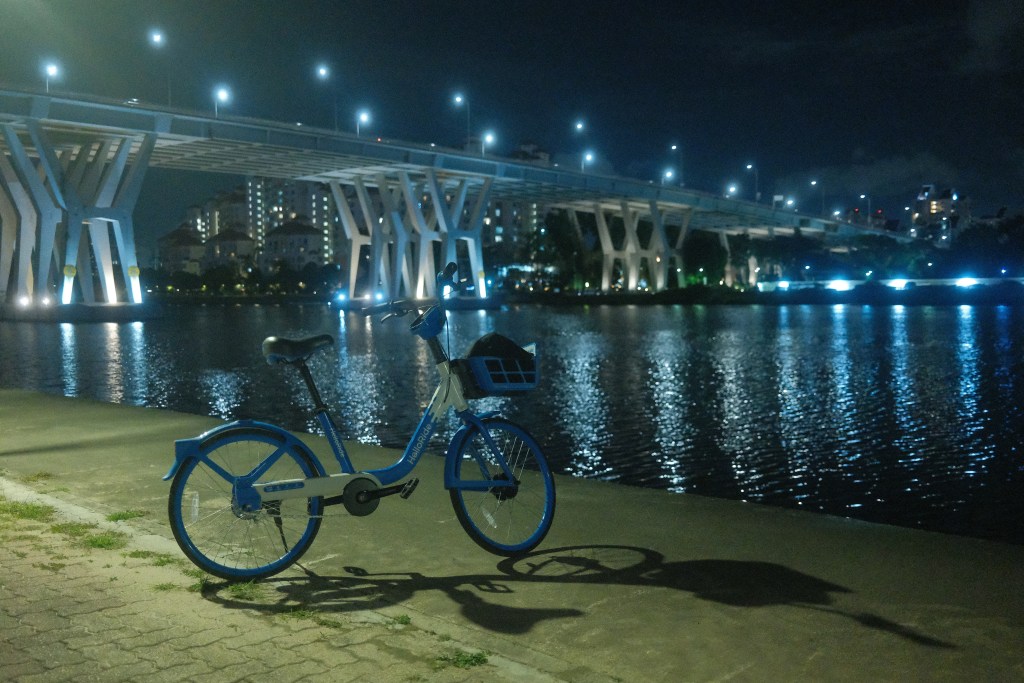
The following day was packed. The family went around the Botanical Gardens in the afternoon, and then I checked out some digicam shops at Hajji Lane.
We got back after dinner but it wasn’t too late, so we were able to bike again. This time, another cousin joined.
Learning from last night, I kept the route short. The first stop was the Merlion. We hadn’t left the hotel yet and there was already a hiccup with the route.
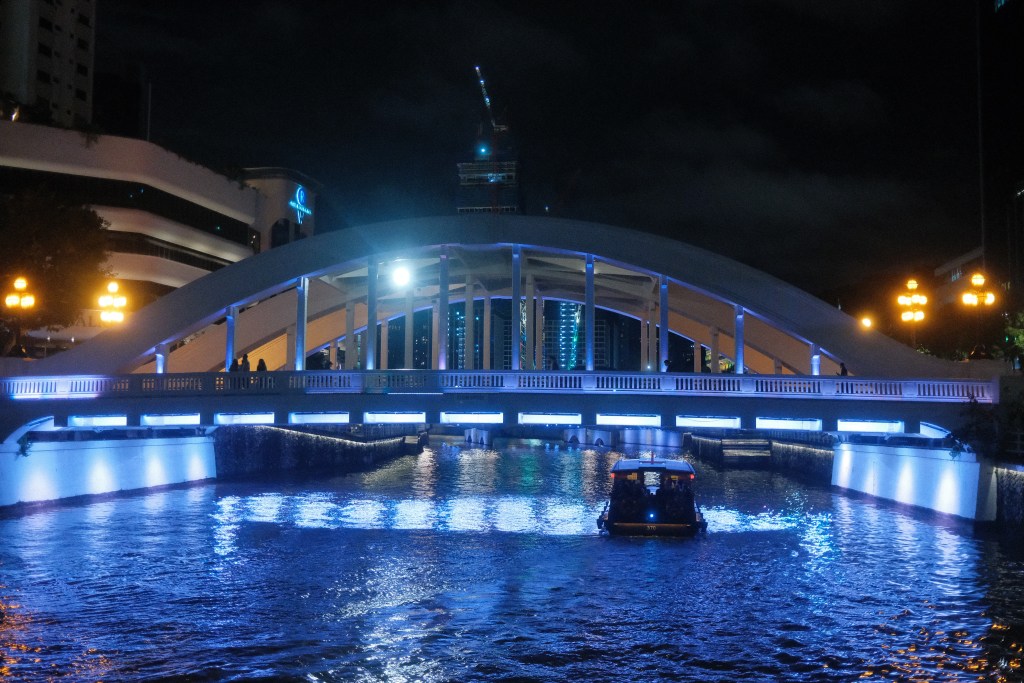
Because the roads surrounding the hotel were one-way and there was no sidewalk going to the Esplanade Park, we had to take a detour passing through North Bridge Road. Things were smooth sailing once we got on the Riverwalk path.
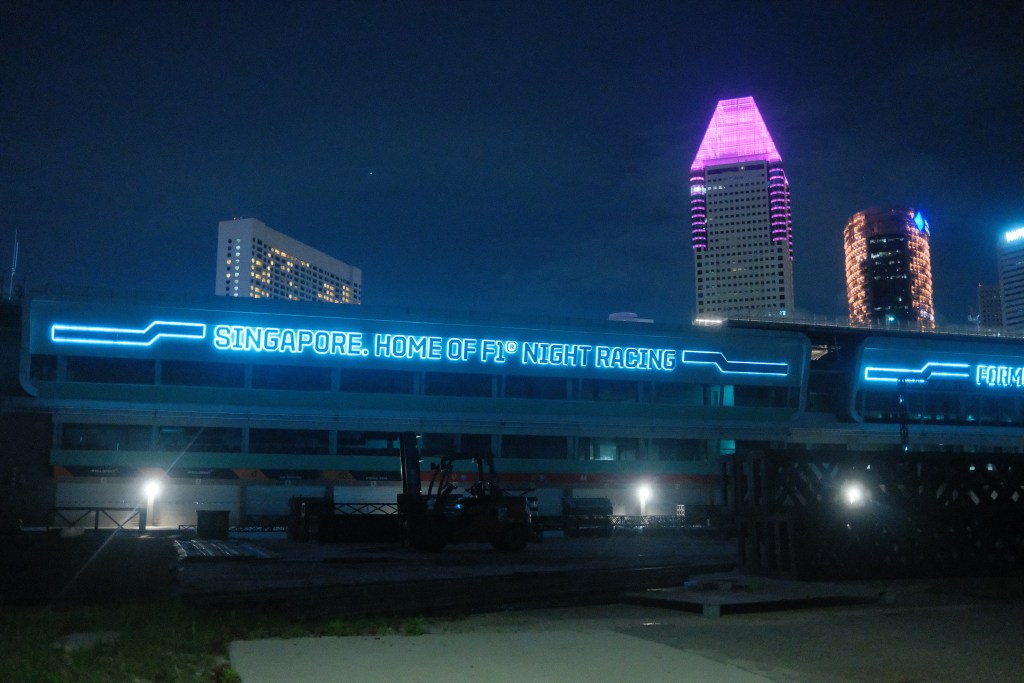
We didn’t spend a lot of time at the Merlion because it was crowded. So we went to the next stop, which was the pit building of the Formula 1 track. Getting there was a hassle as usual with the inaccessible sidewalks and long stoplight timers. We couldn’t even figure out how to get to the Marina Promenade because the race track was fenced off except for one section.

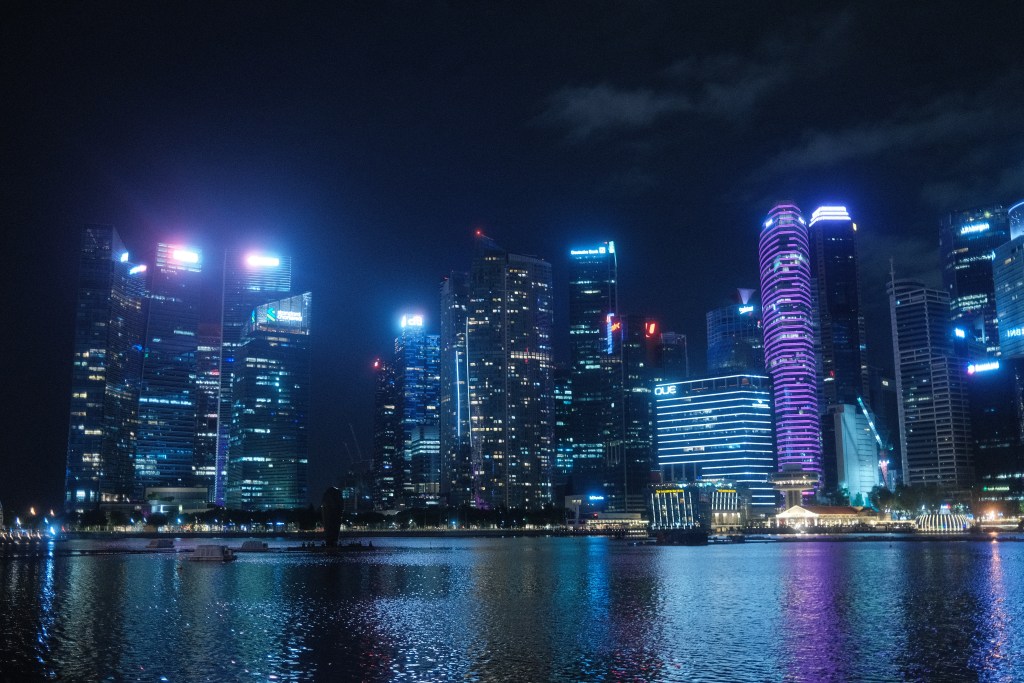
From there we biked to the Youth Olympic Park and crossed the Helix Bridge to Marina Bay Sands. The area reminded me of Dubai because of the grandiose architecture. However, it was much more lively with plenty of people cycling around using the same rental bikes.


All that cycling in Singapore and sightseeing made us hungry, so we were supposed to head to the same place as last night. However, we spotted Lau Pa Sat, a popular hawker spot according to a Grab driver. After the midnight snack, we went back to the hotel passing through the same park.

What to wear when cycling in Singapore
Packing was challenging because not only am I going cycling in Singapore, but the country is also more humid than the Philippines. Thankfully, the weather during my trip was mostly cloudy, although there were a few times when the sun was out.

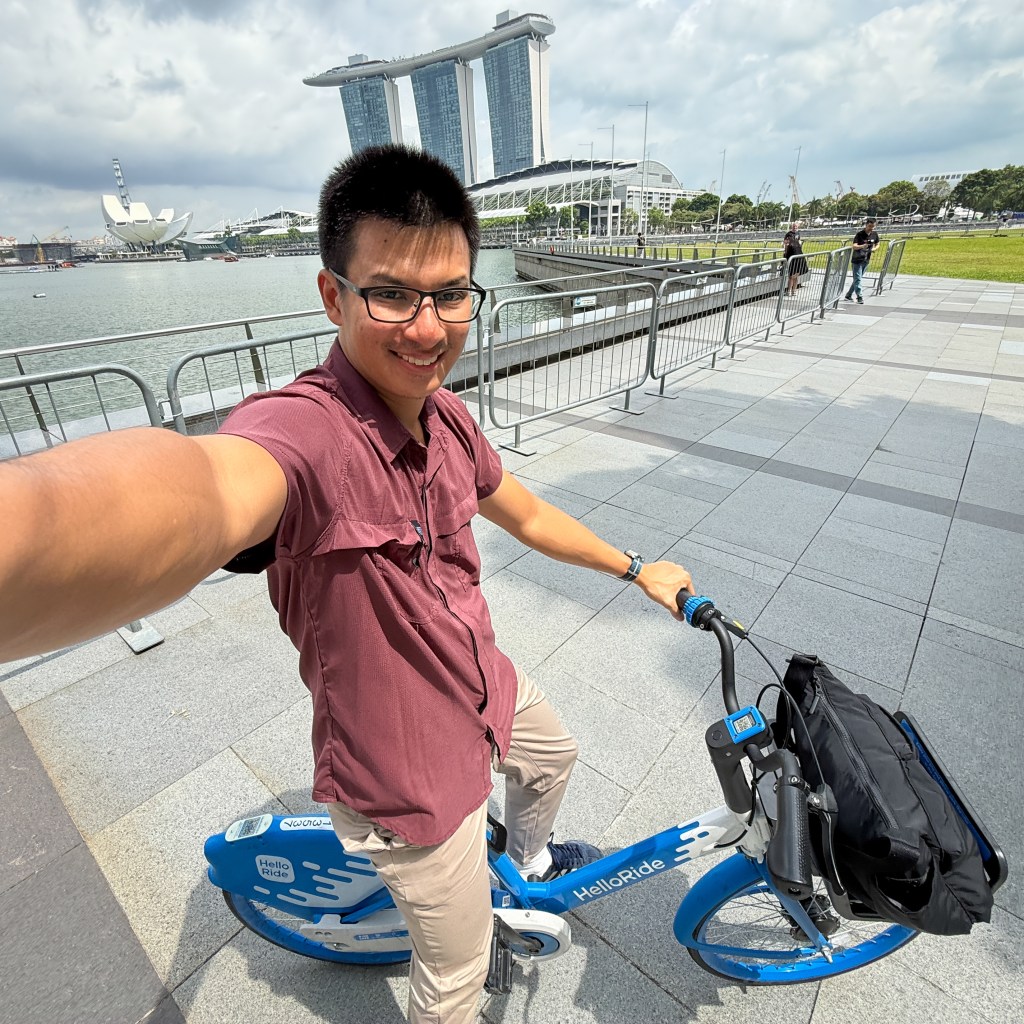
If you’re used to biking in Metro Manila, you just have to wear the same clothes. My wardrobe consisted mostly of Uniqlo apparel and Courier shirts because they’re breathable and let me move easily. Unless you’re cycling for sport, there’s no need for specific attire. Just wear what’s comfortable for you.
I was concerned that I might get drenched in sweat while cycling in Singapore. However, that rarely happened. The climate is similar but the air was cooler and cleaner, perhaps because there were less cars on the road and more green spaces.
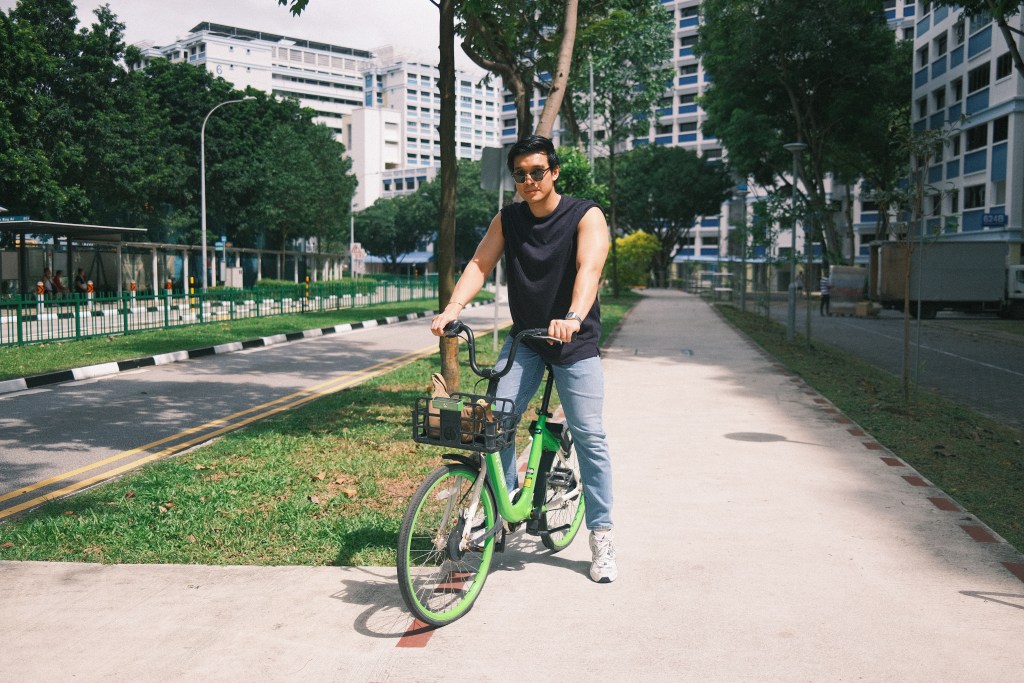
As a result, walking and cycling in Singapore is much more pleasant. And I didn’t always have to change clothes the moment I went indoors. The sun can get harsh though, so you’ll want protection whether it be sunglasses or, in my case, a Uniqlo parka.
Challenges with cycling in Singapore
After three night rides with my cousins, I kind of had enough with cycling in Singapore. Going on leisurely rides around the city is hard when it’s unnecessarily convoluted and inefficient.
Shouldn’t I be thankful that there are sidewalks in the first place? Yes, because it means I don’t have to mingle with cars most of the time. No, because that’s the bare minimum.

Despite the LTA’s efforts to make the country a car-lite nation, I don’t see anything on the ground that would make cycling in Singapore a preferred mode of transportation.
It beats walking, being at least two times faster, and it’s certainly cheaper than a private car. However, the effectiveness of cycling in Singapore diminishes the farther you have to go, to the point you might as well take the MRT.
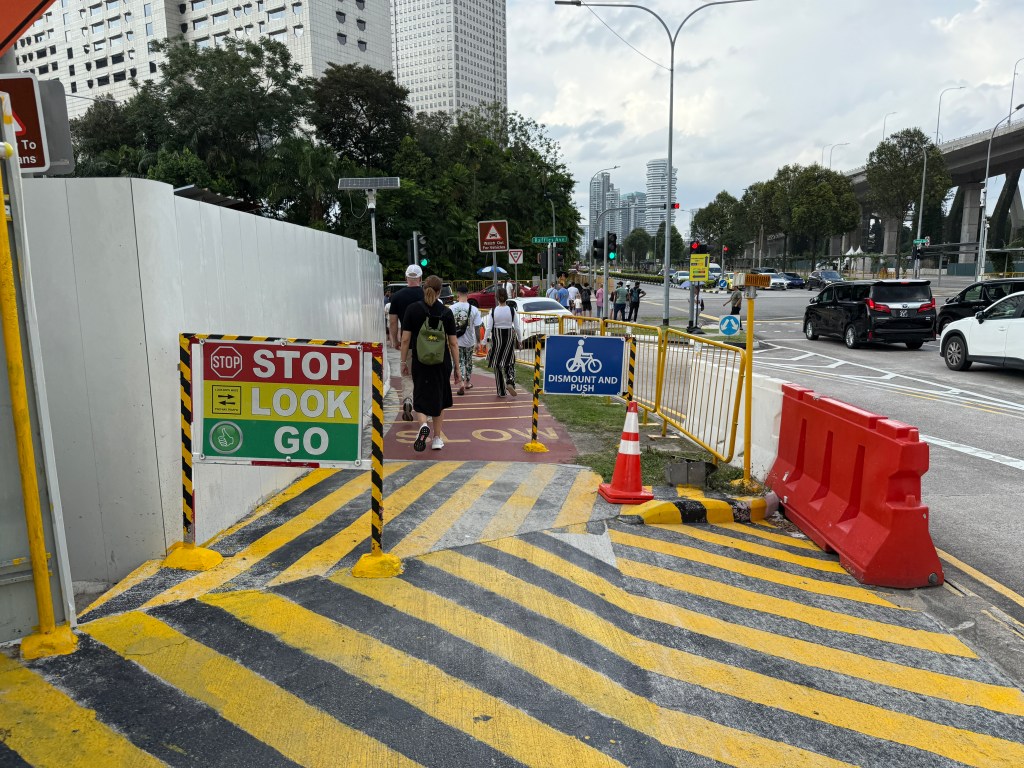
I didn’t encounter dedicated bike paths designed to make cycling in Singapore more efficient. All I saw were painted lanes on the sidewalk, which is usually disregarded by pedestrians. Taipei has a similar problem with how road space is allocated.
Rules are plentiful but accessible infrastructure is lacking.

Is cycling in Singapore safe?
It’s ironic that, despite my frustrations about cycling in Singapore, it’s exponentially more beginner-friendly than Metro Manila. My cousins do not bike commute, but I was confident I could guide them around the streets of a foreign country.
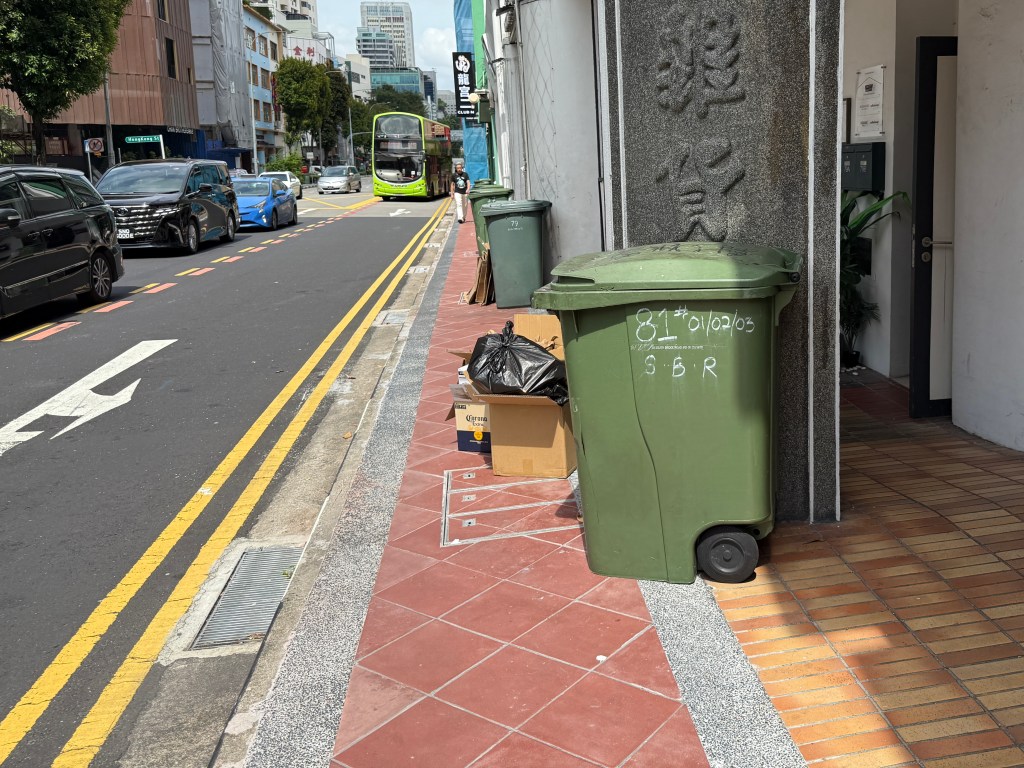
Assuming you stay off the road, the biggest risk from cycling in Singapore is colliding with a pedestrian. Not only are you constantly weaving around people, but you are also slaloming around trees, bus stops, driveways, bollards, and pillars on the sidewalks.
With all these obstacles, going on the road would be simpler. However, it will take a lot of guts when even the busiest city streets are treated like drag strips, with no congestion or traffic calming to slow drivers down.
Cars are limited in Singapore because owning one is ridiculously expensive. Yet, there’s still too many of them to pose a danger on the road. It’s baffling how drivers go as fast as 60km/h knowing full well they will have to stop at the next red light shortly.
If there’s anything I’d give credit to Filipino drivers for, it’s that they’re cautious in a way—because they’re used to people being pasaway on the road. I don’t trust that Singaporeans are defensive behind the wheel, especially if there are so few cyclists on the road.

Who goes cycling in Singapore?
Despite the heat, many people actually go cycling in Singapore and you’ll see a wide range of cyclists. The most common bikes you’ll probably see in tourist areas are rental bikes. These are popular because they’re accessible, even for foreigners who need a quick and convenient way to get around.
While Giant is the world’s largest bicycle maker, Decathlon bikes were the most common brand. I spotted BTWIN Tilt folding bikes, Elops step-through bikes, Riverside hybrid bikes, and Rockrider MTBs. I suspect this must have been the result of a bike boom with the implementation of the LTA’s Active Mobility Act in 2018 and the COVID pandemic.
Old surplus bikes were plentiful and it’s rare to spot an expensive commuter bike in public. Of course, there will always be sports cyclists and these are the people you’ll see wearing helmets while riding high-end road bikes on the road with cars. I didn’t see a single gravel bike though, perhaps because the pavement’s smooth enough that you don’t need thick tires.

I was able to visit The Bike Atrium in Admiralty, and I learned from the staff that folding bikes are popular because of the limited living space. As a result, Bromptons and the clones have a cult following among Singaporeans. Another notable group is the fixie riders, which resembles the crowd here in the Philippines.


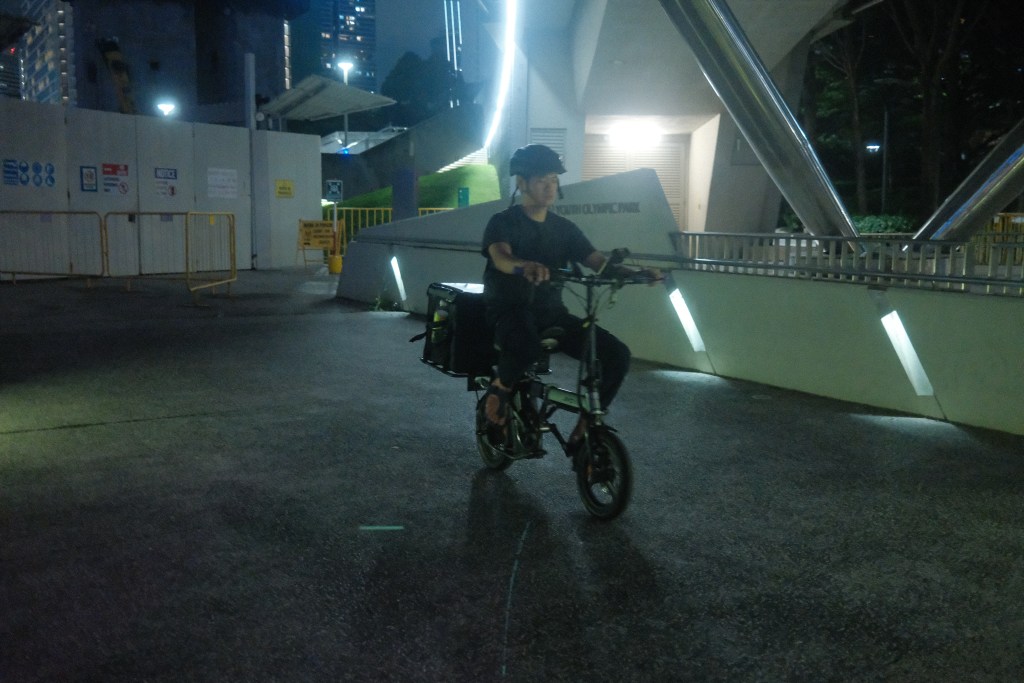
What about electric mobility? E-bikes and e-scooters are also on the road, but almost every single one I saw was used by a delivery rider. According to Mobot, light electric vehicles need registration and the rider needs either a license or a theory test.
It sounds quite the hassle, really, so it’s understandable that only those who earn from light electric vehicles would go through the process. At least Singapore knows what it’s regulating, unlike the LTO.

Is Singapore bike-friendly?
The LTA envisions Singapore to be a car-lite nation with a people-centered transportation system. During my week-long stay, I can see that there is a concrete effort to improve cycling in Singapore. Although the conditions are miles ahead of Metro Manila, it is still lacking in the areas where it hurts most.
Singapore is bike-able, but not bike-friendly.
This distinction is important. You can ride a bicycle on the streets without fearing for your life. But it is painfully inconvenient compared to riding the MRT. As a result, cycling functions best as a first- and last-mile ride. The farther you go cycling in Singapore, the less efficient it is.
There is a system for active mobility in Singapore, but it is constrictive when the infrastructure is lacking and the rules don’t protect you. If the LTA is serious about its grand plan, then it has to start taking away space from motor vehicles and allocate it for active transport.
Put up separated bike paths or protected bike lanes on the road, and, please, optimize stoplights for people instead of cars. Cycling should feel like gliding on two wheels, which is why the infrastructure needs to ensure smooth and continuous movement for people on bicycles.
I believe that with Singapore’s resources and political will, it’s the one country in Southeast Asia that can lead the charge in being bike-friendly and people-centric. And given its limited land area, it can’t afford not to remain trapped by its car-centric shackles.
However, do the Singaporeans want it for themselves?


Leave a Reply