
We all dream of a zero-emission future.
Last February 27, 2026, mobility advocates, industry representatives, transport cyclists, and representatives from government agencies and LGUs gathered together for the ‘Life with LEVs: Powering the Future of Low-Carbon Mobility’ in Harold’s Hotel, Quezon City. This was a two-part panel discussion that touched topics on the benefits, challenges, and opportunities for light electric vehicles as a response to the climate crisis.

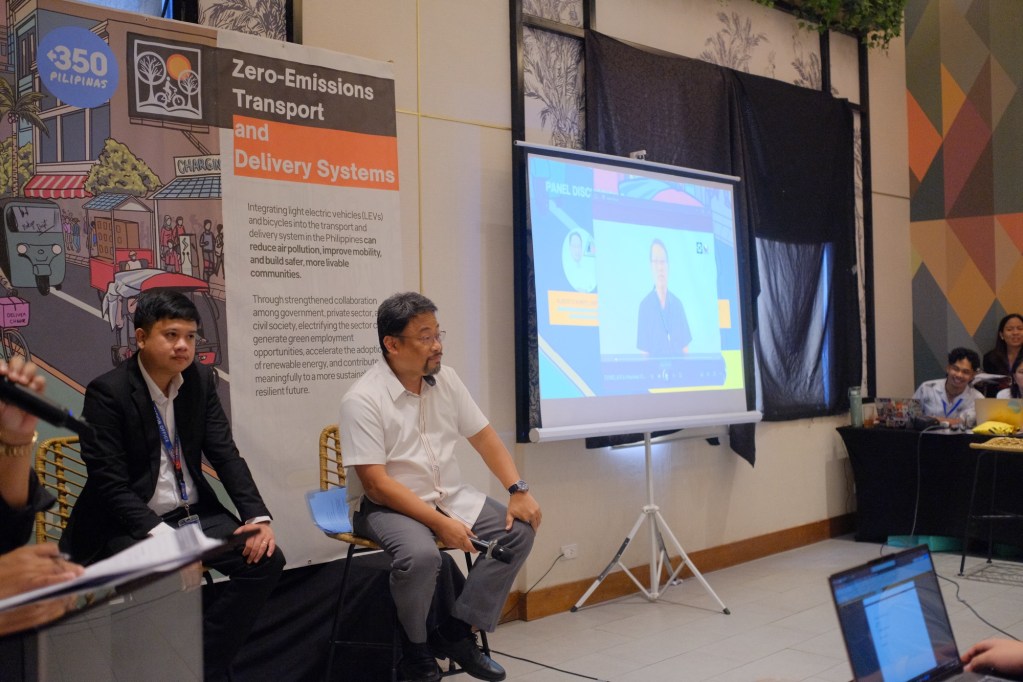
“The transport sector remains one of the largest contributors to greenhouse gas emissions in the Philippines, yet we also see solutions already working,” said Fread de Mesa, National Coordinator of 350 Pilipinas. “Translating climate action into real change requires transforming transport systems toward sustainability, promoting cleaner air, and moving away from dependence on fossil fuels [sic].”
The panel discussion included delivery riders from Grab Philippines, LEV retailers and distributors, civil society organizations, and representatives from DOTr, LTO, and the Quezon City Local Government Unit. Discussions turned into dialogues when members of the audience gave their two cents on particular topics, such as the controversial case of the regulation of LEVs.
The Strong Case for a Life with LEVs
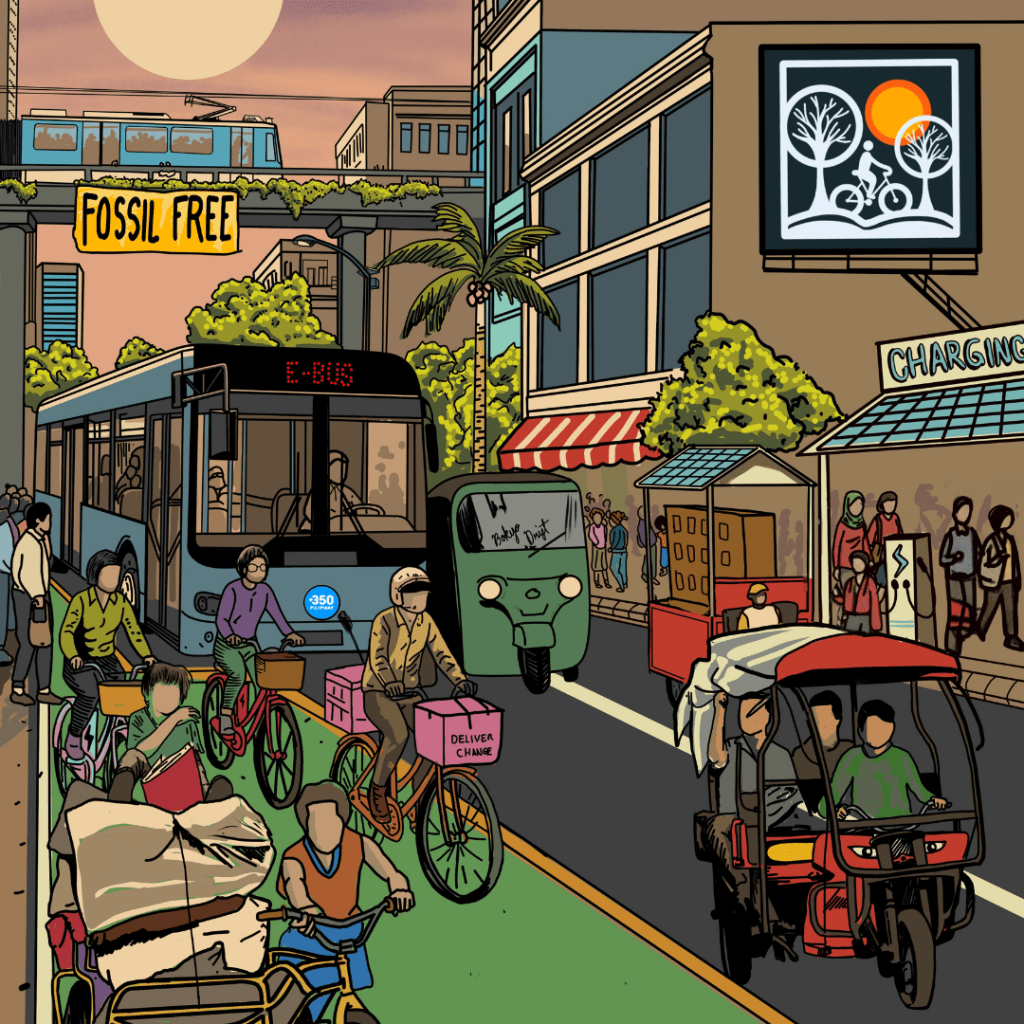
While the country does rely heavily on fossil fuels, it is a known fact that LEVs produce far lower emissions than fuel-powered motorcycles and cars. For instance, a delivery rider can replace their motorcycle with an e-bike and dramatically reduce air pollution.
As well, most trips around Metro Manila are within five to ten kilometers, round-trip. Even if one does use an electric car, it can be inefficient and still take up too much space on the road. Thus, LEVs provide more energy-efficient trips and are better suited for city-scale mobility, especially if they integrate seamlessly with public transport (i.e. going bimodal with an e-bike).
A ‘life with LEVs’ also means fresher air. Reducing gas-powered cars from the road also means reducing PM2.5 exposure and nitrogen oxide (NOx) pollution, both of which contribute to respiratory illnesses. This goes beyond the original thought that carbon dioxide emissions are the sole cause of the climate crisis.
Finally, LEVs promote a low-carbon mobility ecosystem, where these types of mobility vehicles can provide better ways for everyone to travel. LEVs paired with safe, segregated bike lanes, walkable streets, and reliable public transport, Metro Manila not only becomes more breathable but also more humane.
Environmental and mobility advocates generally agree that LEVs do make life easier and the earth breathe a little better, but without political will, we cannot move forward to a future with zero emissions.
Jheny Dabu, Sustainable Transport Campaigner, emphasized: “The urgent need to decarbonize our transport systems must translate into concrete, people-centered programs that highlight their benefits to the public and to the climate… We hope that spaces like this continue to exist to examine both the opportunities and the policy gaps in accelerating low-carbon mobility in light of the rise of electric mobility.”
About 350 Pilipinas

350 Pilipinas is an advocacy organization working for climate action that is based on the realities of science and grounded in the principles of justice. They are an affiliate of the global organization, 350.org.
The number ‘350’ refers to the amount of carbon dioxide in the air, with 350 as the safe limit. Realistically speaking, we are well above that limit, and we need to bring down carbon dioxide levels to below 350 parts per million.


Leave a Reply