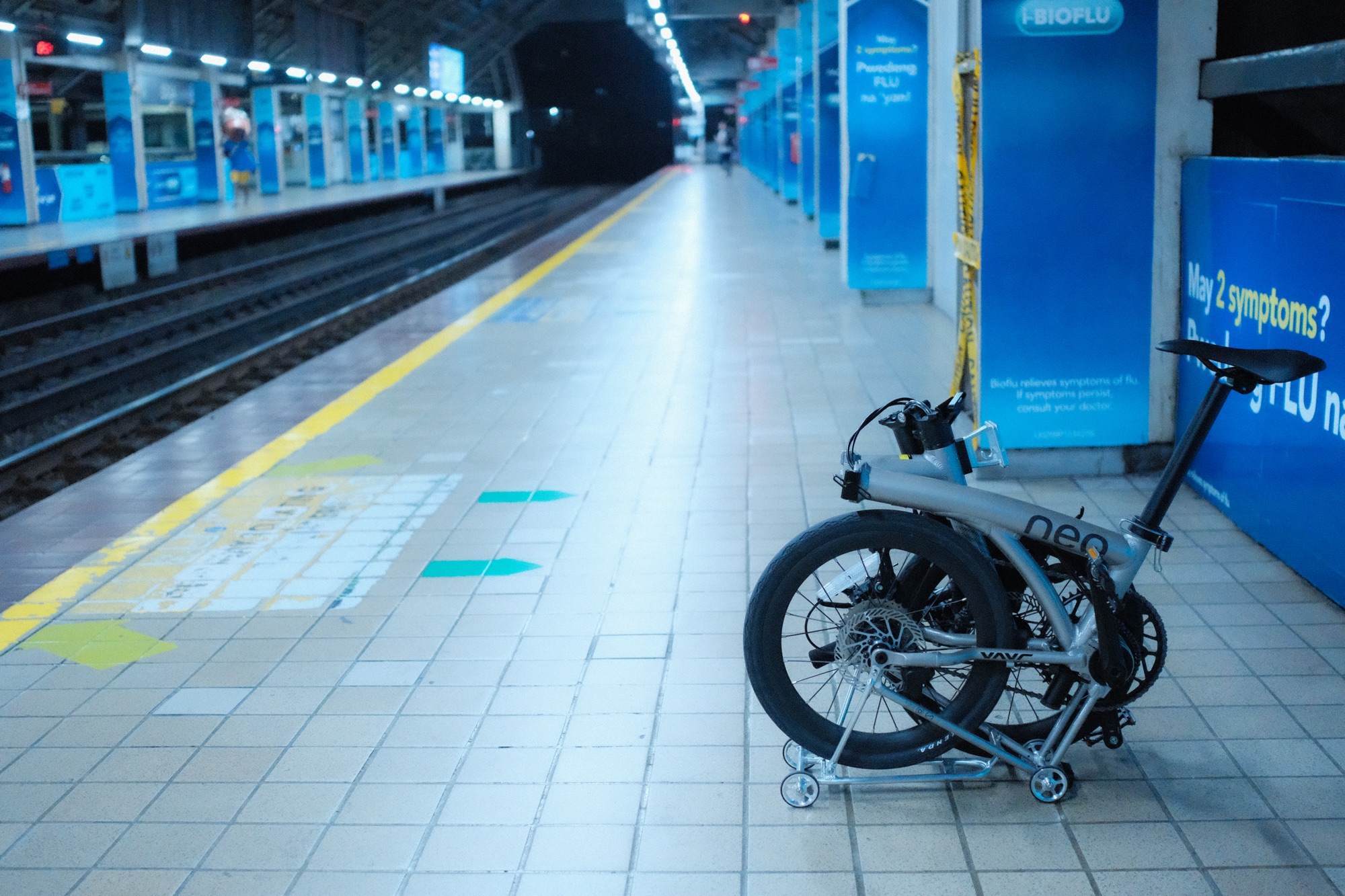
We tend to romanticize bimodal travel with folding bikes because it looks efficient on paper. But the realities of our transport system in Metro Manila alone prove that it can be as challenging as biking all the way to your destination and back. This isn’t my first time doing bimodal travel, or with any type of bike for that matter, and it can be an experience packed with compromises more than convenience.
Sunday in a Nutshell
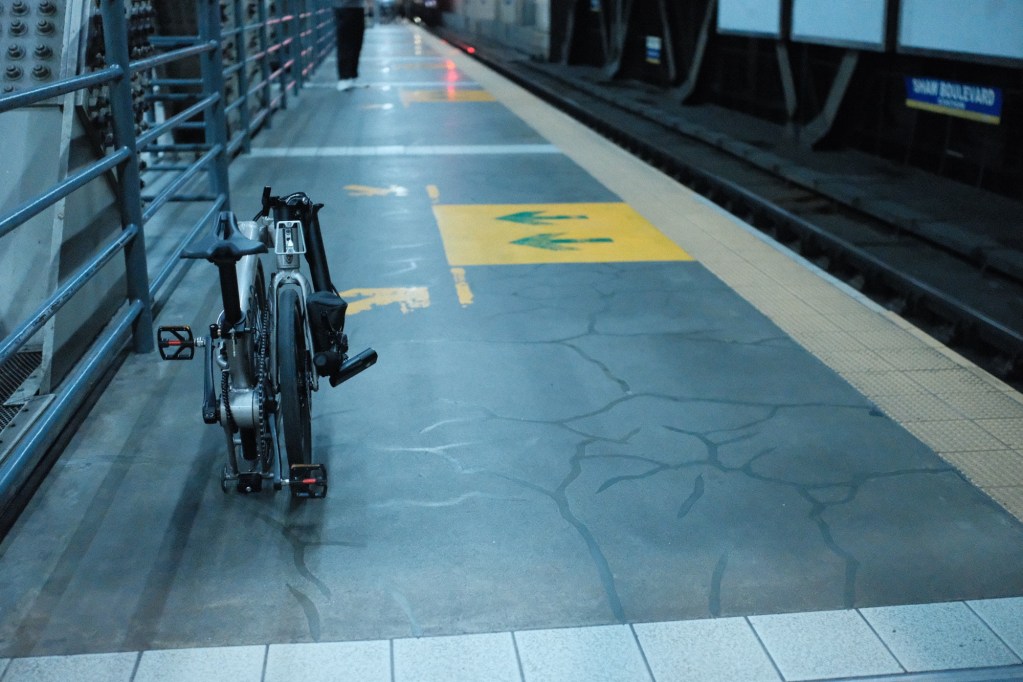
I was up as early as four in the morning one Sunday, as I attended the opening of the Polo Riverwalk in Valenzuela. Right from the start, I wanted to go bimodal: use the Java Neo 3 trifold as my first- and last-mile vehicle and take several modes of transportation in between. As I had lunch with family in Makati in the afternoon, I knew I was in for a full day of traveling.
From my place in Pasig, I biked to the Shaw MRT Station and took the southbound train to Taft, then walked a bit to the LRT station and took the train all the way to Yamaha Monumento. From there, I biked some ten kilometers to Alvarez Park Cafe in Tagalag, Valenzuela via MacArthur Highway. After the event, I visited my mom’s grave in Palasan Cemetery.

The sun was high up, and I was sore from moving all morning, but I still had lunch to attend to all the way in Makati. I decided to take a Grab to the EDSA busway in Monumento and take a bus to the south; this gave me about 30 minutes to recharge my social battery. Upon reaching my stop, I biked to my condo in Salcedo Village to freshen up before heading to my cousin’s house. Around three in the afternoon, I biked back home to Pasig.
And plopped my body on the bed after showering, tired from the journey.
Honestly, Bimodal Travel is Complicated
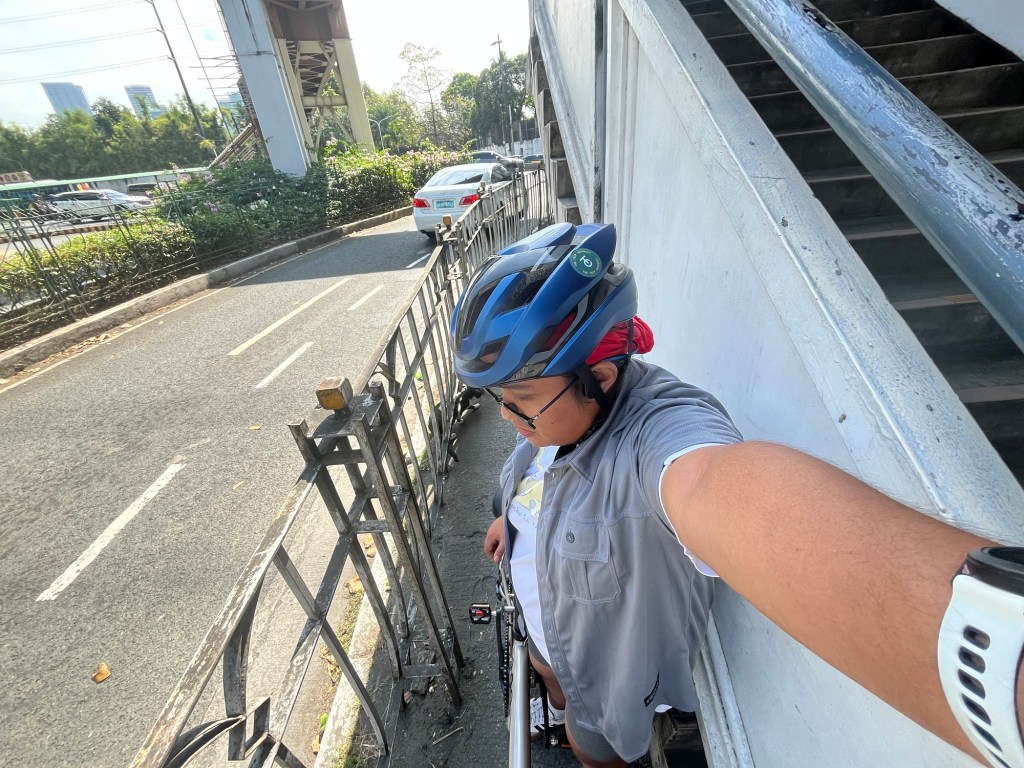
I had written about the in-between disconnection of commuting, and the same can be felt while doing bimodal travel. Here are my observations.
1. Getting the bike into the train or bus is already a third of the journey.
Yes, a trifold is compact, but because you’re bringing something bulky into the train, you’ll likely take up more space and bump into passengers when it gets too crowded. Skill issue or not, it’s embarrassing to bump into the shins of fellow commuters.
2. Elevators don’t always work.
This means you’ll have to carry the bike up the stairs. Luckily, though, the escalators at Shaw Station were operating as early as 5 am, so I didn’t have to worry about climbing Mt. Shaw next to Shangri-La EDSA. Still, though, I’ve seen a couple of elevators at different stations undergoing maintenance, which ground my (mental) gears.
3. There’s just too many stairs.

Our transport system assumes that commuters are able-bodied individuals who aren’t carrying anything with them except, maybe, a backpack or a purse. But in reality, families that primarily use public transit often bring young children along with big bags, and sometimes strollers. Some commuters are seniors who already struggle walking on flat surfaces, much more so when climbing stairs. And then there’s the bimodal bike commuter, carrying a trifold that’s 10-12kg heavy (or sometimes more). Even with public transportation, we put too much consideration into cars, not people.
4. You’re still exposed to traffic.
It’s true that bimodal travel reduces distance more efficiently, but not exposure to traffic, especially when exiting train stations. There’s rarely a safe space for you to unfold your bike, mount it, and bike away. Instead, you’re “sharing the road” with other heavy vehicles that park or drive into the bike lane. And once you’re forced to merge into traffic if bike lanes are obstructed or non-existent, you’re pretty much on your own.
But despite it all, we active mobility and road safety advocates still push for the adoption of bimodal travel, not because it’s easy, but because the benefits outweigh the challenges.
How Can Bimodal Travel Improve?
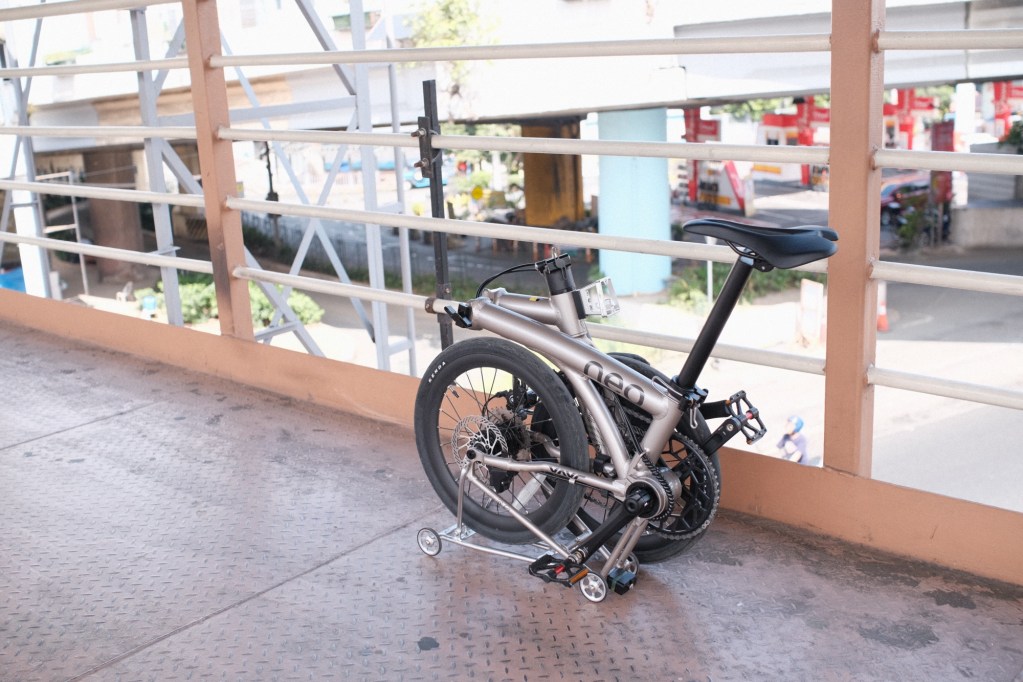
Recently, President Bongbong Marcos urged transportation officials to make it easier for commuters by improving railway systems in the country, particularly with regard to the LRT-1 and -2, and MRT systems. Facilities should be well-lit, trains must arrive on time, and operations must last longer.
Sure, thanks, buddy. But that’s the bare minimum. And these don’t address how people actually reach the train. There was no mention of the EDSA Busway, nor of other everyday modes that millions rely on: jeepneys and tricycles that potentially connect neighborhoods to a wider transport network.
There was also no mention of improving protected cycling paths.
This narrow focus reveals the larger problem for commuters in general. Many of the solutions needed to support bimodal travel are basic—and have been obvious for years:
- Protected bike lanes must connect directly to stations
- Pedestrian crossings should exist at EDSA Busway terminals.
- Sidewalks should be passable, unobstructed, and wide enough to handle people with mobility devices, bikes, and luggage.
- Stations and terminals should follow universally designed principles so everyone can use public transit.
Bimodal travel remains a struggle because our transport system is still designed in fragments. In other words, there is a severe lack of transport integration into a single network. Until these pieces are treated as one continuous journey, Mr. President, improving trains alone won’t make Metro Manila easier to move through.


Leave a Reply