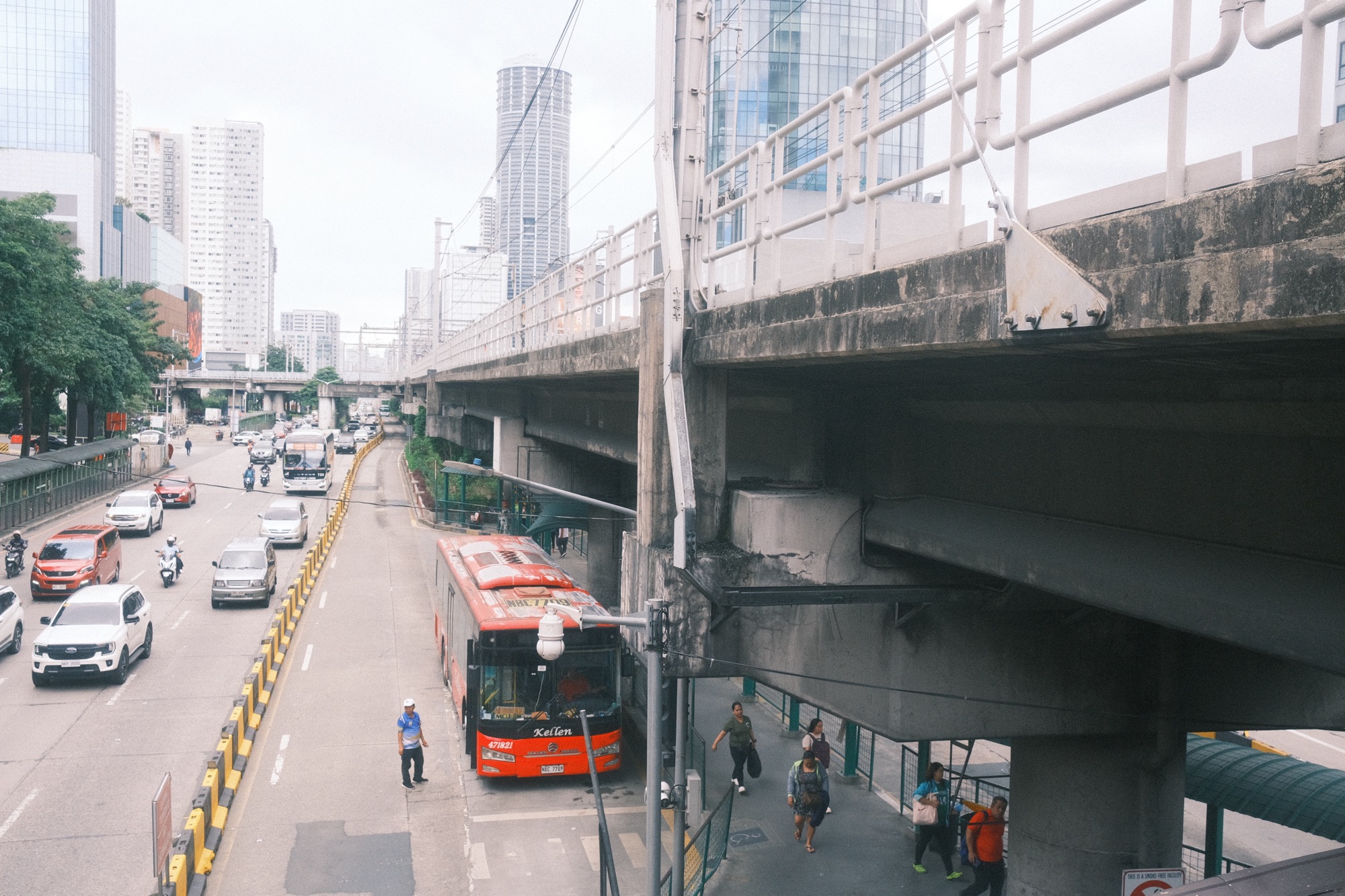
Public transport in Metro Manila has always been bad, but I still choose this over relearning how to drive and getting a car.
What I noticed, though, aside from the severe lack of better infrastructure, was the in-between of commuting and how equally antipathetic it is.
Last November, my maid and I visited my mom’s grave in Valenzuela to give it a little sprucing up. I considered taking a GrabCar from Makati, but saw the price and felt it was too steep (imagine paying more than P600 one way).
So public transport it was.
The plan was simple:
- Take a jeepney from Buendia/Gil Puyat to go to the MRT Station
- Ride the MRT from Buendia all the way to North EDSA
- Take the EDSA bus carousel from North EDSA to Monumento
- Get a GrabCar from our last stop to Polo Memorial Park
Sounds good, all good, right? The reality, though, was far more complicated.
The Able-Bodied Assumption

My maid and I walked from the condo to the Buendia/Nicanor Garcia intersection to get on the jeepney that stopped near the Buendia MRT station. We’re used to this route, but I did notice that jeeps were hard to get into if you’re a senior with limited mobility. My maid boarded the jeep properly, but not without support.
When we arrived at the Buendia/Makati Ave stoplight, a blind lady and her guide tried to get on the jeepney just as the traffic light turned green. The driver, instead of waiting a few seconds longer for the couple to board the jeep, kept saying “Bilisan niyo!” (Hurry up!) and the lady had to hang on to the railings to get up as the jeep started moving.
I wasn’t sure if the driver knew the lady was blind or had not yet fully settled in the jeepney.
The antipathy set the tone for the rest of the trip.
Poor Pedestrian Integration

We made it to the Buendia MRT Station and boarded the first available train. The ride was smooth until we alighted at North EDSA.
It was here that we hit a major hurdle: Getting to the EDSA bus carousel.
We didn’t immediately find the footbridge because we assumed that the MRT was connected directly to the bus stop. But that area was locked, and we spent a good fifteen minutes or so figuring out where to go.
Apparently, we had to:
- Go down at street level to go up a footbridge, and
- Go down again at the center island of EDSA to board a bus headed to Monumento
It was both confusing and unnecessary.
The authorities were helpful, but when they led us to the footbridge, I gave out a loud sigh and looked at my maid. I really didn’t want her to have a harder time than she had, but she said she was okay, so we pushed through.
Even if I’m able-bodied, this setup is clearly wrong and ultimately shows how disconnected public transport in Metro Manila is. Sure, I was able to get a few hundred steps in, but the lack of accessibility was not worth the exercise. Light cardio shouldn’t be a mandatory feat for something as ordinary as commuting.
Once we were seated on the bus, we were able to rest. In fact, this was the more relaxing part of the trip. We decided then that we’ll take the bus straight from Monumento back to Buendia.
But then I remembered we had to climb and descend another footbridge at Monumento just to get to the northbound side of EDSA. I began asking the same age-old questions:
- This arterial road isn’t even a highway; why aren’t there more street-level pedestrian crossings leading to the bus stops?
- Why prioritize cars?
- What’s this weird love affair with underpasses and steep footbridges?
There’s No End-of-Trip Terminal or Facility

After loudly complaining while going up and down the footbridge, I had to get a GrabCar. My mom’s final resting place was still too far to walk to, and I was getting hangry. I could also see the fatigue in my maid’s face, so Grab was our only option; we weren’t aware of any other form of public transit that could take us straight or near to the cemetery.
Another observation I had was that there were no terminals or shaded stops at either side of the footbridges at each stop. If there were any, it would be occupied by peddlers or sidewalk vendors also seeking shade, or it could be dirty or dilapidated.
The shaded stop at Monumento after crossing the footbridge had some food vendors, so there was no space for us; we were looking for a ride under the heat of the noonday sun.
It took a couple of tries before we finally got a ride to the cemetery. I finally took my power nap, and by the time I reached my family’s crypt, I felt relieved that we made it…
… Until we had to go home. I had to get a GrabCar from the cemetery back to the bus carousel, go up the footbridge (ugh), and get on the bus back to Buendia. Thankfully, it was smooth sailing from Monumento. Even the jeepney ride back to our neck of the woods was peaceful and not too crowded.
Still, though, I was so unnerved by how disconnected our public transport is, even and especially between transfers.
Cars are an Option, but Not the Solution

You’re probably asking yourself, “Why didn’t this schmuck just get a car?”
Yeah, that would have been easier. Safer. A more expensive option, sure, but that’s the price to pay for convenience.
But I chose not to because public transport in Metro Manila should be able to handle inter-city journeys without turning them into an obstacle course.
Cars shouldn’t be the end-all solution. Grab was a last-ditch, last-mile option due to the lack of other modes of transportation available. But as long as public transport in Metro Manila remains the way it is, then it pushes people toward only choosing cars. Not because they want them, but because the better option is unbearable.
Public Transport in Metro Manila Deserves Better. We Deserve Better

So why is public transport in Metro Manila disconnected?
Because it was never intended to be a single, continuous experience in the first place. Public transport is an afterthought of an afterthought. The system is severely underbuilt, like piling Lego pieces on top of each other, hoping that you’ll end up with a building.
The solutions are there, and none of them are radical ideas or feats of technological innovation: At-grade transfers with clear rest points and even clearer signage so we know where to go, for example. In short, the boring in-between needs to be addressed as much as improving and adding to the infrastructure.
Yet with every administration, public funds go to projects that benefit the pockets of policymakers, not the lives of the people they should serve. The disconnect persists chiefly because those in power refuse to solve the problems faced by their constituents, and there’s no sense of urgency to do so.
I’m still hopeful. Public transport in Metro Manila may be disconnected today. But as long as people keep showing up, using it, and demanding better from the government, it doesn’t have to stay that way.


One response to “Why is Public Transport in Metro Manila Disconnected?”
[…] In this regard, the transport industry needs to have a better understanding of women’s mobility, particularly the in-betweenness of commutes. […]