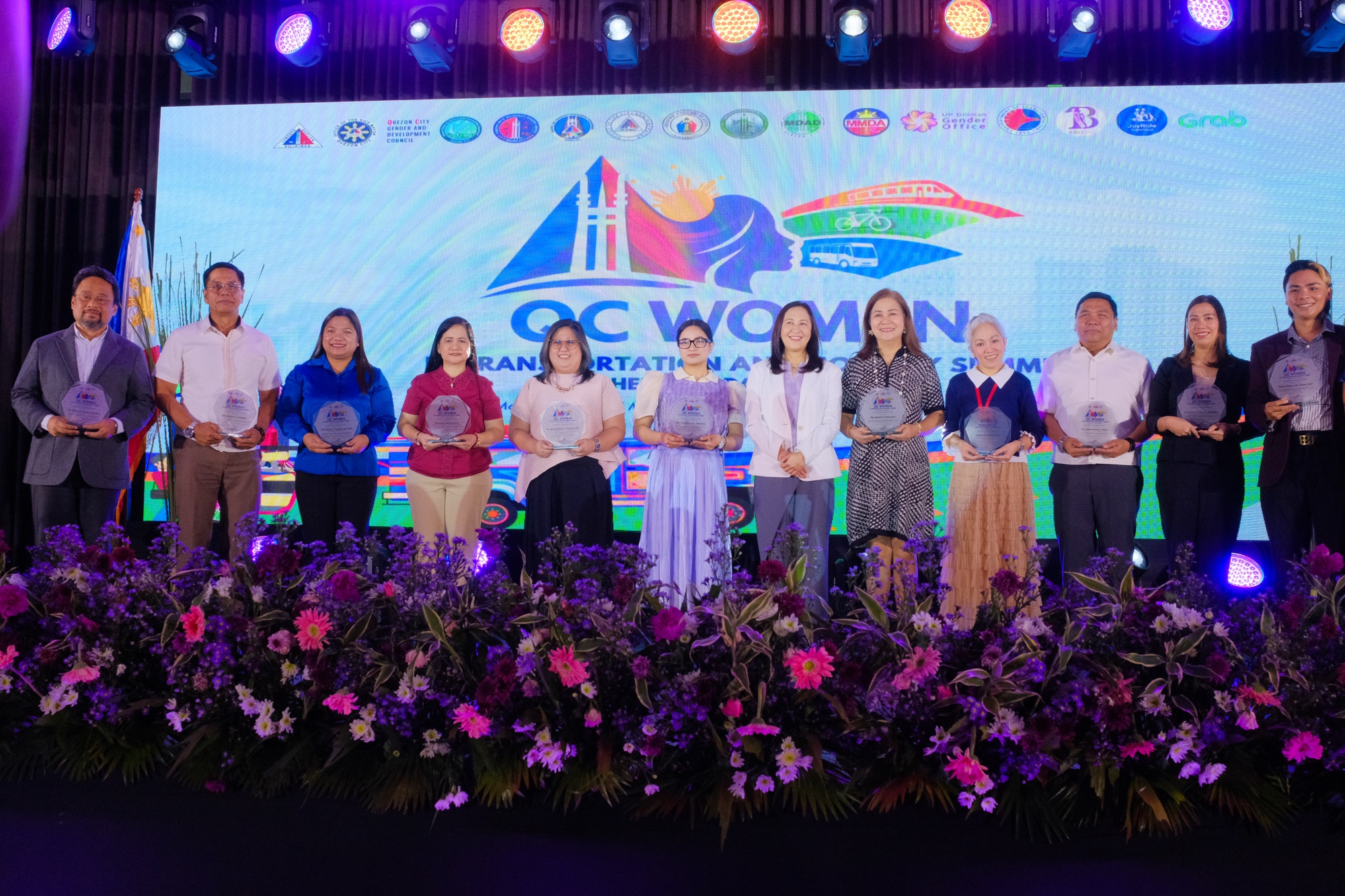
Last March 19, the Quezon City LGU invited various professionals and women advocating for safer commutes within and around the city. Entitled “QC Women in Transport & Mobility Summit,” the goal of the event was to highlight the issues and provide data and solutions so that women can go out and about more easily in the largest city in Metro Manila.
Women are more Likely to Trip-Chain
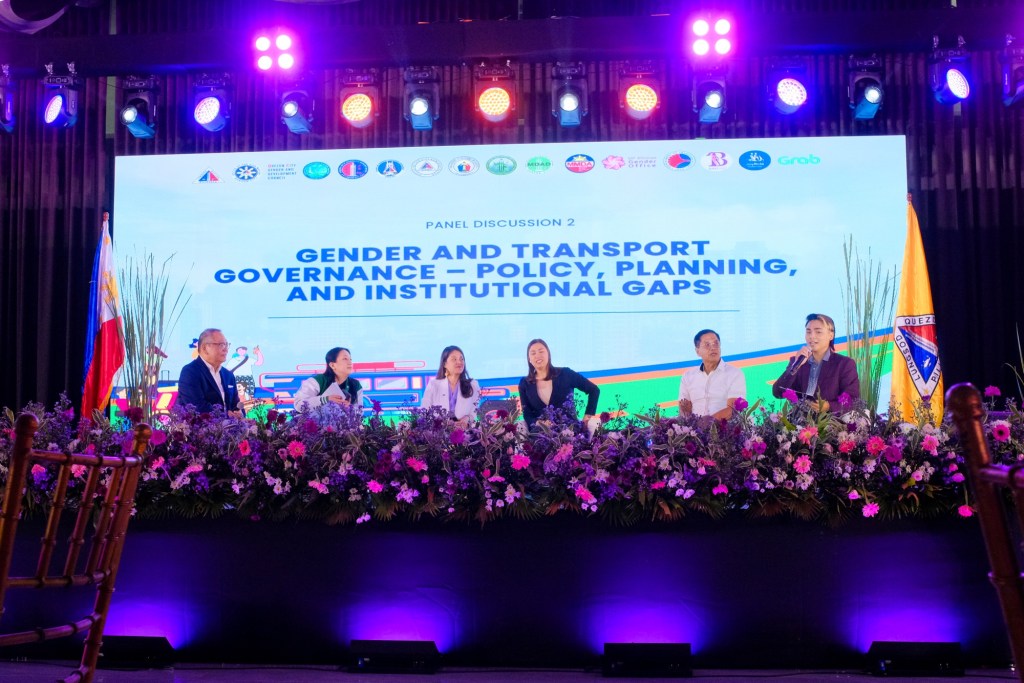
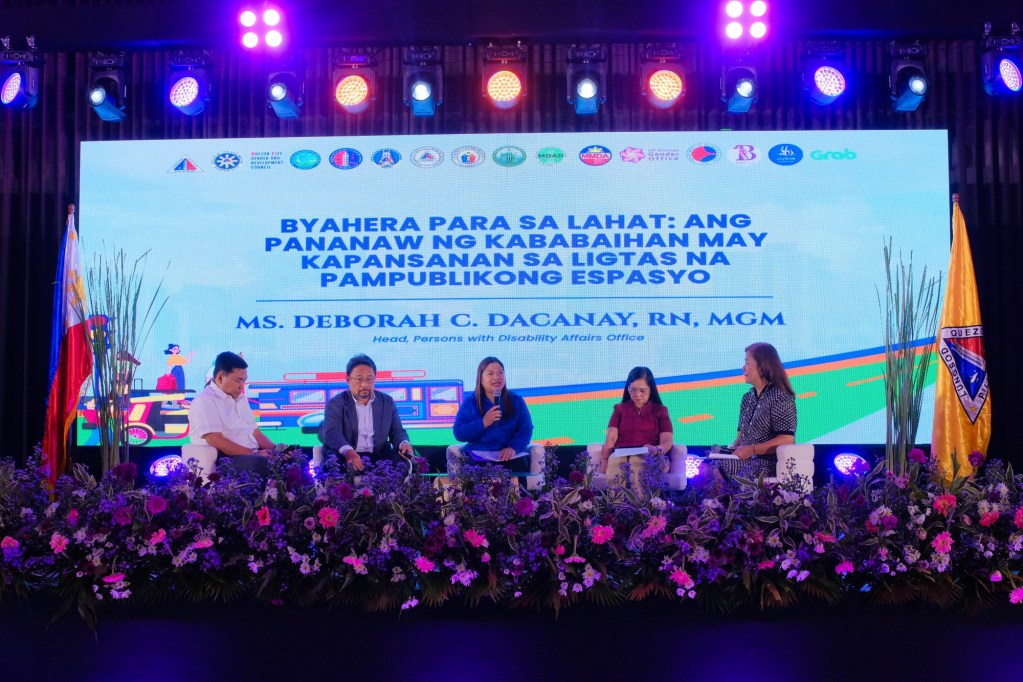
Speakers during the panel discussions at the QC Women in Transport & Mobility Summit.
A common term thrown throughout the summit was the reality that women are more likely to do trip-chaining than men. “Trip chaining” means linking different trips together between leaving one’s home and heading to their main destination. For most women, this means leaving their house, dropping their children off at school or a daycare center, going to the market or grocery, doing other activities afterward, picking up their children, and then heading home.
In contrast, men tend to leave their homes to head to their place of work, and then return home when their day is done.
Through this logic, women are more likely to use public transit, active transport, or a combination of several modes of transport, to get around. But as Mayor Joy Belmonte pointed out, it’s not always a safe journey for women. According to her presentation, 10% of women are more likely than men to feel unsafe in MRTs, and 6% more likely to feel unsafe on buses.
Anna Myrshia Villanueva of the UP Diliman Gender Office reiterated this issue, citing “hidden risks in the commuting journey,” namely:
- Long flights of footbridge stairs
- Crowded boarding areas on MRTs
- Uneven and obstructed sidewalks
- Long walking distances
- Unshaded waiting sheds
- Poorly lit terminals
- Insufficient waiting spaces
In this regard, the transport industry needs to have a better understanding of women’s mobility, particularly the in-betweenness of commutes.
Women’s Safety in Transport is an Intersectional Issue
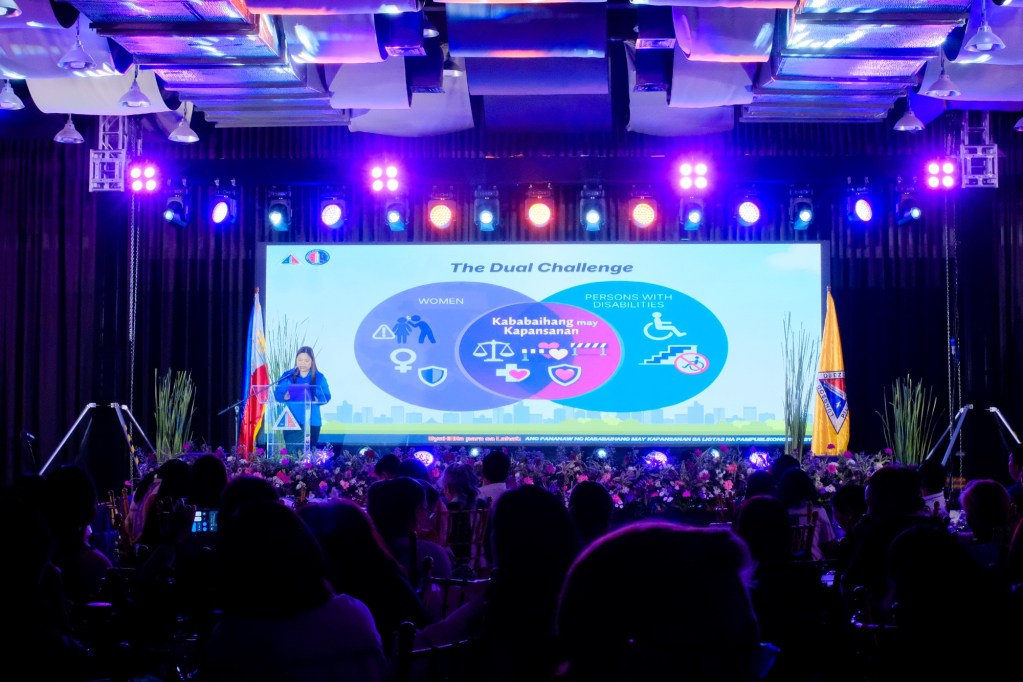
Mobility issues for Persons with Disabilities were also discussed during the summit. Out of nearly 100,000 registered Persons with Disabilities in QC alone, some 48,000 are women. Deborah Dacanay from the Persons with Disability Affairs Office mentioned that women with disabilities suffer from the lack of safe roads and mobility infrastructure, from uneven or obstructed surfaces to inaccessible buildings whose ramps are not up to code.
As well, road safety for women goes beyond improving infrastructure. According to Clean Air Asia, women are more affected by air pollution, and thus illnesses such as breast cancer, cardiovascular diseases, and issues in maternal health like stillbirth and miscarriages, and post-partum depression grow rampant. In fact, the risk of death from cardiovascular illnesses goes up by 76% due to exposure to air pollutants.
And the transport sector is a big contributor to air pollution.
So, how can our transport system be safer for women across the board?
Alberto Kimpo, Assistant City Administrator of Operations of QC, proposes a holistic and collaborative approach: improve design, not just road capacity, integrate active transport with public transport, and align policy, infrastructure, and enforcement.
“Public Spaces Must Be Safe Spaces”
Atty. Dianne M. Dizon of MMDA talked about how to uphold dignity in public transportation. To the government agency, “a transport system is not truly efficient if women are afraid to use it,” and that “safety in mobility” means protecting people against gender-based violence in public spaces, including roads and public transportation.
Our table was speaking in hushed tones, as we have had our fair share of harassment on our bikes, in the MRT, and even while walking across footbridges. “Hindi ko ramdam,” one of my companions said, “we’re objectified as bike commuters by motorists, and MMDA enforcers don’t even bother helping.”
While MMDA does acknowledge that safe commutes are a right, not a privilege, their leadership does not seem to understand what it is to be an everyday commuter, more so an everyday female commuter.
If Women are Safer on the Road, Everyone is Safer in the City

These points, when taken together, show who’s bearing the hidden costs of poorly maintained mobility infrastructure. When roads are designed simply for speed and capacity, they exclude women and expose them to risks that can affect their independence, health, and dignity.
But when cities move toward people-centered urban design, especially one that uplifts women and encourages them to move with confidence, mobility becomes accessible. Safer streets and equitable access thus bring about a cleaner environment and a happier home. These goals are one in designing transport systems that value care, safety, and everyday life.
We only wish, however, that government agencies at both the regional and national levels share the same objectives and the same mindset, and prove to us that events like the QC Women in Transport & Mobility Summit are not merely lip service and a PR stunt.


Leave a Reply