
Having a car-free lifestyle means a person does not completely rely on a private car as their primary mode of transport. This type of independence comes from knowing that mobility and car ownership are not one and the same.
My Experience with the Car-Free Lifestyle

When I started bike commuting in 2022, I experienced the joy of cycling and found my place with like-minded people on two wheels. I still owned a car then, as my mom needed it to get to her medical appointments.
But after she passed away last year, I sold our car and made it a point to walk, bike, or use public transit. I use GrabCar or carpool once in a while, but only when biking to a place isn’t feasible or when someone offers to drive me to and from my place.
The car-free lifestyle has greatly improved my wayfinding skills, deepened my love for urban exploration, and given me a better sense of place wherever I go. Bike commuting, especially, opened so many doors for me, and what was just a hobby then is now something that positively consumes my life (and negatively consumes the contents of my bank account).
Of course, though, not everyone can have this lifestyle.
Some People are Forced to Own Cars, Unfortunately
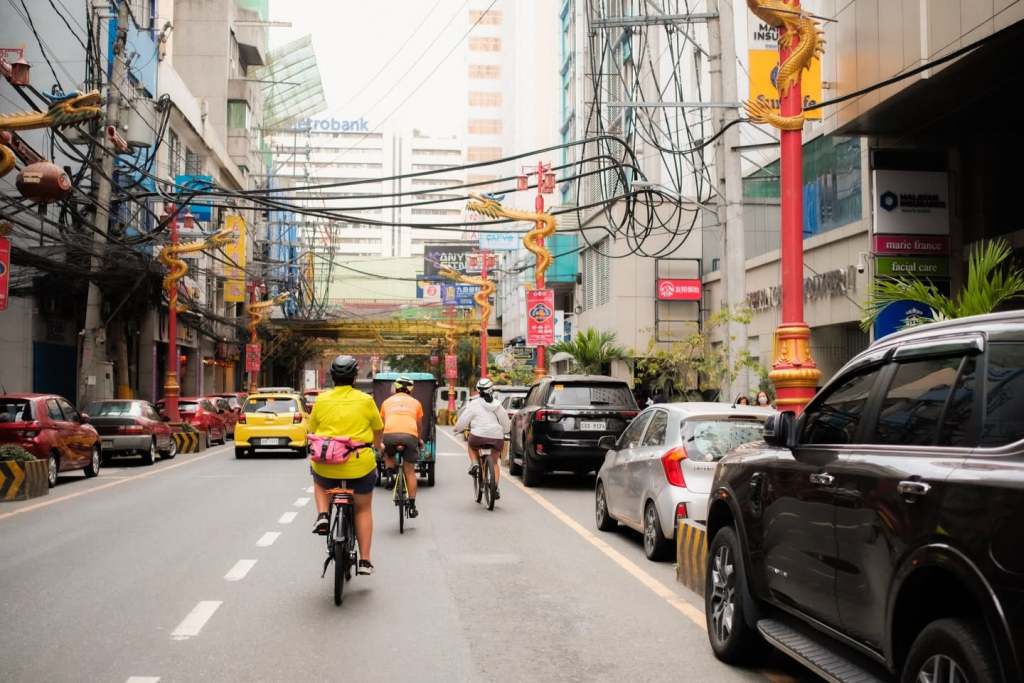
Over the years of choosing the bike more than the car, despite my mom’s consternation when she was still alive, I began to see that even if the car-free lifestyle works for me, it’s not easily attainable for everyone else.
The problem is not that people are unwilling to walk, bike, or take public transportation. It’s that Metro Manila is designed only with cars in mind. So being a pedestrian or a daily public transit commuter is difficult, uncomfortable, and even dangerous.
Many of us experience it. Some areas, such as Kapitolyo, don’t have good sidewalks. Bike lanes become express lanes for motorcycles, and these motorists really pick a fight with us if we say “BIKE LANE, BIKE LANE!” Additionally, MRT and LRT trains are few and often overloaded, and thus become unreliable, especially during rush hour.
These issues make car ownership so appealing. For many Filipinos, owning a car is not simply a status symbol or a matter of convenience: it’s someone’s one-way ticket to escape the shortcomings of our transportation system. But even then, owning a car is still a money trap, as maintenance and volatile oil prices can affect how money flows.
As well, many people can’t always bike or take public transport. Some have long commutes while carrying heavy loads, others have family responsibilities that require a larger vehicle, some have physical disabilities that may hinder them from cycling, or others live in places where access to public transit is limited. The real issue lies in whether they have viable alternatives.
Our government should have been creating policies long before our roads became worse for everyone. Cars shouldn’t be the end-all, be-all solution to transport problems. A person should have the choice to walk because sidewalks are safe, bike because cars respect the cyclist’s space on the road, and take the bus or MRT because these systems are reliable.
If every road user were respected, more people would choose the car-free lifestyle.
True Freedom is Being Able to Choose

I may not believe in absolute free will, but I do believe people should have meaningful choices available to them. So this Independence Day, if you can, please consider what a car-free lifestyle can look like for you.
Because true transportation freedom is not about forcing everyone onto bicycles or out of their cars. It’s about ensuring that walking, biking, public transport, and driving are all safe, viable options.
Metro Manila still has a chance to succeed when all LGUs work together with the national government and urban planners to create an integrated transport system for everyone, so that owning a car is no longer a primary requirement for participating in everyday life.
And perhaps that’s the kind of independence worth celebrating.


Leave a Reply