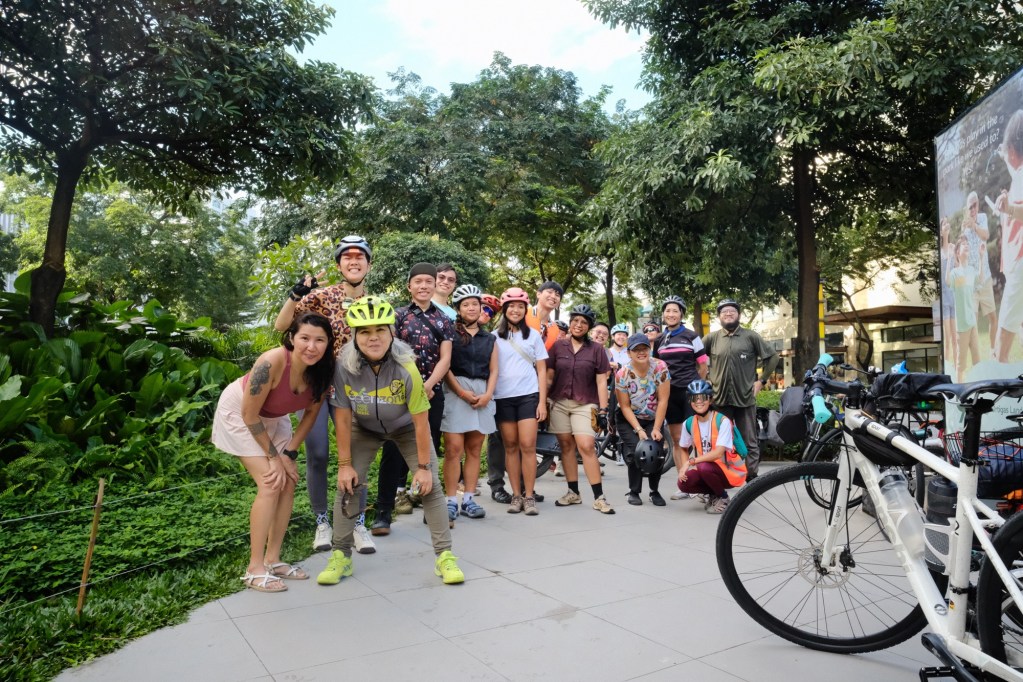
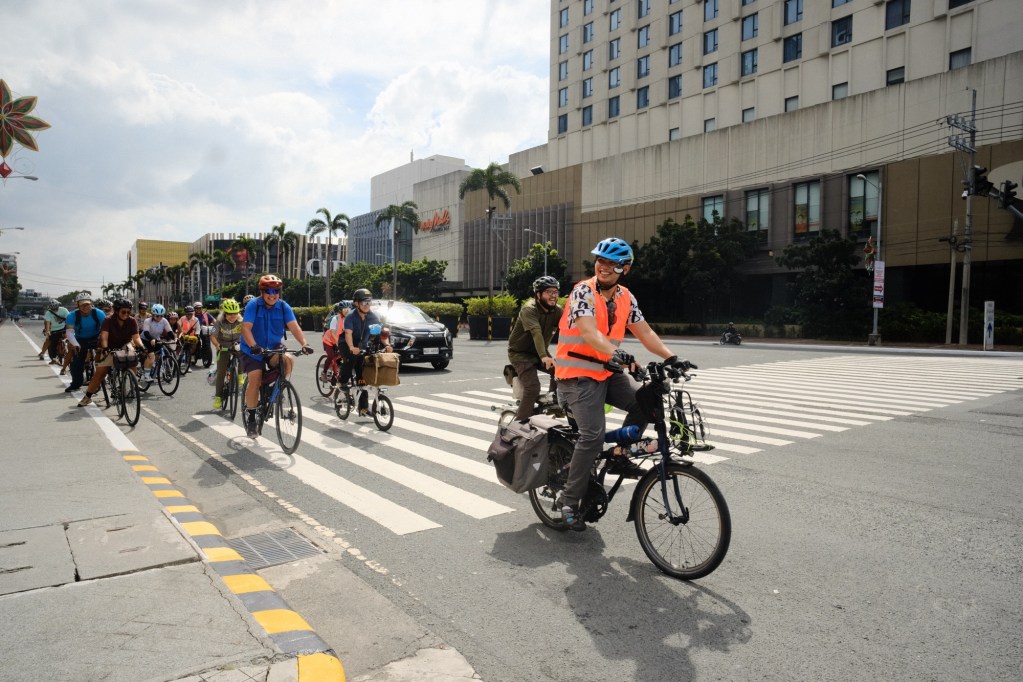
On October 10, 2026, The Trip Chainist, in collaboration with Sakay.ph and Happy Pedal Project, organized a bike ride to the Museo del Galeon. Nearly 30 bike commuters joined us, riding from Capitol Commons in Pasig City to the MOA Complex in Pasay. This is our first organized bike ride, and it was definitely a success!
Why Museo del Galeon?
Both Wil of Sakay.ph and I have had our respective professional experiences with the museum. Back in 2017, Edgardo J. Angara, the Founding Chairman, hired me to help him with the initial planning and marketing. While life had other plans and I had to leave after a few months without seeing any of the plans come to fruition, I was still keeping tabs with the people involved. Unfortunately, Angara, who we lovingly called SEJA, passed away in 2018, and I became busy with my full-time job then.
On the other hand, Wil and his main company, Bonito Tech, worked on the interactive digital exhibits together with White Widget. Bonito is the team behind Sakay.ph, the public transit navigation app available in the Philippines, particularly in Metro Manila and Metro Cebu.
When the Museo del Galeon opened last May 1, 2026, I had been wanting to go and see how they set up their collection and exhibits. A few months later, Wil and I were talking about it, and we put two and two together.
We then reached out to Stephen and Coi of Happy Pedal Project to help us further organize the event. We were supposed to have it last August, but the rains persisted, so we had to move it to October.
Getting to Museo del Galeon

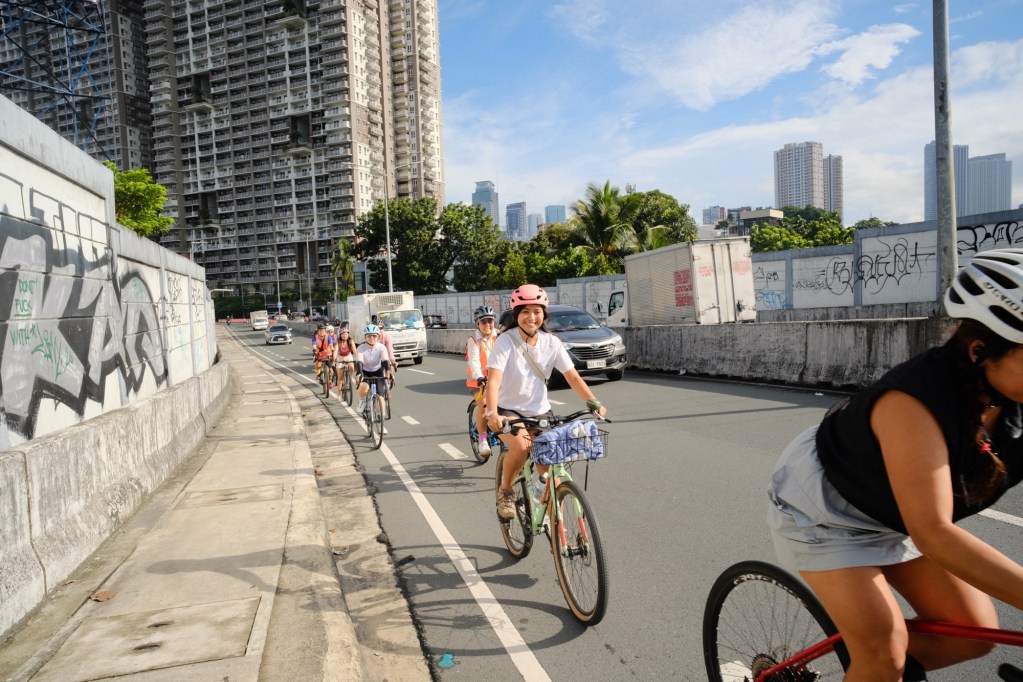
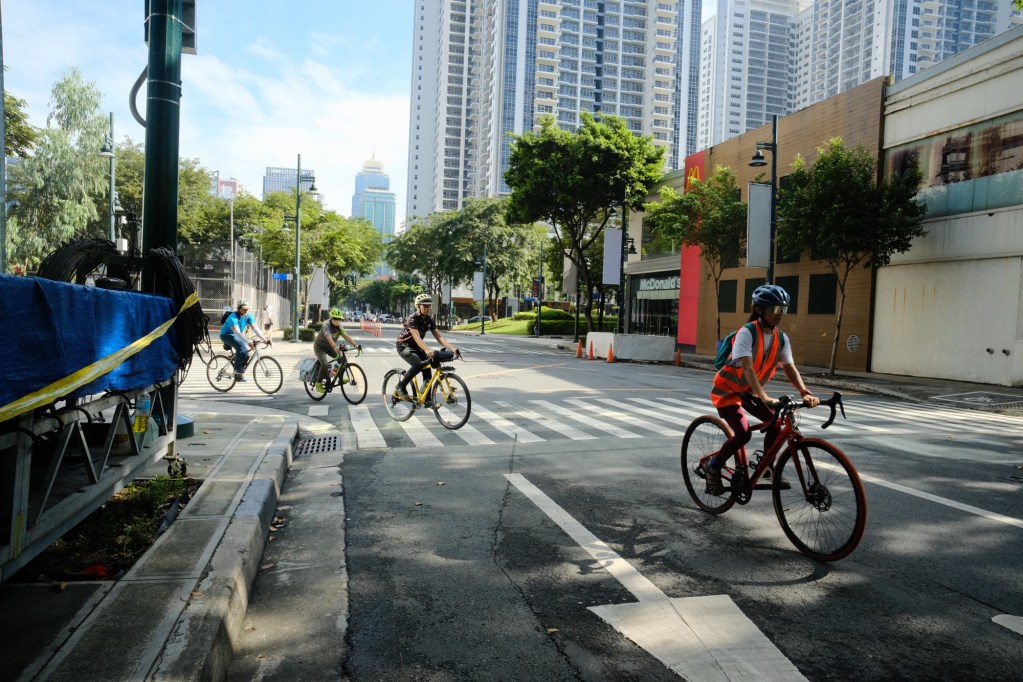
The route from Capitol Commons in Pasig was around 15 kilometers, passing through BGC, Lawton Ave, and Andrews Ave to get to the museum. The ride itself was “standard,” having to manage and maneuver in and around the roads to get to our destination in one piece.
Overall, the ride was smooth and straightforward, given that it was a Saturday, and except for my chain drop early in the ride, we had no untoward incidents.



We’re happy that SM has thought of placing several bike parking areas throughout the MOA Complex. This makes it convenient for us to visit Museo del Galeon by bike, unlike other museums with hard-to-reach bike parking facilities, or none at all.
Exploring the Exhibits

After getting our tickets at the reception area, we had an hour or so to kill because there were groups of students who had gone ahead. To reduce the number of people inside the museum, we decided to go around Mall of Asia for a while. By eleven in the morning, we grouped ourselves into three and followed our respective tour guides to explore the exhibits.


Our guide showed us a balangay, or barangay. What we know now as a basic unit of Philippine society was actually the name of the boats that held 25-50 passengers. That’s probably more than eight families. Other, much bigger balangay even had a second floor, exclusively for the datu.
These watercrafts were often used for trading and migration, and were constructed exclusively with Philippine hardwood. Yes, there were no metal fasteners like nails to hold all the pieces of wood together; instead, builders used various joinery techniques. Both hardwood and hard labor would later be exploited by the Spanish colonizers during the Galleon Trade, which started in 1565.
The trade between Manila and Acapulco saw an influx of boats being built on our soil due to several reasons:
- The colonizers preferred Philippine hardwood
- There was an abundance of trees
- Labor was cheap (I’ll get to that in a bit)
Major facets of Philippine society have “improved” due to the Galleon Trade, even though Southeast Asian maritime trade existed long before the Spaniards colonized us. We were able to grow corn, coffee, cacao, ginger, turnip, and tomatoes, among others, as these were brought to us all the way from Central America. We imported various textiles from China and ceramics from other parts of East and Southeast Asia to sell to the West, especially when the Silk Roads had long closed. In fact, owning these clothes, plates, and jars indicated a family’s affluence in colonial society. We sold spices that would otherwise come from neighboring countries.
To buy these Asian goods, one had to use extremely valuable silver coins, the lifeblood of the Galleon Trade.
Las Islas Filipinas was, in a way, the Shenzhen Sorting Center of its time.
But it was not all sunshine and rainbows for the Filipino people, as we all know. The Galleons needed people to work on the ship, and no way would the Spaniards do it. Instead, they kidnapped people through “press-ganging” and then put them to work. Whether they escaped, bribed, or bought their way out of ship-bound slavery, some Filipinos eventually settled in Florida and Acapulco, as it was easy for them to acclimatize in these places.
Language was also controlled during this time, so that our people had no access to understanding Western thought. The colonizers published the Doctrina Christiana and translated it into Tagalog rather than teaching us Spanish. By instilling religion through the native tongue, they kept us isolated from global ideas and dependent on Catholic friars as our sole translators to the outside world.


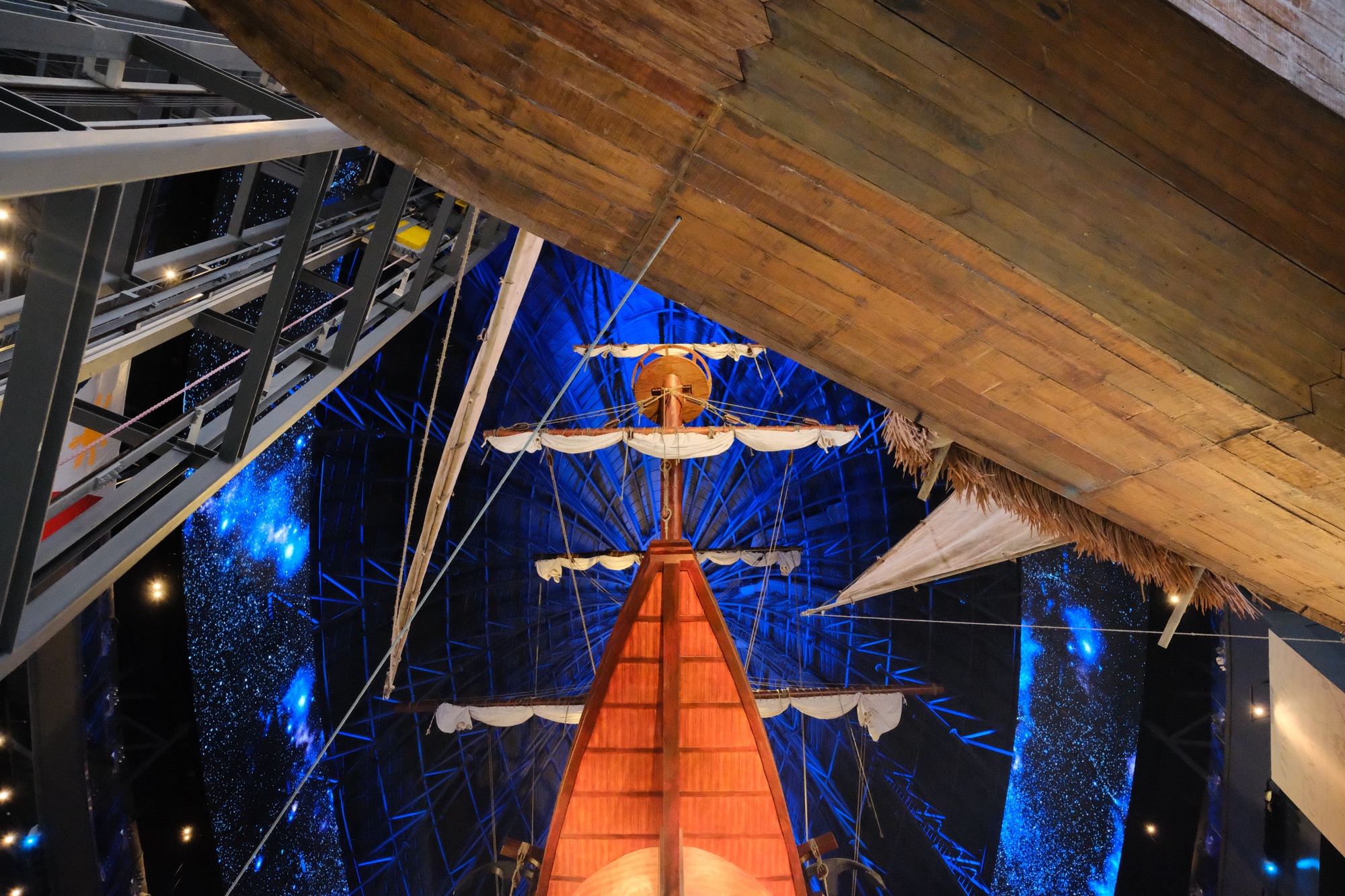
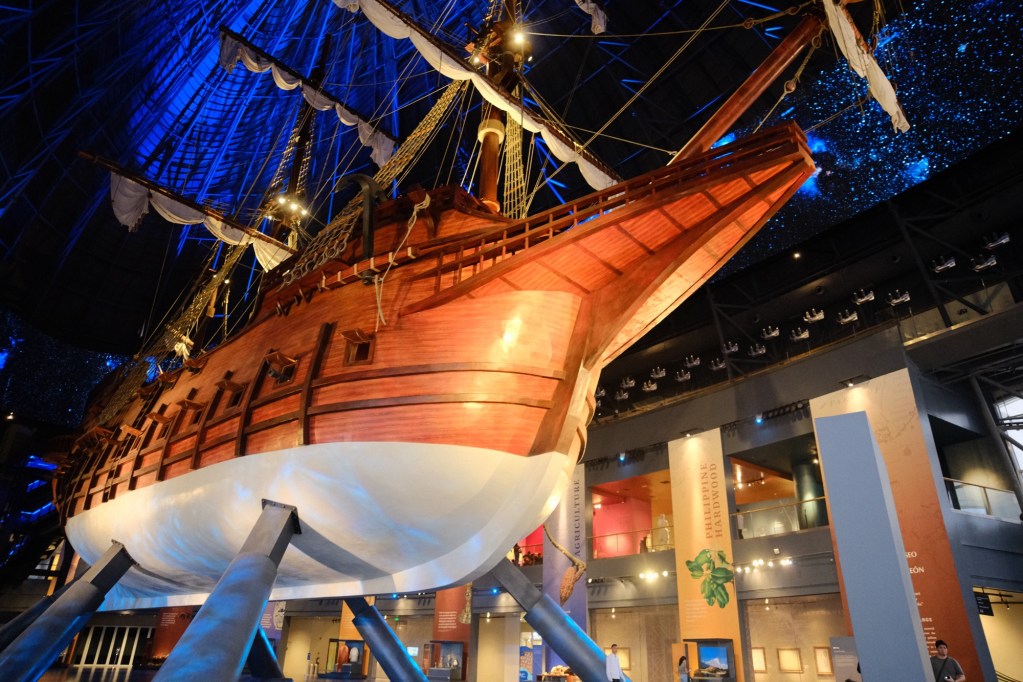
Our group sped through the rest of the collection, and we found ourselves at the entrance of the Galeon de Espiritu Santo, a life-size replica of a galleon ship built in Cavite. Inside, we learned how the crew lived (and died) at sea. If one stayed in the gun deck, for instance, they had to endure stifling heat due to the lack of windows, as they could only feel the sea breeze through the gunports. It is only in the captain’s quarters that one can find several windows, if they aren’t on the main deck.
The abundance of pests like rats and cockroaches plagued the ships, as there was no way to properly keep food safe at that time. The crew was often subjected to disease and death, with no access to medicines to treat scurvy and beriberi, as well as typhus and smallpox.
The Galleon Trade ended in 1815, after 250 years. But it marked another beginning: The rise of the Chinese-Filipino elite, the expansion of higher education to local students (no longer reserved just for Spaniards), and the rise of the secularization movement led by native priests like GomBurZa.
These shifts eventually gave rise to the Ilustrados. In the decades after the Galleon Trade, wealthy merchant and landowning families sent their children to Europe. There, they were exposed to the Enlightenment and liberal political thought, and began questioning colonial rule, ultimately helping spark the movement for Philippine independence.
So, Why Bike to a Museum Anyway?
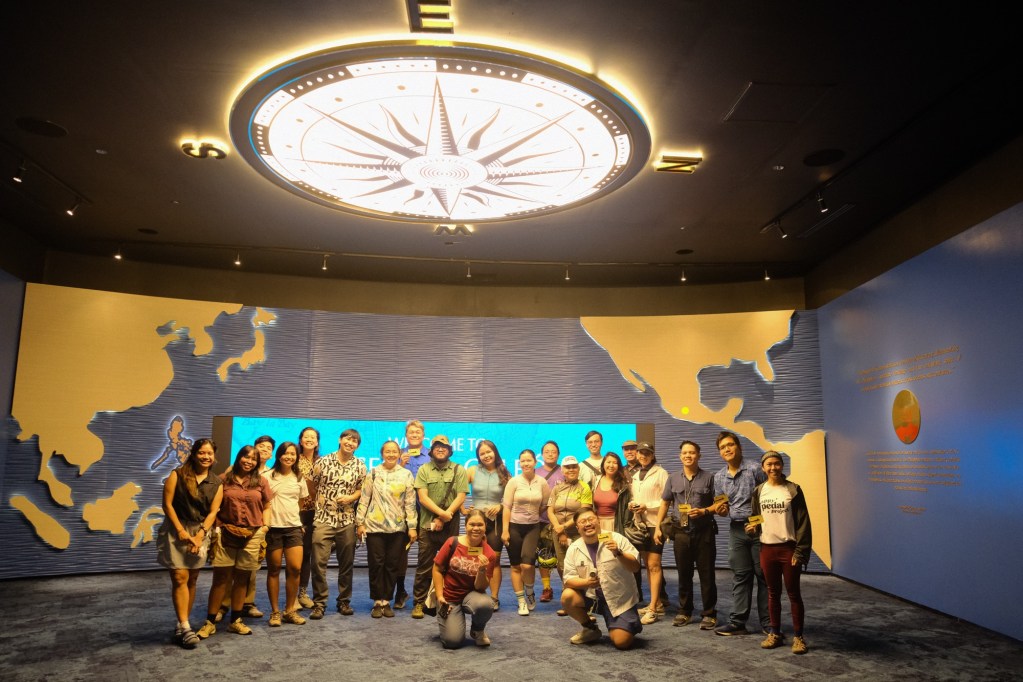
Honestly, we all could have just carpooled to Museo del Galeon, but we didn’t want to be like the crew in the gun deck—packed inside a vehicle and enduring heavy traffic. Instead, we showed how easy and practical it is to bike commute to museums, especially when dedicated bike parking is available right nearby.
It also goes to show that people want to visit places of cultural interest; museums just need to be more inclusive and accessible than they claim to be.
While bicycles didn’t coexist alongside the galleons, the idea of seeking enlightenment and fighting for the freedom to move freely and safely is still very much alive on two wheels. The galleons carried trade across oceans to open Manila to the world. Today, our bikes carry us across our own city to reclaim the history those global routes left behind.
May our bikes continue to ensure that every Filipino has the opportunity to connect with our shared past.


Leave a Reply