
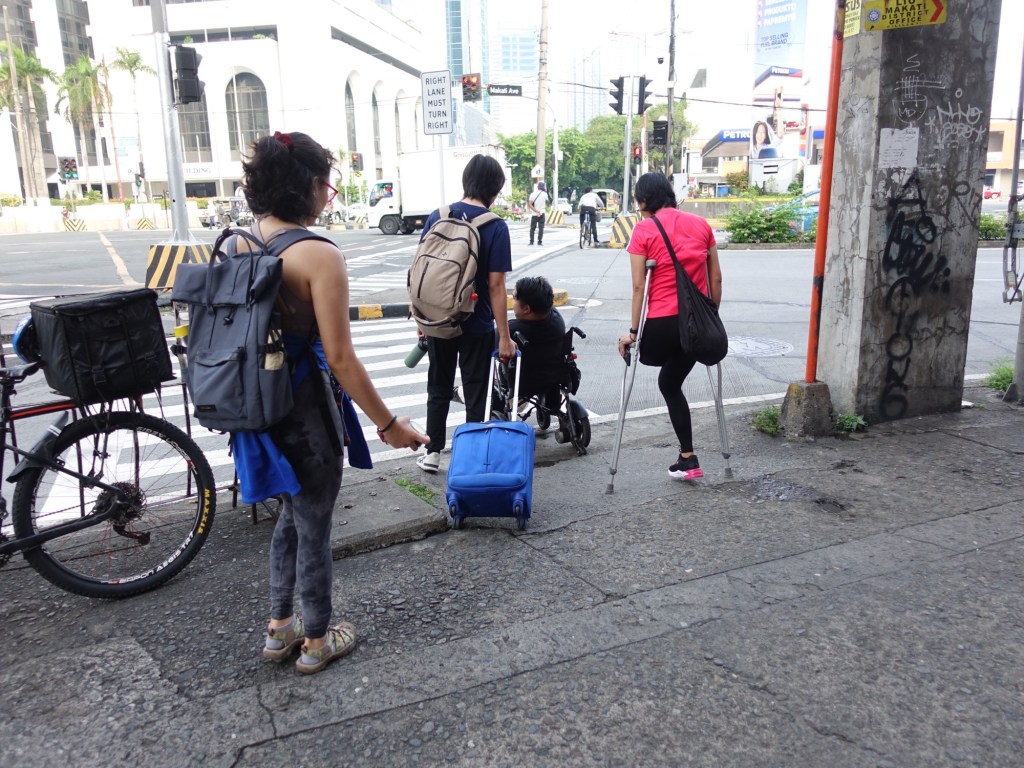
A few weekends ago, I joined members of the Move as One Coalition and MISMO for a partial accessibility walk along Gil Puyat Avenue. We started from the Shell Buendia across the MRT station and made our way on foot toward The Columns Ayala. With us were persons with disabilities, including a wheelchair user and an amputee on crutches.
Here are my observations about Gil Puyat Avenue, and why it needs an overhaul.
Why Do This?

Walkability is an overlooked concern in Makati. And yet my hometown is touted as a “walkable city.” Having lived here all near-thirty-six years of my life, I can tell you that it’s not. It’s only walkable in the CBD, but even then there are challenges to accessibility.
I’ve seen people trip over cracks on the sidewalk, seniors fall down just because they didn’t notice the slight change in level of the wheelchair ramp, and children cry for their parents or caregivers when their knees hit the coarse pavement.
Were they clumsy? Probably, but a city that works should avoid this. Because no matter how accident-prone a person is, as long as the infrastructure is sound, they won’t injure themselves.
This has been an observation since I moved to Salcedo in 2011. And I had kept my peace until recently.
When I was invited to listen to a seminar about Vulnerable Road Users by MAOC on May 31, I took the opportunity to talk to Doc Mau Guillen and others about my idea of doing a photowalk in Makati. She was immediately on board, and we set the date for the walkthrough on June 7.
We eventually chose Gil Puyat as our pilot walkthrough because it’s one of the major arteries in Makati for both motorists and pedestrians. Our main objectives for this walk were to:
- Document segments of Buendia Avenue – Makati CBD – with broken, obstructed or “vanishing” sidewalks
- Identify poorly designed/absent pedestrian crossings
- Note conditions for physically disabled people (wheelchair ramps)
- List areas that are highly exposed to vehicular danger (speeding cars)
I myself have walked the length of the avenue several times, from MRT to LRT, even up to CCP and Intramuros (guys, I was bored during the pandemic), and have always noticed how hard it is to walk. Now add persons with disabilities into the mix, as well as people dragging trolleys and bringing strollers with children or pets, and you have a big infrastructure problem.
It’s high time to discuss the issues of Gil Puyat Avenue.
1. Uneven Ground
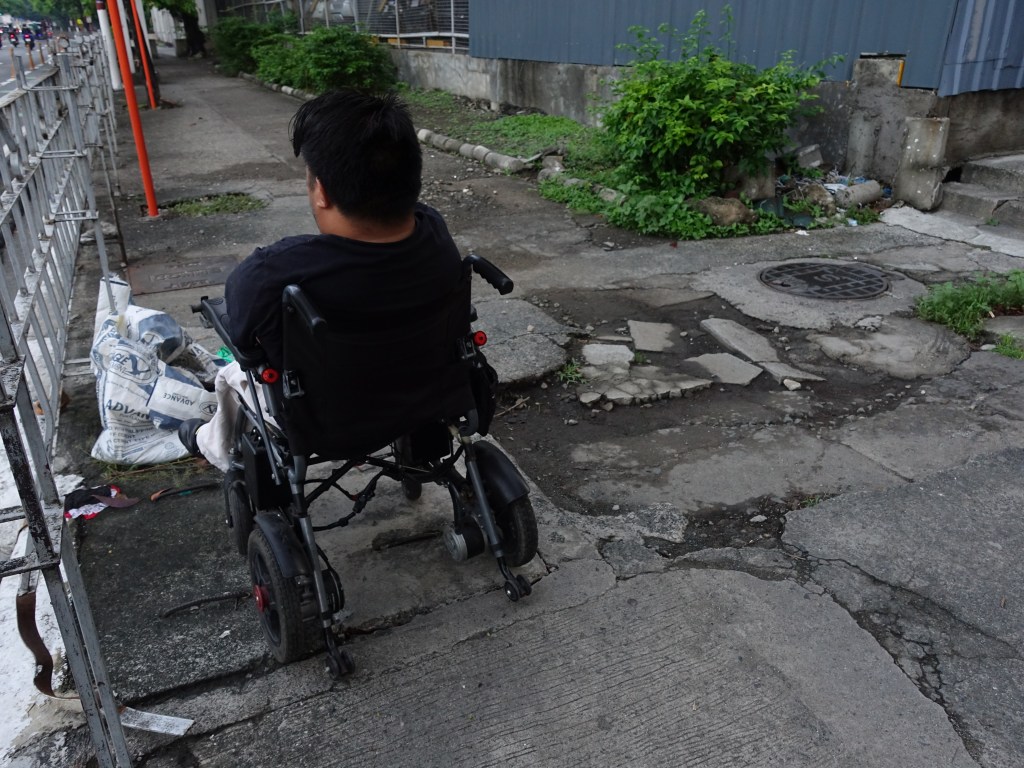
The first thing I noticed was how the street looked. Cracks, gaps, patches of missing pavement. Even for someone without mobility challenges, I felt that the sidewalk was dangerous to walk on. I found myself watching my step more than usual–especially since I was taking photos and was distracted with how my shots looked a good chunk of the time.
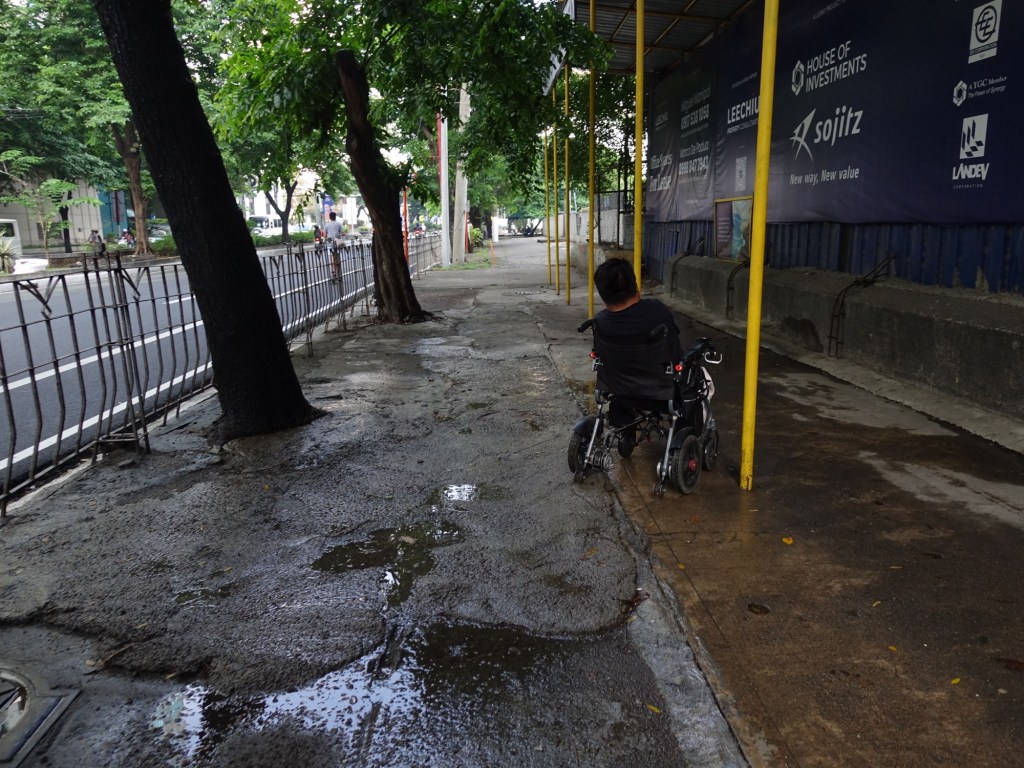
For the wheelchair user in our group, Angelo, navigating meant weaving: avoiding broken sections and adjusting to shifts in elevation. I hadn’t realized just how fragmented a single stretch of sidewalk could be until I saw someone experience it from a lower vantage point.
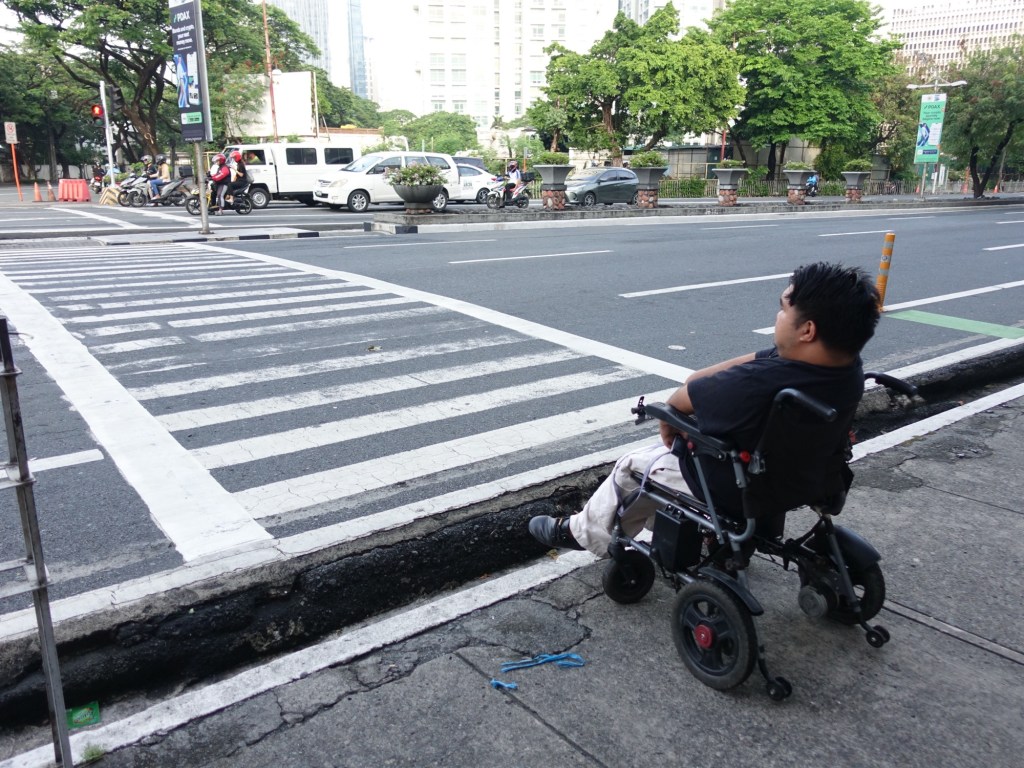
There were some ramps present but many were either too steep or headed straight into the gutter. Jeepneys and other vehicles were also blocking the path as they waited for passengers.
Some pedestrian crossings didn’t have any ramps at all, like the one that crosses GPA to Paseo de Roxas. At one junction, we even had to help Angelo off his device so we could lift it down to the street. That moment stuck with me because it felt so frustratingly and insultingly normal, especially since my mom is a wheelchair user herself.
2. The Shrinking Sidewalk

We passed along several buildings where the sidewalk narrowed abruptly. Like… why? I understand why properties make these changes, especially for compliance or better entry, but I couldn’t help wondering: at what cost?
We tend to treat sidewalks as leftover space, and it shows. So… where are people supposed to go?
3. Little to No Assistance
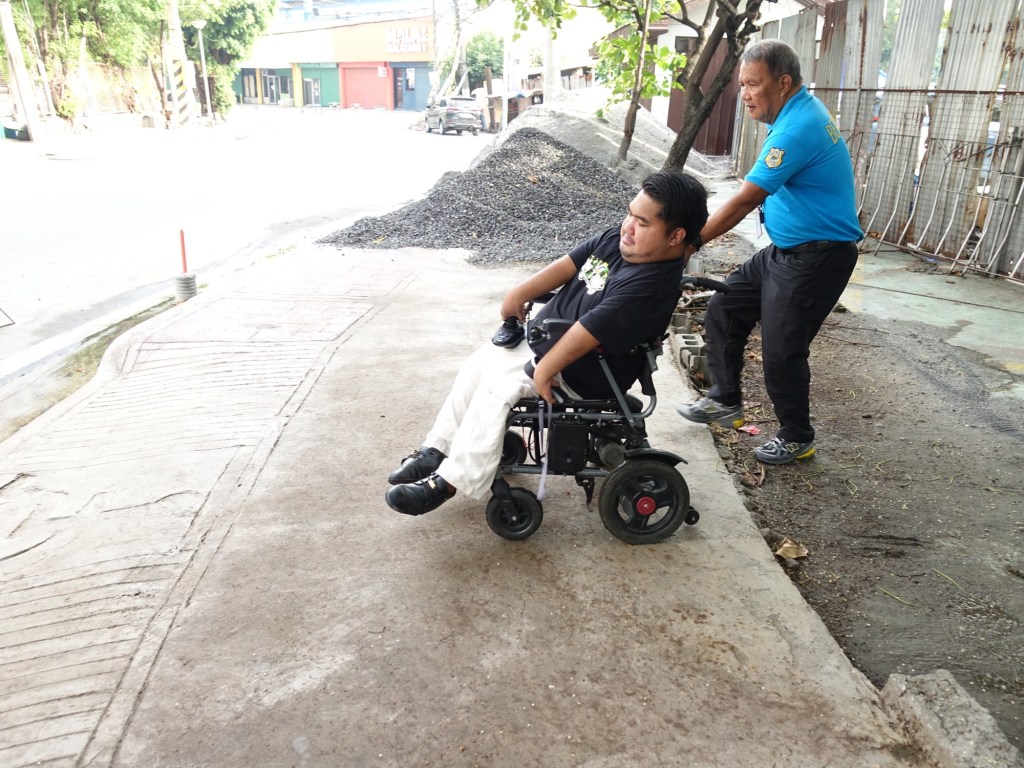
Another thing that stood out was the absence of people who had the authority to help. We only saw one non-traffic marshal the entire time. This was at the intersection of Malugay, Tordesillas, and Gil Puyat. I live near that intersection and there’s always someone at that station. But in other places, there was no one guiding crossings, no one around to help.
In a city as dense as Makati, and in an artery as busy as Gil Puyat, that emptiness felt loud.
While we were walking, I started wondering: What would it be like to cross this road alone in a wheelchair? Or with limited vision? Or with a stroller and a child in hand? I was thinking how I’d struggle if I had to push my bike and walk from the MRT to my place, a la cyclocross.
I had this growing realization that what we call “public” space often isn’t truly shared.
Who Gets to Move?

Unfortunately, it’s always been like this. Our sidewalks, be it along Gil Puyat or in other places, were never designed for the pedestrian of today. Urban planning and design feels like a futurist’s hobby more than a civic responsibility.
And there’s something very telling about how we design for movement in this city. We don’t notice it immediately, but it’s… plain injustice. The roads are smooth, wide, and fast for cars. But the pedestrian infrastructure feels stitched together, like a patchwork of temporary fixes. And if walking feels difficult, rolling through it must feel near impossible.
There’s so much about this city that teaches us to look away. But we can choose otherwise. We should choose to look at where we’re walking.


Leave a Reply