
I’ve been living in Salcedo Village since 2011 but only noticed street-level changes when I started bike commuting in 2022. Due to the COVID pandemic, I also observed the proliferation of food delivery riders on bikes, and more people choosing to get around by cycling.
But car-centrism is still deeply embedded here. The mix of offices, condos, and commercial buildings was never planned with cyclists in mind.
So while bikes are a norm in my neighborhood, the question remains: Where do they fit?
Case Study: Salcedo’s Bike Parking Conundrum


I’ll start my argument with an ongoing issue: Bad bike parking infrastructure.
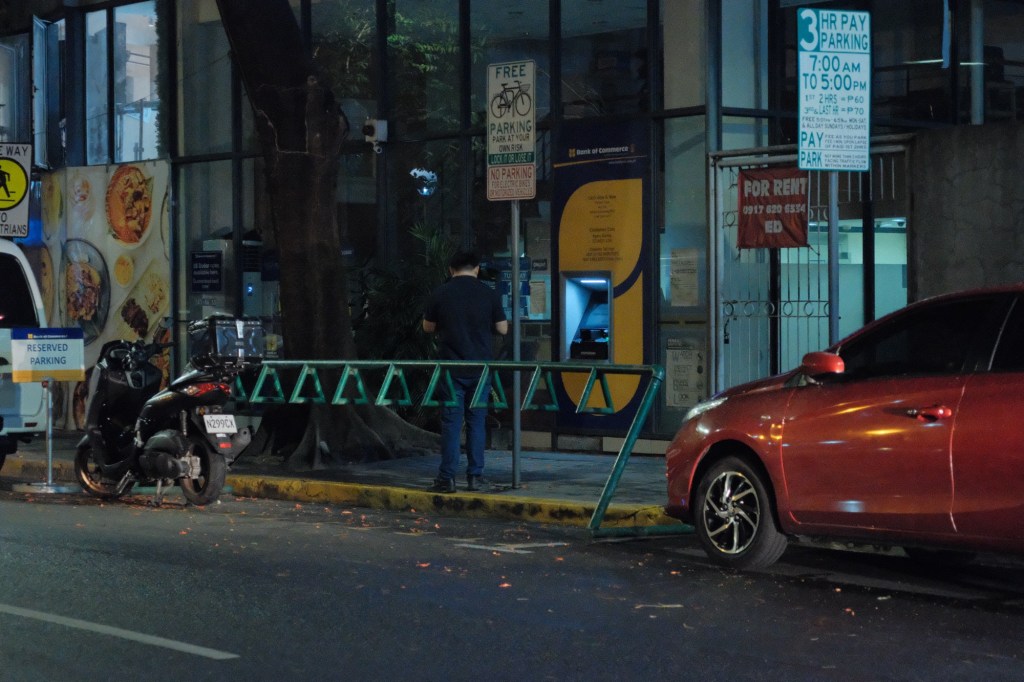
Yes, there are bike racks sprinkled all around the neighborhood. In fact, there are three on my street. However, these green metal structures, while they get the job done, are far from optimal.
A chief complaint is that there’s no true secure frame-locking capability. The triangular design forces cyclists to lock their bikes only by the frame. Ideally, good bike racks should let users lock their bikes by the frame and the rear wheel.
There’s also a lack of consideration for e-bikes or step-through bikes, both of which have different frame builds compared to standard manual bikes. Others whose bikes have smaller frames resort to other workarounds, such as hanging their bikes by the saddle, just to secure them properly.
On top of that, there are many bike racks that are a distance away from establishments, so transport cyclists have to make do with parking their bikes in spaces between buildings, which is risky in itself.

The racks here alone show how bikes are still an afterthought in urban planning. It works if you have no other option, but it doesn’t offer safety and dignity. It’s even more insulting that even MACEA knows of these issues, but they’ll still put up a sign saying “Free Bike Parking – Park at Your Own Risk.”
Why don’t they reduce that risk by providing more substantial racks in the first place?
This is just a small case study of a bigger socio-cultural issue.
Salcedo Village is Only Bike-Tolerant
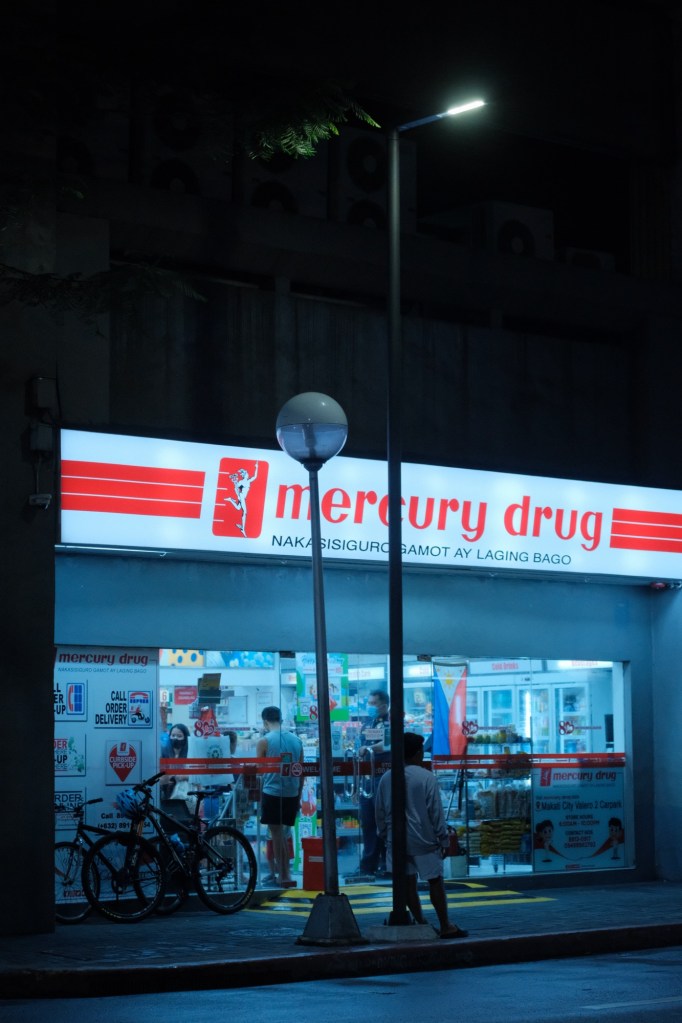

It would be easy to call Salcedo “bike-friendly” because we see more bikes now than we used to. You’ll find riders huddled up in McDo Valero or waiting for orders outside bars and restaurants. You’ll see their bikes leaned against the gutters, or some of them taking a quick smoke break on the steps of office buildings. But all of that is happening in spite of a car-centric system in place.
As a resident looking further in, this is what I can say: Salcedo Village is only bike-tolerant. There’s only a small ounce of respect for those who risk their lives to deliver our lunches, snacks, and dinners. They weave carefully along traffic. They bike beside cars parked on the street at the risk of being doored or crashed into if a vehicle starts to move. They get honked at if they’re in the middle of the lane.
There aren’t even bike lanes in wider streets for them to use.
It feels like we’re improvising every day, because Makati, in general, never planned for people on bikes in the first place.
Bikes, Thus People, Need to be Prioritized
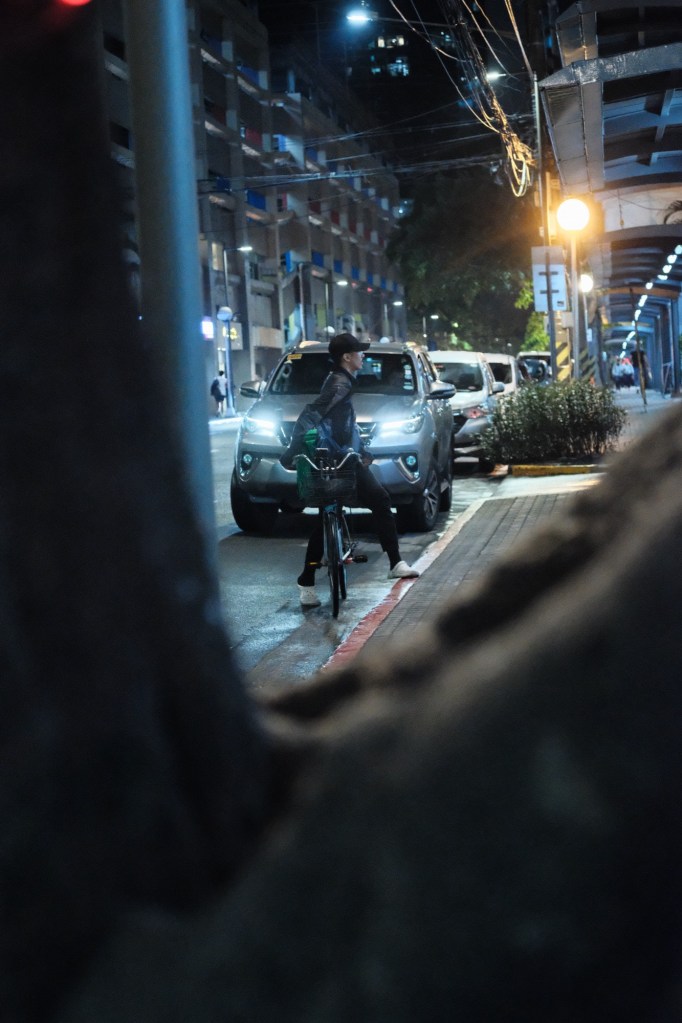
When delivery riders or other transport cyclists are left to fend for themselves, it says so much about how we value essential labor. These riders move quickly and dodge traffic just to deliver food that we consume comfortably indoors. Yet we offer them no safe passage. Not even a spot to wait that isn’t in the way.
What would it look like to plan for them, not around them?
Literal food for thought.
I honestly don’t have any concrete solutions in mind, but I know it starts with a change in mindset. Salcedo needs to be re-planned for human-scale activity… not just vehicle flow. Maybe the smallest change could be telling establishments have street-level parking within their property, like Tyler’s Cafe. Another would be to push back on buildings that encroach into public space, and treat sidewalks not as overflow storage, but as a right of way for those who actually move.
Because… think about it. If we designed with the delivery and transport cyclist in mind, the rest of us would benefit too. Yes, even car users.
Dignity & Empathy for People, On and Off the Bike
Salcedo is a cycling neighborhood, though most working cyclists go unseen unless they’re in the way. Without functional infrastructure, they are also the most exposed. No amount of band-aid solutions can protect a FoodPanda or Grab rider from a system that refuses to account for their presence.
Dignity is, in this sense, about being acknowledged. And infrastructure is part of that acknowledgment. It tells riders, and the cycling community at large: You’re part of Salcedo’s story.
It’s ironic that Salcedo Village prides itself as a mixed-use area, but it can be hard or challenging to move around. It goes back to how MACEA creates and implements policies for the neighborhood. Yet, bikes move more efficiently than cars do, and these riders make it work because they have to. So they shouldn’t have to “fit where they can.” That phrase might sound neutral, but it’s damning.
Because when bikes only fit into the cracks of the city, it means the people on them do, too.
And that needs to change.


Leave a Reply