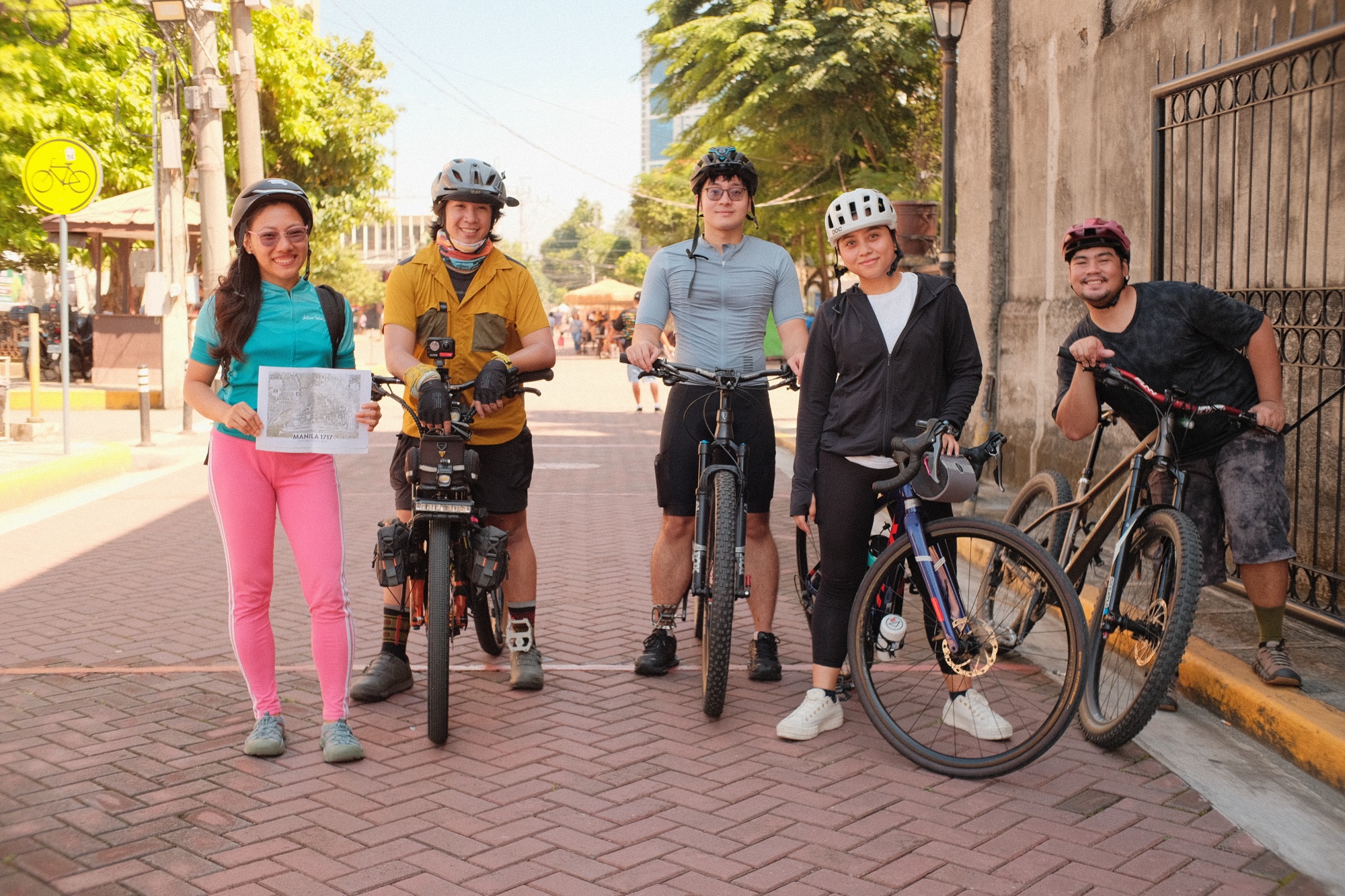
Manila without a doubt is a city full of surprises, even if you’ve been in and around it for almost all your life. It’s much more fun to explore the Philippine capital by bike, but as we continue to cycle along her streets and alleyways, we begin to open our eyes to what could have been if we all banded together to preserve her beauty, instead of looting her spoils.
On August 3, I joined Renacimiento Manila’s bike tour around Binondo/Escolta, San Nicolas, and Intramuros. For some reason, this one tour made me think more than usual.
About Renacimiento Manila’s Bike Tours
Renacimiento Manila, a heritage preservation organization, hosts bike tours around Manila’s districts six times a year (January, March, May, July, September, and November). This is one of Bea Dolores’s main projects for the advocacy as she’s also a regular bike commuter. With her is James Bansigan, a Manila native and Bea’s beau.
I regularly sign up to join these tours as sweep and additional documentarian because I share Bea’s passion for heritage preservation and documentation. Pair this with cycling and you’ve got yourself a unique way of learning about Manila.
My only regret is not bringing the Canon Macro 100mm F4 lens because the details of these buildings deserved a close-up. And maybe getting a wider lens ahead of time. Oh well.
Follow Renacimento Manila on social media to see their tour schedules (walking tours also available)!
Escolta, Binondo
We started at the First United Building in Escolta and biked through parts of Binondo, San Nicolas, and Intramuros. Our last stop was at Papa Kape in Luneta Park, by the site of Jose Rizal’s execution.
Escolta was the Makati Central Business District of its time, with department stores, banks, and other commercial buildings lining up the streets and riverside. Situated near the Pasig River, Escolta for centuries saw the world and the world saw Manila.
While some buildings stand abandoned or poorly maintained, several are still in use and more are in the process of being preserved by private institutions. The First United Building, Calvo Building, and El Hogar are perfect examples of pre-war buildings in this area.
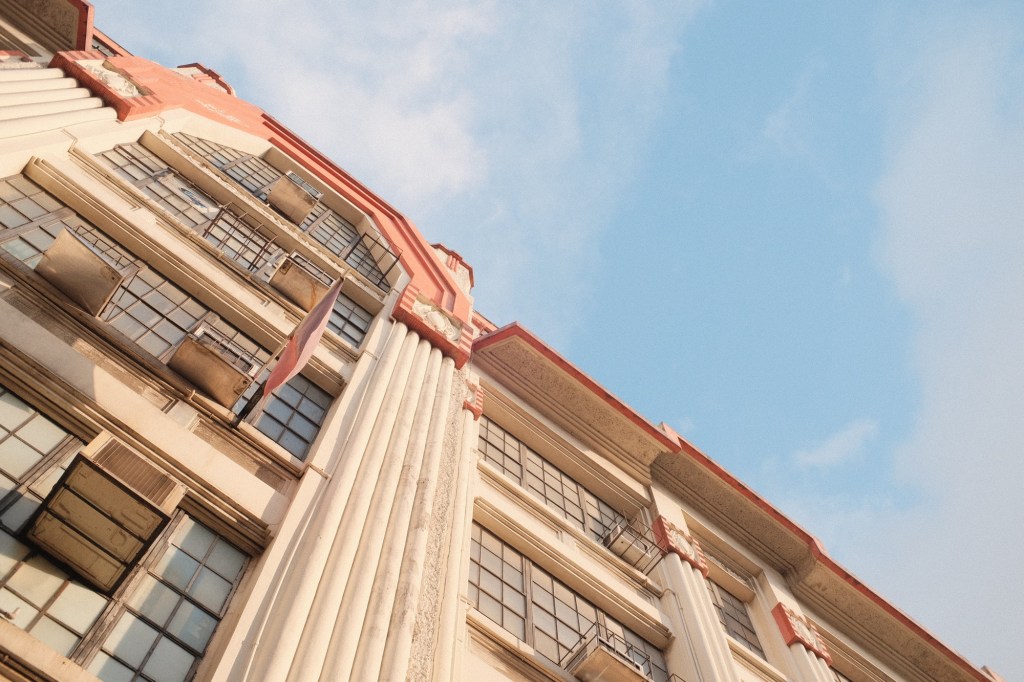
Our meeting place for the tour was the First United Building. Previously known as the Perez-Samanillo Building, it was once the tallest building in Manila and was home to upscale offices, including Berg’s Department Store on the ground floor, a go-to for Manila’s high society.
Built in 1928 and envisioned by Andres Luna de San Pedro, Juan Luna’s son, it exemplifies Manila’s golden era of Art Deco.
Today, it houses the First United Building Community Museum, Hub: Make Lab, a co-working and retail space supporting local creatives, and Fred’s Revolución cafe and bar.

Our second stop was the Calvo Building, built in 1938 by Angel Calvo. It was the original site of the Radio Heacock station, now known as DZRH. Today, it’s home to the Escolta Museum, highlighting memorabilia, photos, and stories from Escolta’s peak era, and some restaurants and a pharmacy on the ground floor.
One thing I love about the Calvo Building is that one can observe an obvious shift from European styles to early modernism, evident on the details of the edifice.
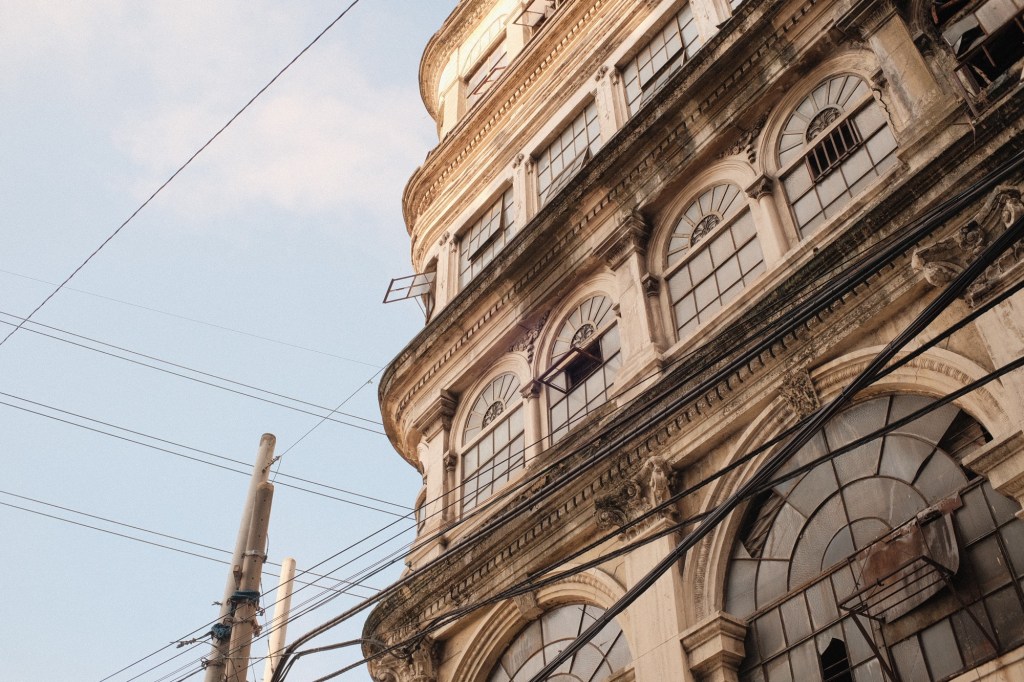
We also took a quick break next to El Hogar, one of the oldest buildings along the Pasig riverside. It was built in 1914 by Ramon Irureta-Goyena and Francisco Perez-Muñoz, showcasing beaux-arts architecture with neo-classical influences. It was a gift to Carmen Zobel de Ayala and her husband.
While it did function as a commercial building back in the day, it now overlooks the river, vacant and decaying. This is one of those buildings that has seen several changes of hands in an attempt to preserve it, but no one has yet to take charge and give it a second life.
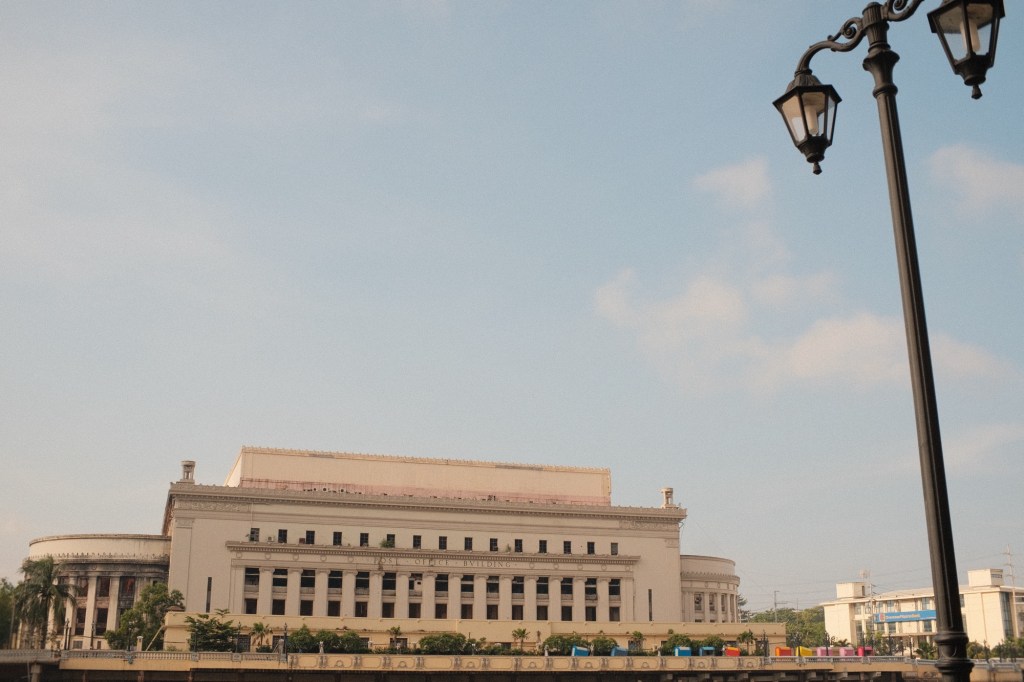
Across El Hogar, we can see the Manila Post Office. Back in 2023, it was consumed by flames and only its exterior remains.
Situated just by the Jones Bridge, the Manila Post Office was constructed during the American occupation as part of Daniel Burnham’s 1905 master plan for Manila: make the Philippine capital the counterpart of Paris or Washington D.C., with wide boulevards and really, really, large buildings.
Beyond their architectural and historical significance, the First United Building, Calvo Building, El Hogar, and the Manila Post Office mirror how highly globalized Manila was prior to World War II. We were really integrated into global systems of commerce, culture, and urban modernity that I even joked during the tour, “We were the first Shenzhen Sorting Center,” as a response to the fact that Chinese goods would come to Manila first before being shipped to the West.
After savoring the sights in front of us, we made our move to San Nicolas.
San Nicolas Fire Station


Did you know that fire stations are also historical? Built in 1903, the San Nicolas Fire Station is one of the first and oldest fire stations established in the Philippines, as a response to the number of warehouses in the area–all of which could catch fire at any time. But it’s more popular for something else: back in the day, firefighters held makeshift boxing matches in its gym, fostering an interest in the sport, especially among the youth.
Over the years, it went through a bit of modernization, but through careful planning, the fire station kept its original elements: fireman poles, wooden interiors, etc. There’s also a small gallery and exhibit showcasing the station’s history and technology used during the American occupation.
Pedro Guevara Elementary School

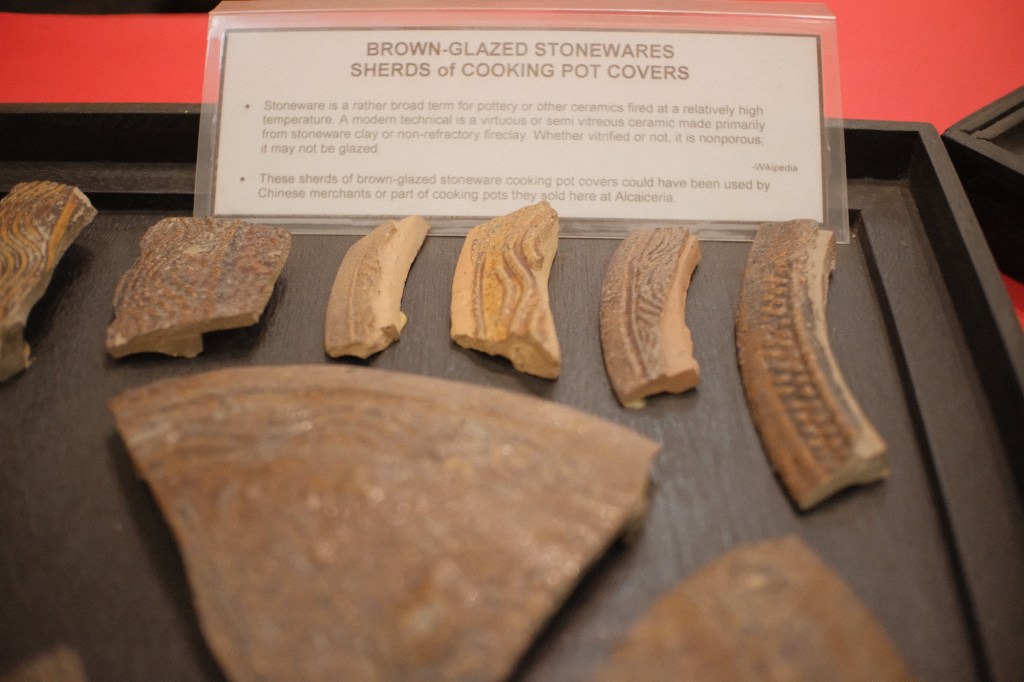
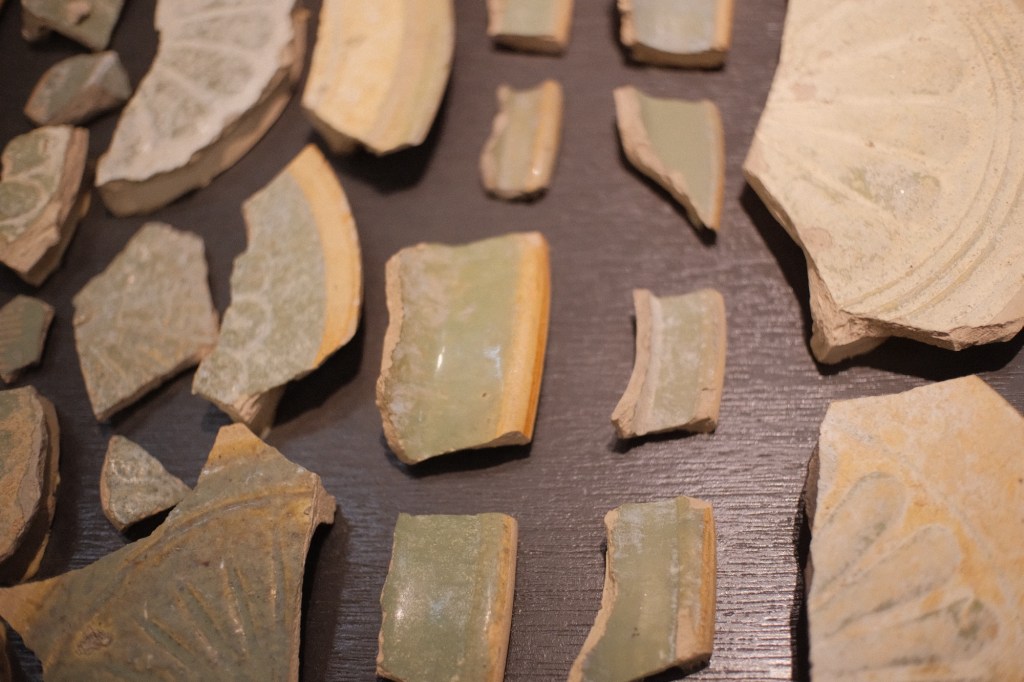
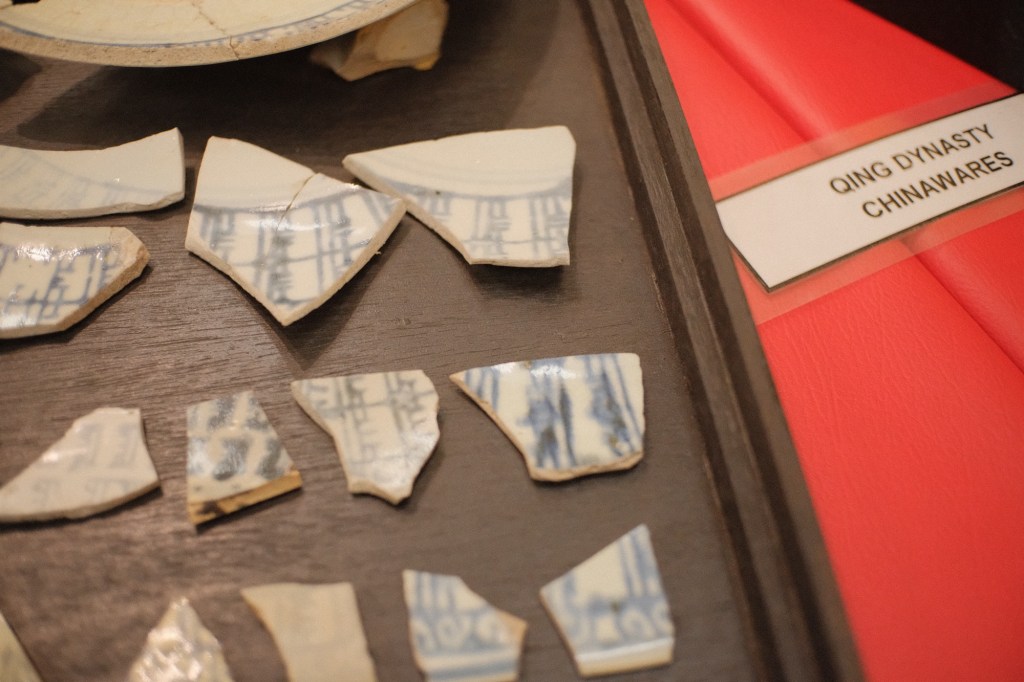
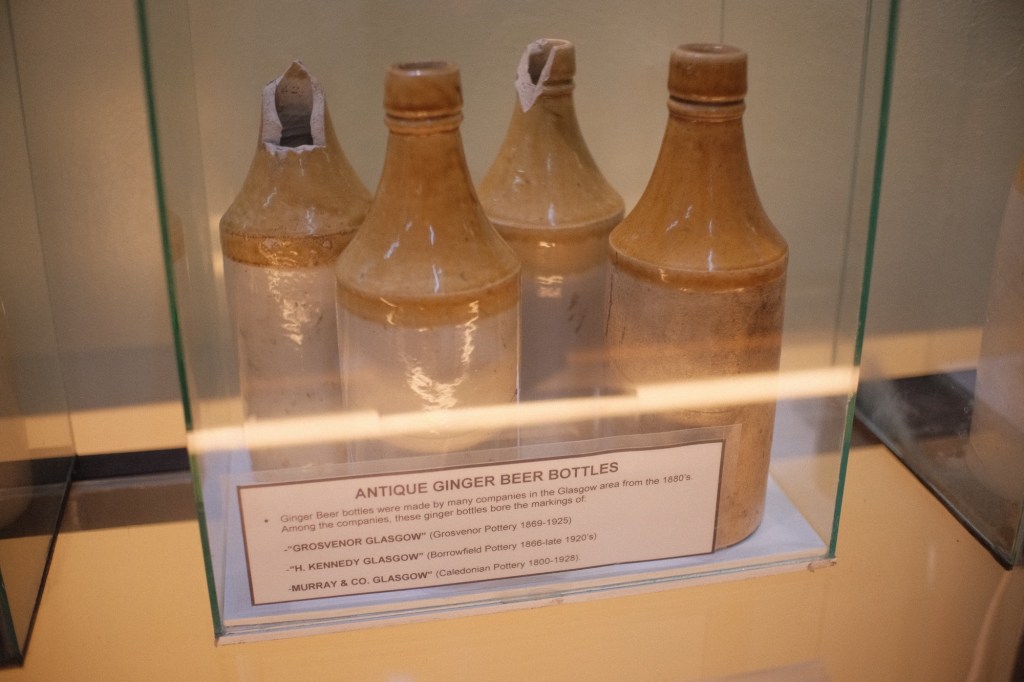
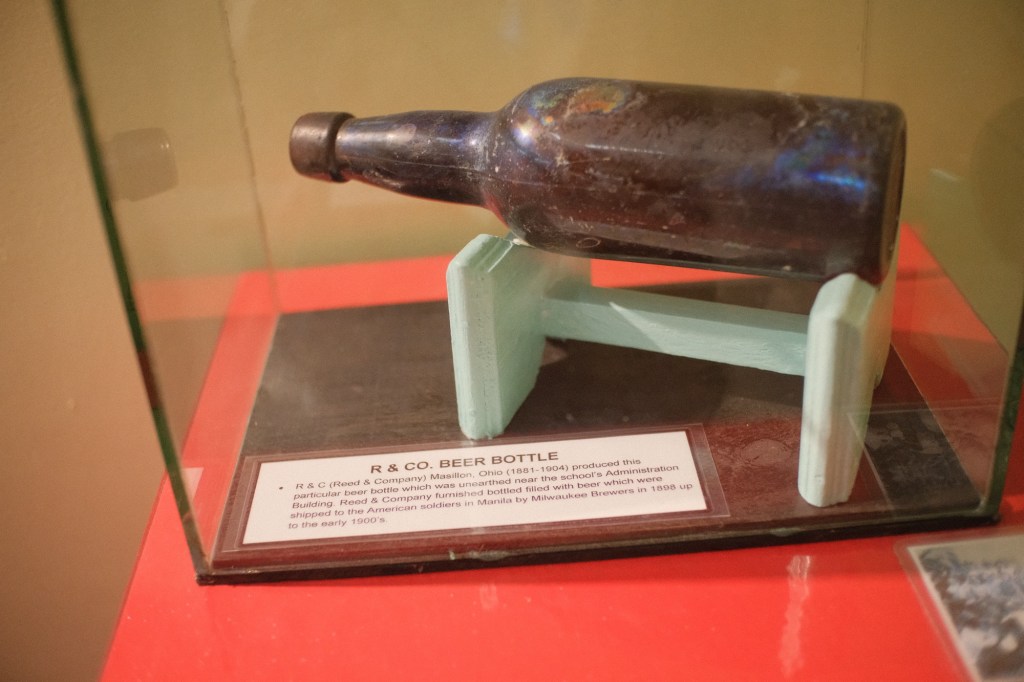
It’s not a hidden museum by any means, but the Pedro Guevara Elementary School is home to a collection of porcelain shards, old bottles, and bricks, most of them dating as far back as the mid-1700s.
The building, after all, stands above the old Real Alcaiceria de San Fernando, an octagon-shaped silk market and customs house for Chinese merchants (and it was probably an opium den, too). Sir Wilven (right most on the photo above) has been curating these relics since 2011, and through his efforts and support from the school administration, we can see that heritage documentation can be organized well enough, if encouraged and assisted properly.
There’s no entrance fee and everyone is welcome to come in and even touch the exhibit (there’s a cat that likes to lick the adobe stone… don’t ask), as long as it’s approved by the admin.

Bahay Na Bato Around Binondo and San Nicolas
We continued riding around parts of San Nicolas, noting the bahay na bato (stone houses) that are still standing today, despite the neglect.

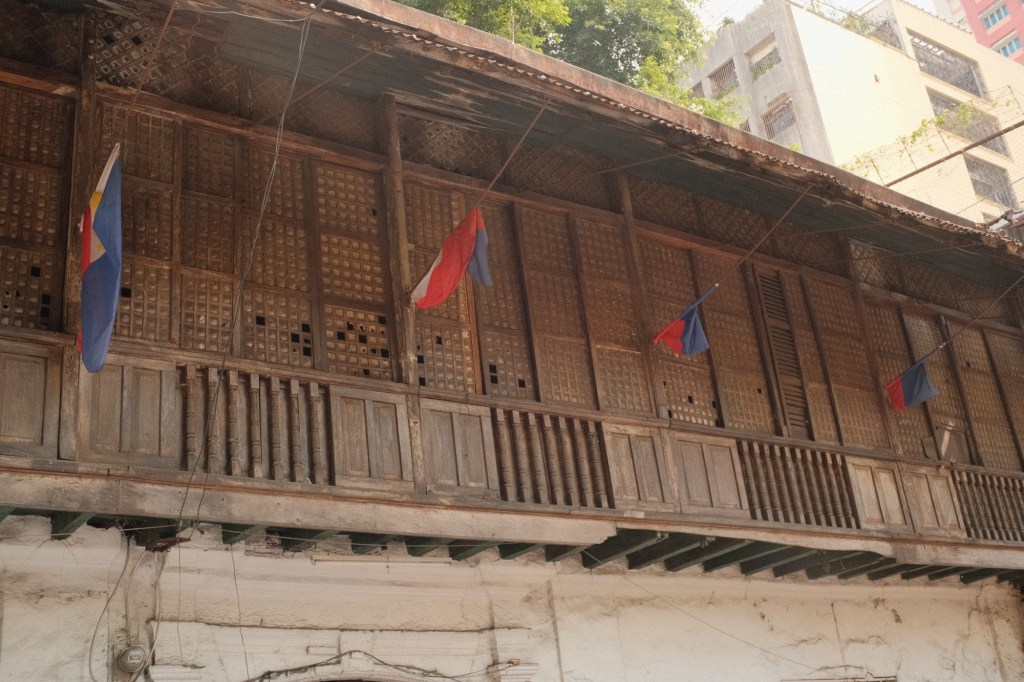
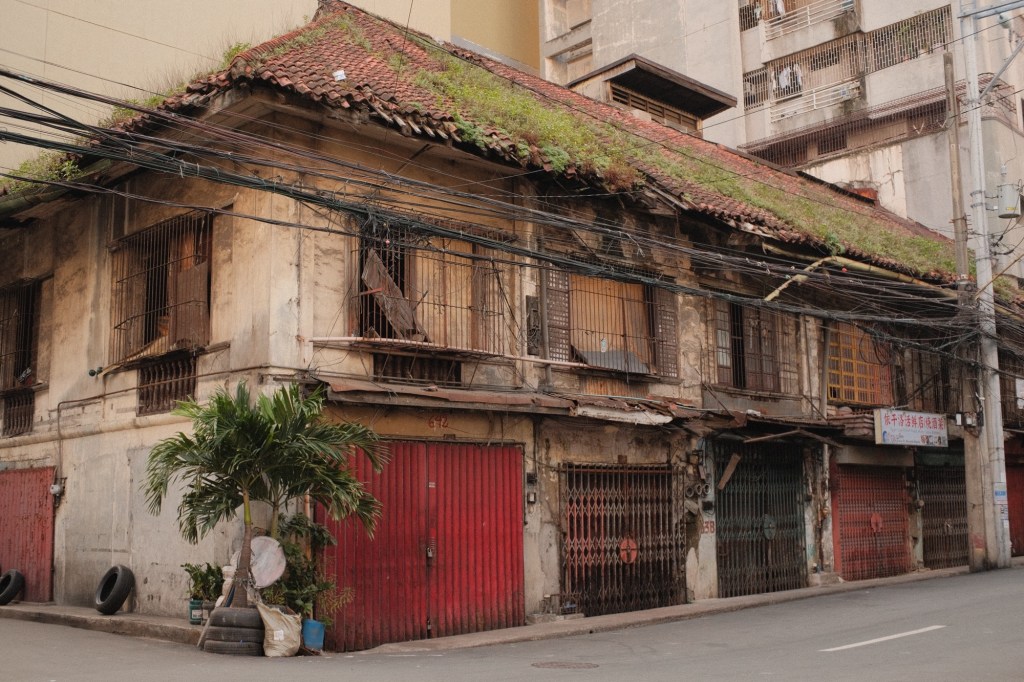
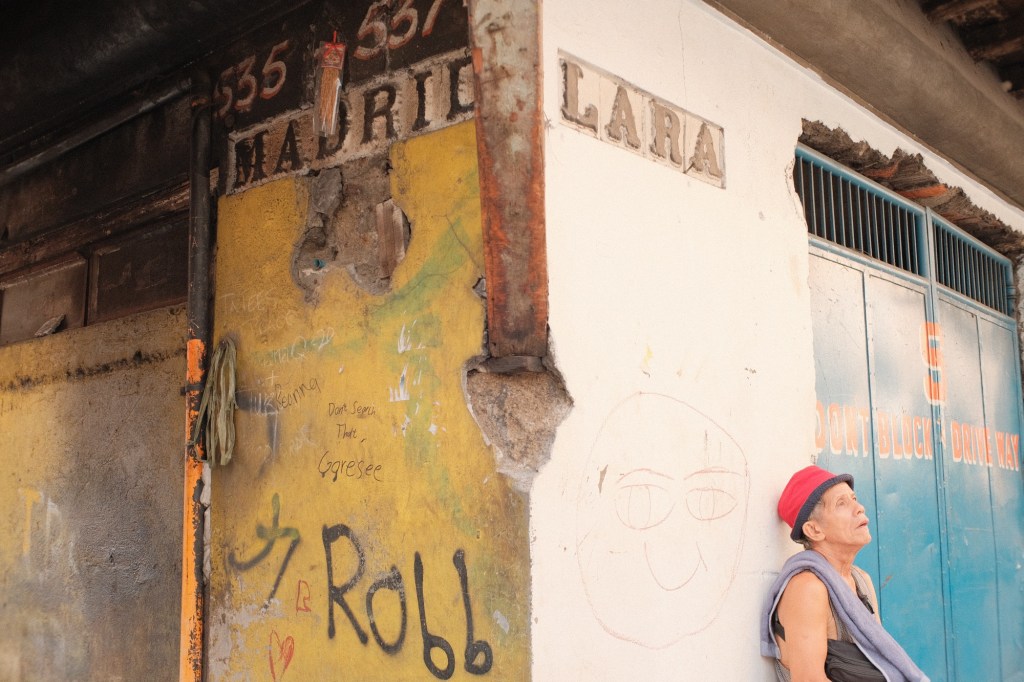
Some homes, like the Sunico House in Calle Barcelona corner Calle Lara, is well-preserved due to family interest. The Luna Ancestral Home in Urbiztondo St. has a historical marker but needs more love. And a house with terra cotta roofing has seen better days – though during the rainy season, the roof does come alive with blossoming flowers.

Baluarte de San Diego, Intramuros


For the second to the last stop, we biked our way to Intramuros on Jones Bridge to go to Baluarte de San Diego.
It’s one of the oldest stone fortifications in Intramuros, but its more popular for the cistern: a large, stone-lined water reservoir located within the bastion. By collecting rainwater, it allowed nearby residents to have a reliable water source.

There’s also this funky sugar cane machine, which we all thought was some steampunk cannon or train engine. I think there should be a sign in front of it that says what it is and what it does.
Note: Admission is PHP 75 (regular) or PHP 50 (students, seniors, Persons with Disabilities), open daily from 8 AM to 5 PM (last entry 4 PM).
Luneta Park – Rizal’s Execution Site
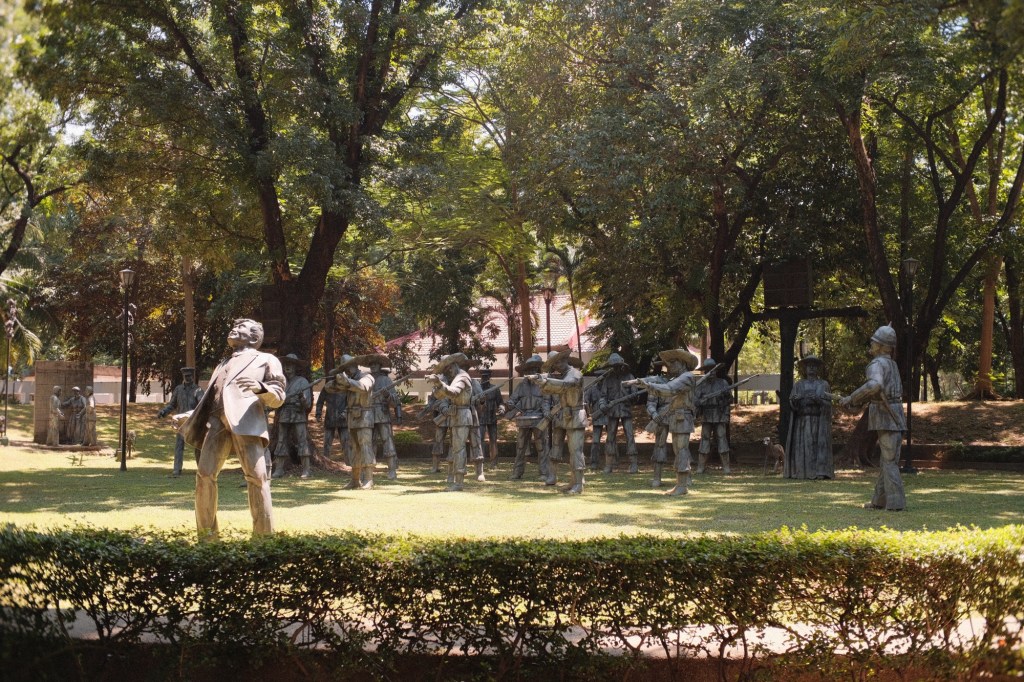
Our last stop was at Papa Kape in Luneta Park, just by the site of Rizal’s execution. I think it was a poignant end to our tour: seeing how one man (among so many) fought for our nation’s freedom, only to be shot, unwillingly, by his fellow Filipinos (or indios at that time). This was one of the last power moves of the Spaniards, who were growing afraid of our national consciousness.
And today, we’re pretty much in the same cycle: shooting our own society and culture down, sometimes unwillingly, at the command of an unknown or unnamed power we seem fearful to disobey (sometimes Filipino, sometimes foreign). This post-colonial, post-war trauma is strangling our soul as a nation, and we saw that during this tour.
Quo Vadis, Manileno?

So I end this piece with a question: Where are we going?
It’s sad that we as a people have no united passion for heritage preservation. So many places are disappearing due to indifferent redevelopment and neglect. It comes with a car-centric mindset, it seems.
We as the children of Manila are still feeling post-war truama, culturally, socially, economically. We are feeling the weight of hyper-commercialism that lacks the public life, walkability, and cultural integration that made these parts of Manila charming.
Perhaps “old-world charm” means accessible places, aside from ornate buildings.
From a cycling perspective, that nostalgia also reveals how walkable and bikeable old Manila once was. The narrow streets, human-scale buildings… these were built before cars and skyscrapers loomed over everything.
But the bones of a livable, connected city are still here. We saw glimpses of that during the tour: A time when man and structure were connected to each other; both were part of a street life that encouraged movement and community.
Cycling through these spaces helps Manila keep its memory alive a little longer. Hopefully.
See you in the next Manila bike tour.


Leave a Reply