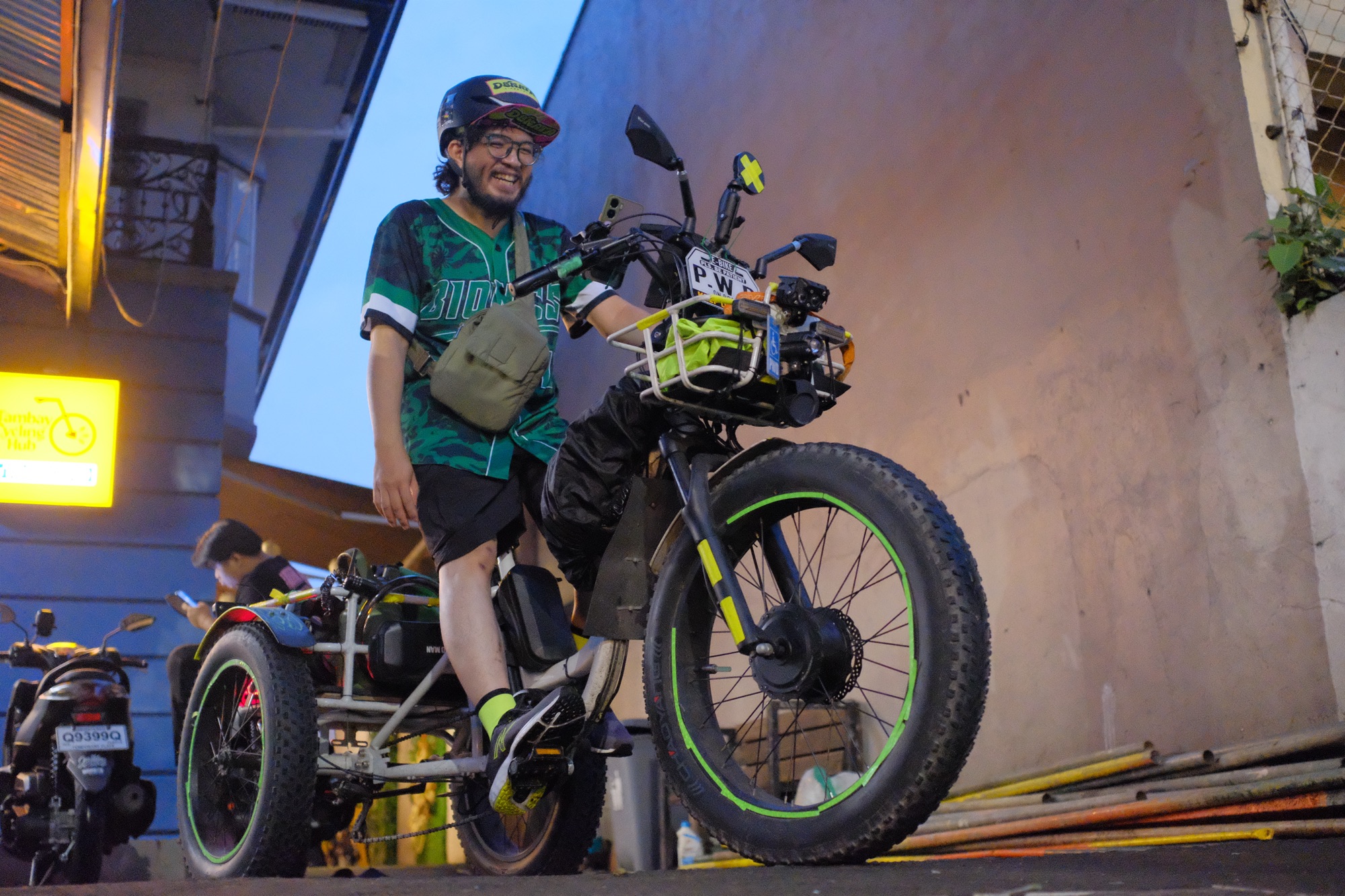
November is Men’s Mental Health Month (also called Movember), and I want to have some space for this on The Trip Chainist.
Did you know that Filipino men die by suicide at more than twice the rate of women? One review reports roughly 4.3 men per 100,000 population, compared to 2.0 for women. In some estimates, male suicide rates can be as high as 8 per 100,000, highlighting the urgent need for awareness and support.
Men don’t always talk about their mental health. In the Philippines, our machismo society teaches men to “stay strong.” But beneath the surface, men are suffering alone, wrestling with thoughts and emotions they feel they cannot share. These struggles are real and urgent.
Addressing men’s mental health now creates a culture where they can speak openly, seek help, and live fully. And Leno Morin is opening that door to all with his story.
Because for him, community and movement helped him find ways to cope and thrive.
Personally, his story reminds me of why I bike, and why I continue to show up, especially during one’s darkest moments.
Leno’s Story (Men’s Mental Health Matters, too)

Leno knows what it’s like to feel trapped inside your own mind. His journey with mental health didn’t start with a diagnosis or therapy session.
It started with loss, isolation, and unanswered questions.
He lost his father at the age of twelve, and soon after, his grandfather. School no longer felt like a refuge. Two weeks into high school, he dropped out. Life, for a young teenager, became a series of shock and grief. His world was unraveling. Adding to the confusion, the truth about his father’s death was hidden. So for years, he carried the weight of secrets alone.
By sixteen, Leno was already navigating a maze of grief, family dynamics, and mental health struggles. Isolation became his constant companion. At seventeen and eighteen, he attempted suicide twice. He describes his first attempt, an almost absurdly “funny” moment in retrospect, as a mix of desperation and confusion. He was trying to survive, searching for a way to end the pain without fully understanding the cost.
Even as an adult, depression lingered. At eighteen, he tried therapy and medication but felt stuck. He describes it as being trapped in the mind of the twelve-year-old version of himself: A mind frozen by grief, trauma, and unresolved loss. Psychiatrists could prescribe medicine, but they couldn’t pull him through the darkness. “If you really want to save my life,” he said, “Pull me, push me, do something.”
Yet, amid the isolation, responsibilities kept him going. He began taking care of his dog, prioritized his family’s well-being, and continued with his routines and hobbies. These became reasons to stay alive. Over time, he noticed patterns in his family: Inherited traits of depression, anger, and obsessive tendencies. He realized that mental health wasn’t just a personal struggle, but it was generational. Understanding this didn’t erase the pain, but it helped him put it into context.
But something felt missing.
The Plot Twist Purchase
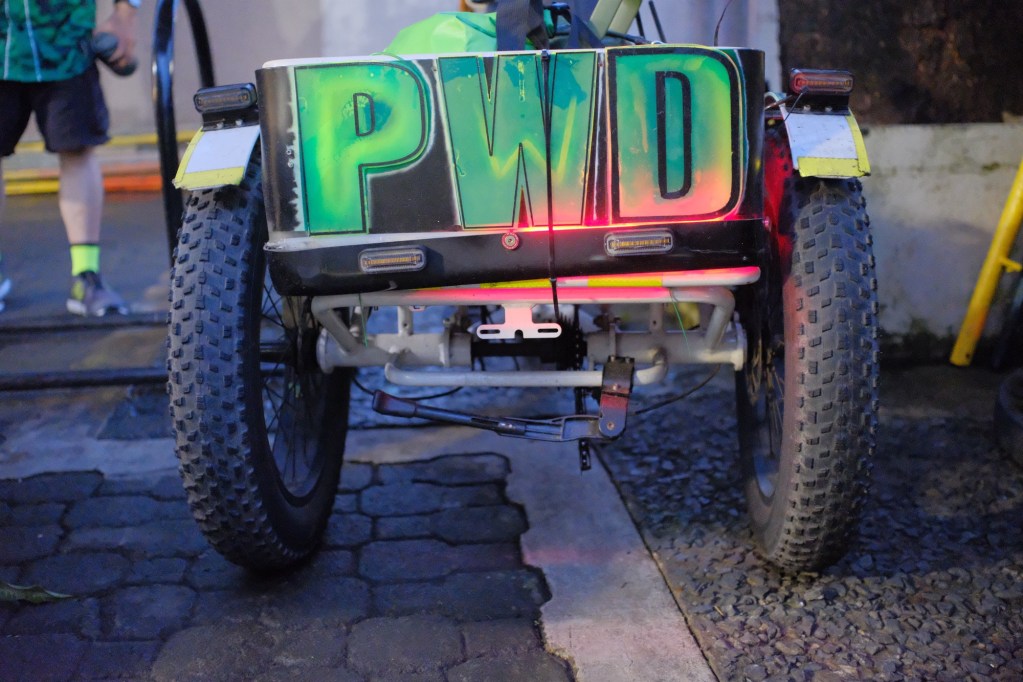
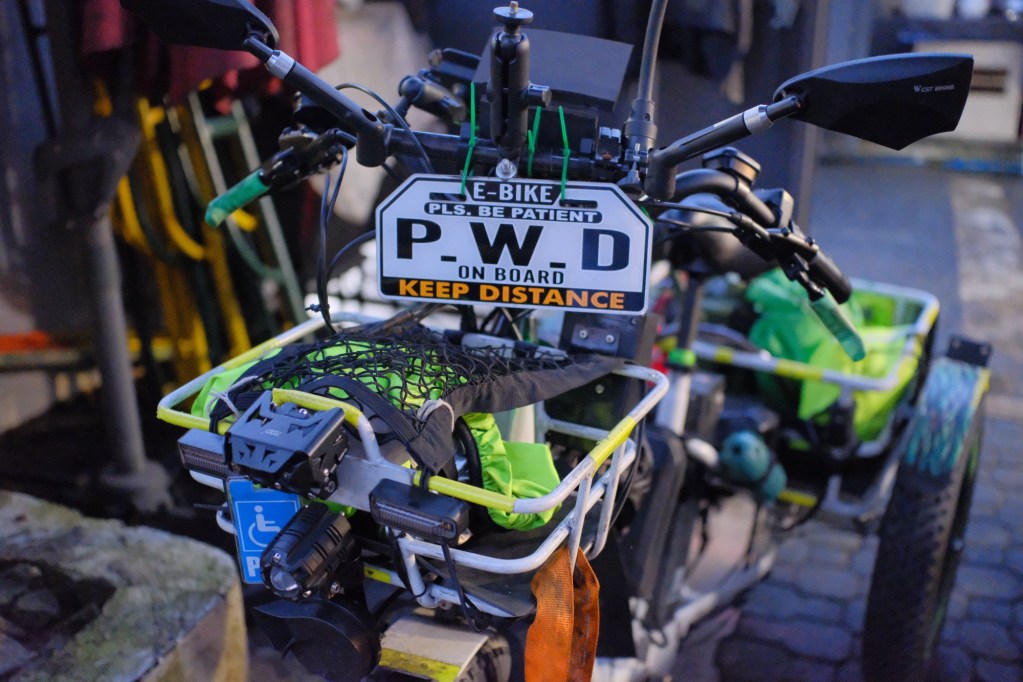
Leno didn’t buy his e-trike on a whim. He had an e-scooter at first, but he had a collision while using it. With his own mobility vehicle, he could get out and experience the world. Nothing was going to stop him.
With help from his mom and insurance money from his father, he bought the VTuvia FT2 e-trike. When it arrived, something shifted. For the first time in a long time, he chose something that was just for him.
He didn’t start confident… well who does? His first two days were just laps around the village. Then he joined a ride with Ian How that started in Mindanao Avenue. Along the way though, his battery died in the middle of the street. He had no backup plan. He was a total beginner, stuck on the road, pushing an e-trike with a dead battery under the midday sun.
Leno walked into a motel—the first one he saw along the road—and asked to charge his bike. After six hours of charging, he rode home.
You’d think he’d quit. But no. From there, he kept riding.
On June 12, Independence Day, he rode alone from UP to Intramuros, then to Roxas Boulevard, Pasay, and EDSA, barely two months into cycling, traveling around Manila on his own.
This experience gave him something powerful: Proof of life.
Author’s note: There’s more to Leno’s story that I cannot include, either due to the sensitivity of the topic or the need for conciseness. If you’d like to know more about Leno and men’s mental health in detail, you can always reach out to him!
E-trike Commuting Towards Better Days

Leno now lives with a clear intention: To live life fully until he is satisfied, on his own terms. Today, he seeks connection, freedom, and moments that remind him he’s still alive. And he does that with his e-trike.
Bike commuting didn’t start as a passion for Leno. He just wanted to go out. After so many years of feeling stuck, the e-trike finally gave him control, and ultimately, freedom.
He rides his e-trike to community events around the Metro and explores new places. Through the bike commuting community, he maintains friendships that ground him. He laughs at how life surprises him, how a simple decision to go outside became the beginning of a journey toward community and self-understanding.
The same man who once felt frozen at twelve now moves forward with hope. His life is proof that even the heaviest grief can coexist with growth.
His journey is ongoing. Yes, there are still difficult days. But he is no longer alone, no longer trapped in silence. And we in the bike commuting community ride abreast with him, even beyond men’s mental health month.


