
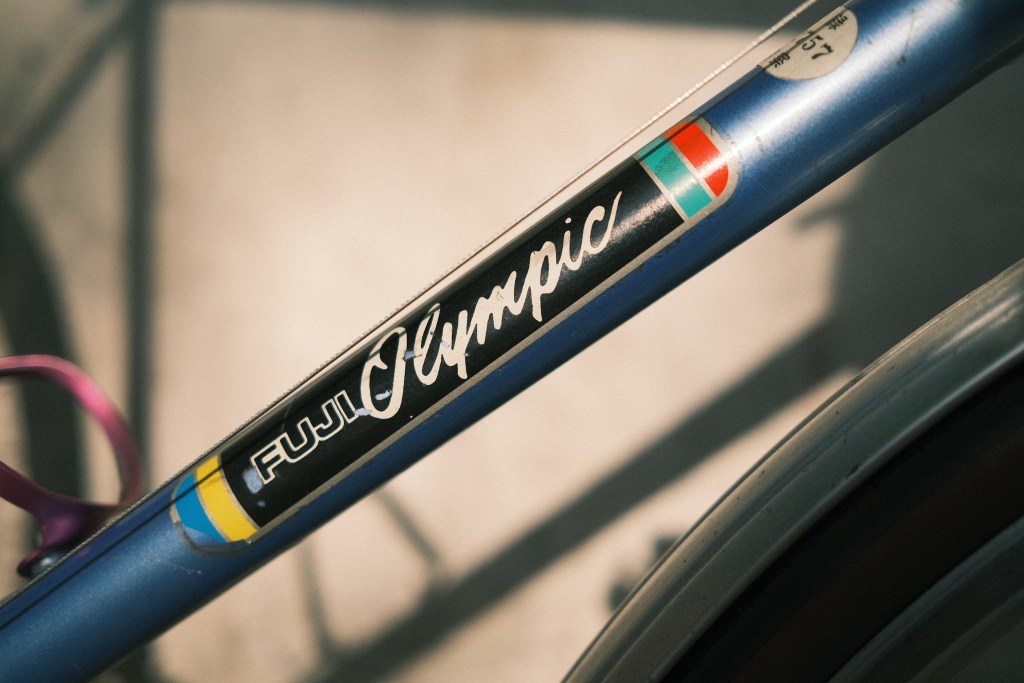
One does not simply wake up and decide to get a new bike—unless that person is me. This is another story of an impulsive, but informed, bike purchase, featuring a 1978 Fuji Olympic touring bike.
The thing about impulse buys is they’re usually not made out of necessity, but out of circumstance. I had just sold four bikes consecutively, so there was room in my stable for another bike.
Meanwhile, a Facebook friend posted his Fuji Olympic for sale because he needed to make room for a new bike. I didn’t bite at the first glance, but I managed to convince myself the next time I saw the listing.
The deal was too good to pass up. The bike was my size; I knew the seller; and the build was tasteful with an attractive price. I don’t think I’ll even find a rando bike this affordable again.
A spontaneous meetup
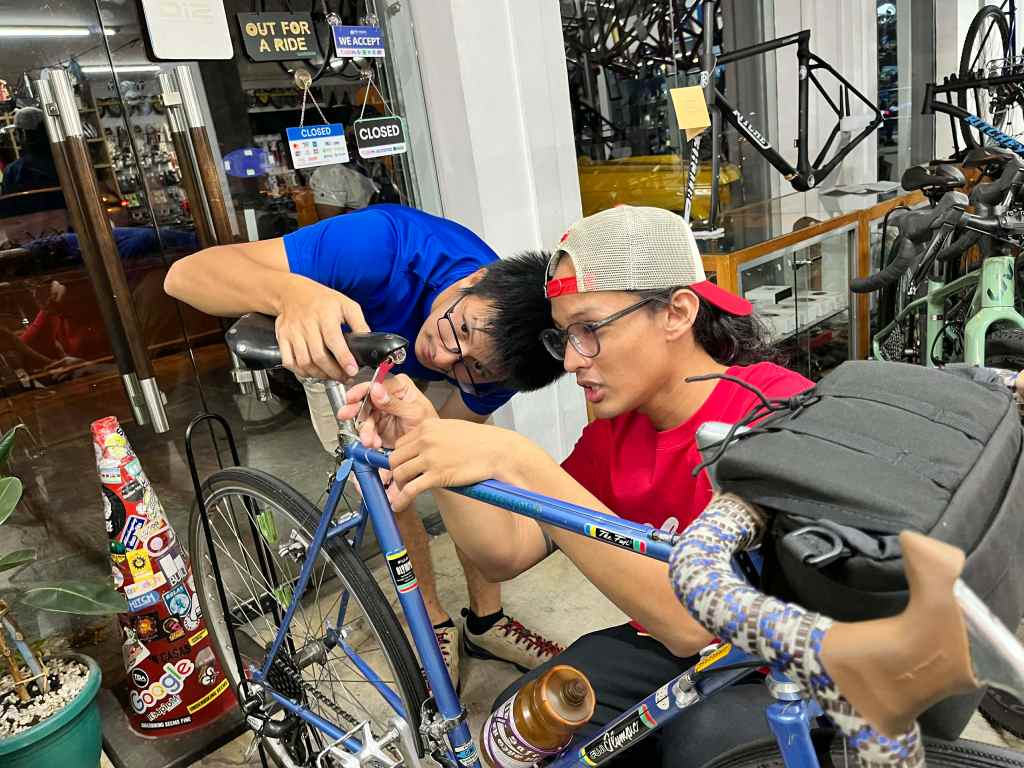
I messaged the seller around lunch time about his bike and after asking him a couple of questions, we agreed to meet at 5pm in Built Cycles Makati. I was pretty much convinced that I was going to get his bike. I just had to see and try it for myself to be safe.
Upon opening the doors of Built, I saw the Fuji Olympic resting on one of the stands. Since the previous owner was much taller than me, the seatpost had to be lowered—a lot—until we noticed it couldn’t be adjusted any further.
We had to swap it out with a much shorter one. Because of the antiquated seatpost design, adjusting the Brooks leather saddle was a pain in the ass, just like sitting on it. I felt that I was too near and the saddle was a bit low. But that was just enough for me to give the bike a test ride on the side streets of Poblacion.
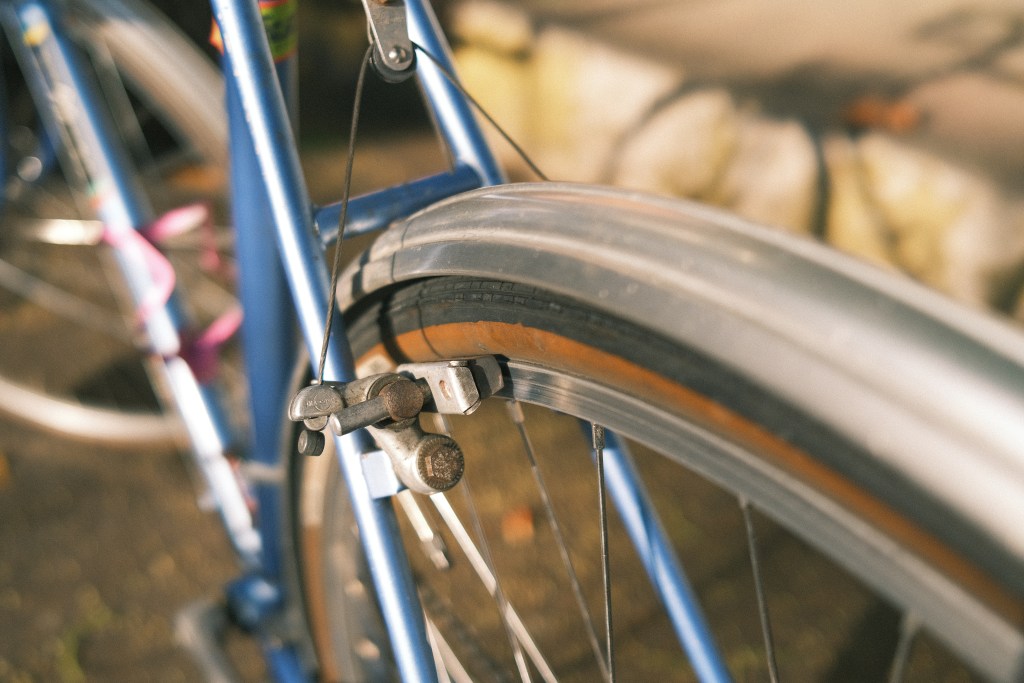
I was taken back to the past the moment I started pedaling the Fuji Olympic. The aggressive and awkward cockpit, thin tires, and sketchy shifting reminded me of my first ride with my Bridgestone Eurasia. Surprisingly, I could slow down and stop while braking from the hoods (this just shows how bad the cantilever brakes were on my Bridgestone Eurasia before).

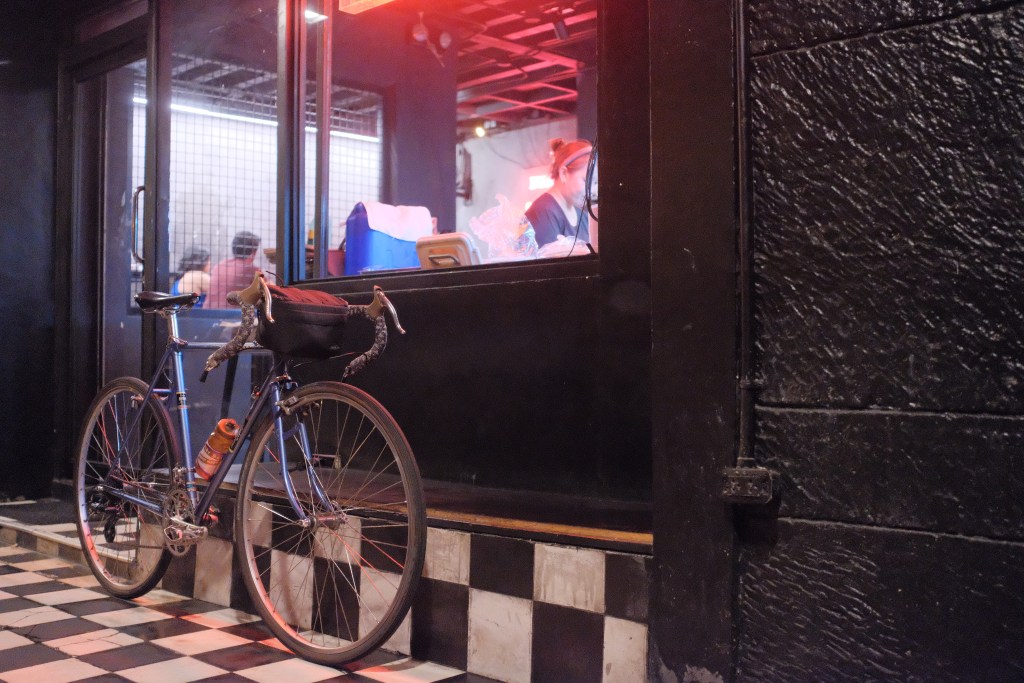
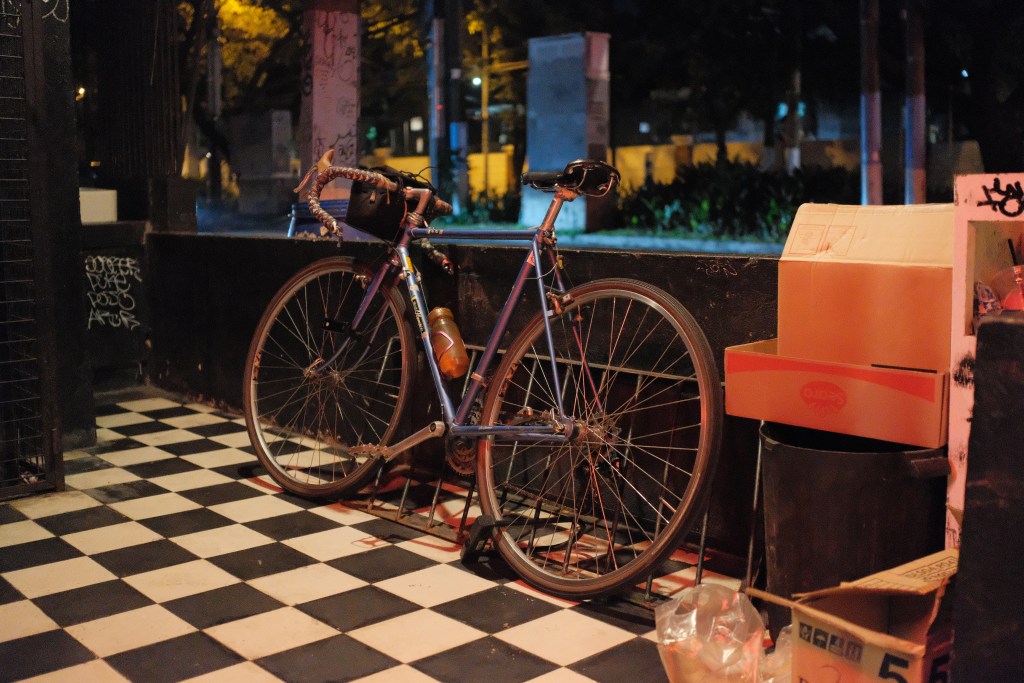

Happy New Bike Day!
After the transaction, I had dinner with Myta at Tetsuo beside the bike shop. It was a fitting occasion since I locked my new beater bike in front of the restaurant by the trash (where it belongs lol). We waited until around 8pm to let rush hour pass before riding out. The trip home was quite an adventure since I was barely acquainted with my new old bike.
It’s fast, for sure, with the 700c wheels, but the brakes couldn’t keep up. This made squeezing through traffic on J.P. Rizal even more fun. There was one moment when I had to swerve to avoid bumping into a car that suddenly braked—without checking behind. The climb in Barangay Kapitolyo was manageable thanks to the 26T granny gear on the 3x crank.

The build of the Fuji Olympic
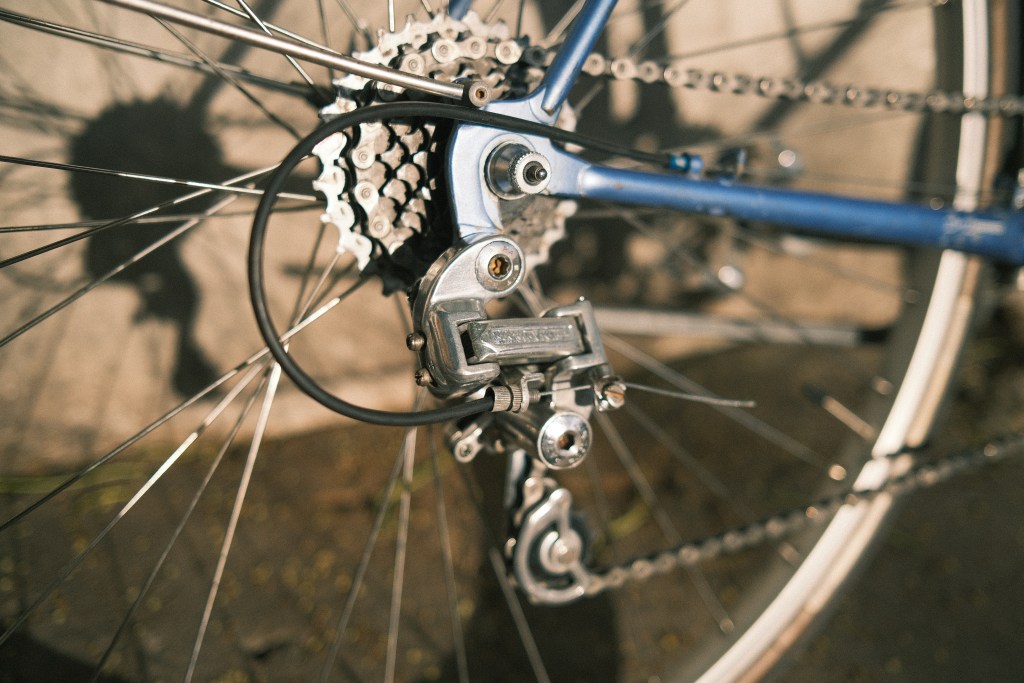
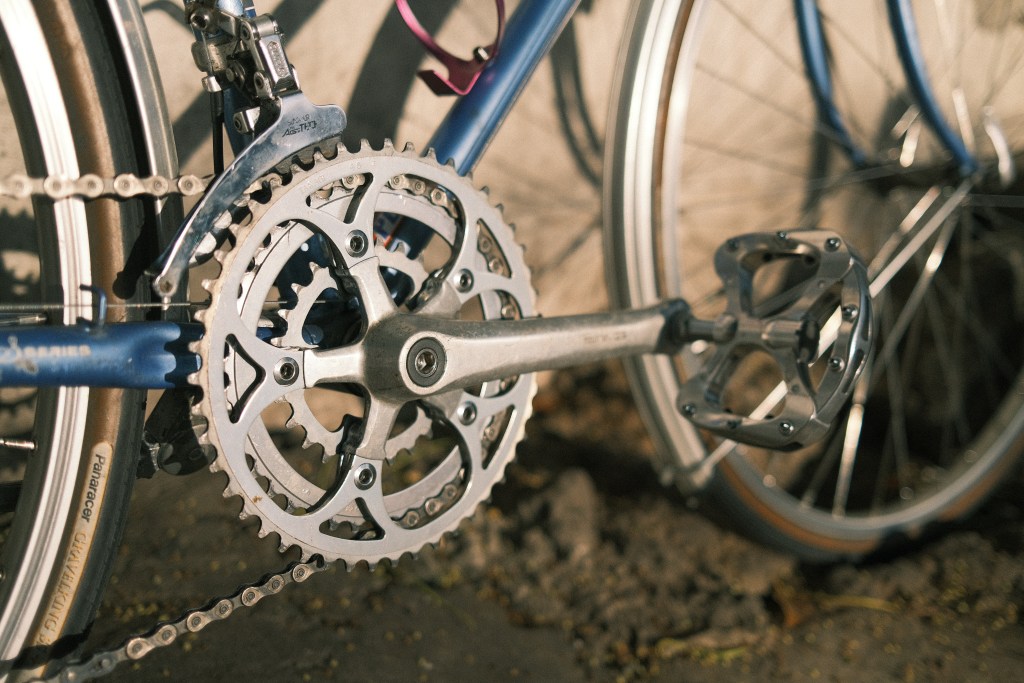
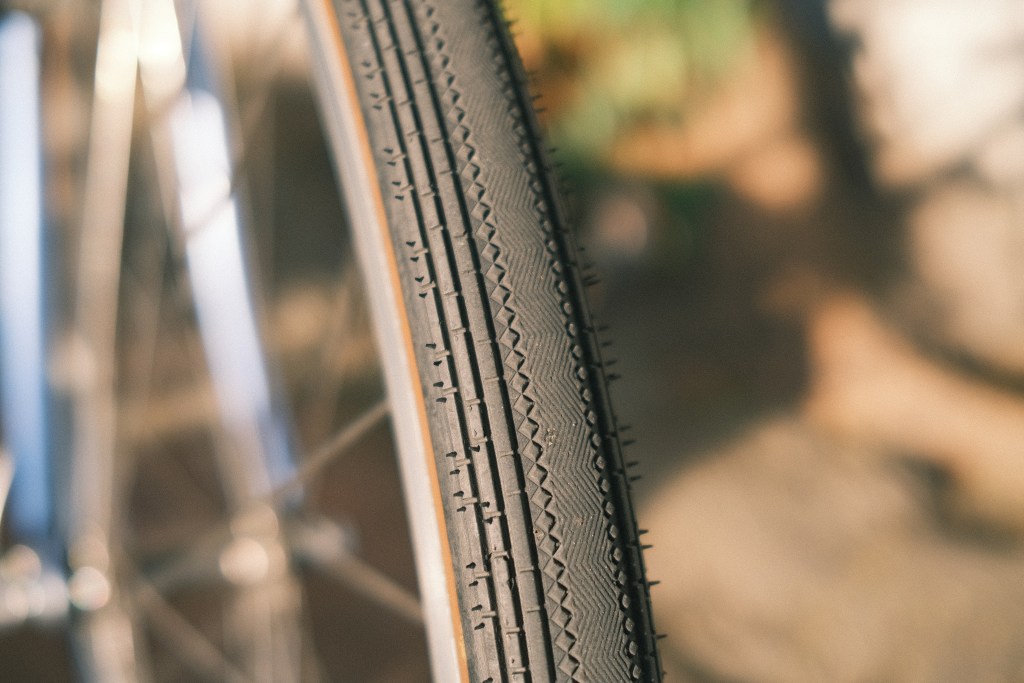
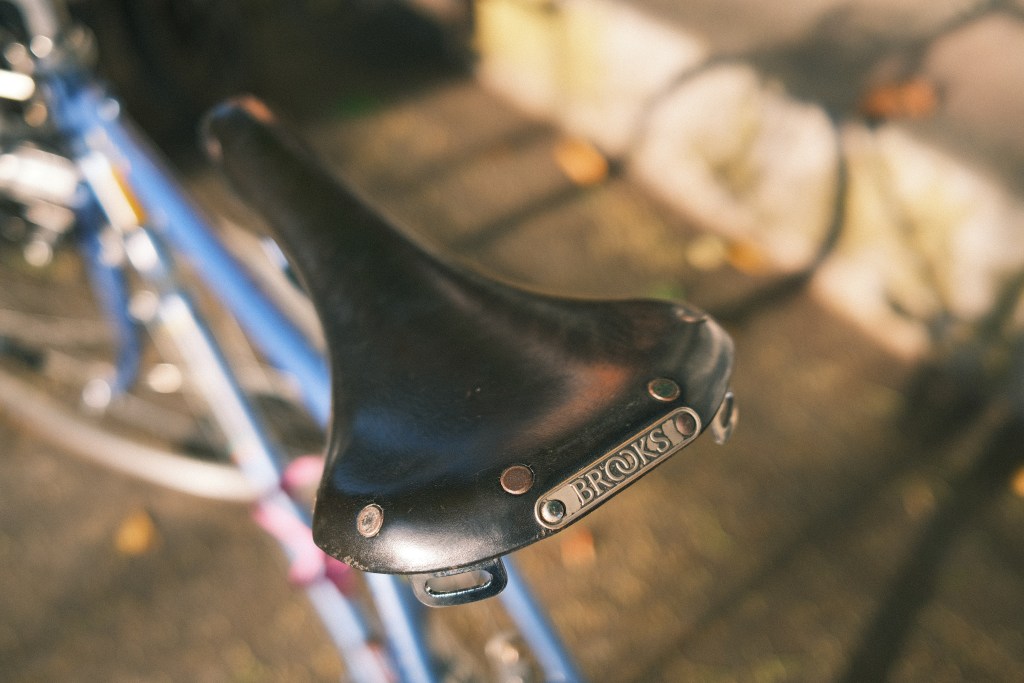
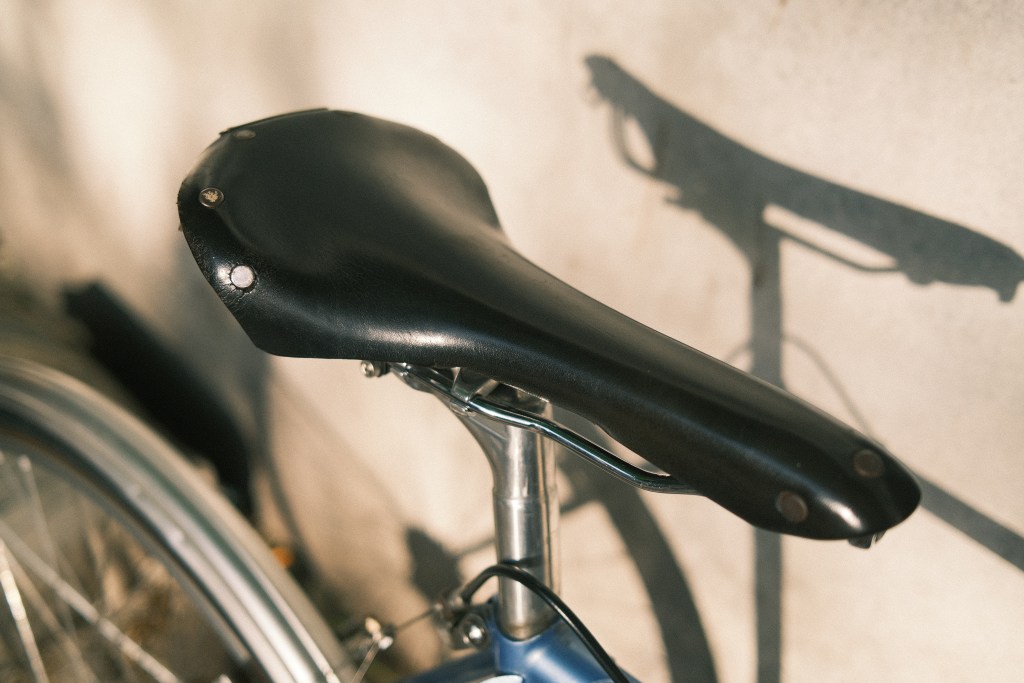
The Fuji Olympic came with 700c by 32mm Panaracer GravelKings (the same ones that were on my Bridgestone Eurasia), a seven-speed drivetrain with a classic Takagi Tourney XT crank and Shimano bar-end shifters, and a Brooks Swallow.
All of this was for only P15,000. Given the price of the saddle when brand new, the rest of the bike might as well have been a freebie. I didn’t want to spend a lot since doing so could easily double the overall cost of the bike. But since it was already well-built, I was able to keep modifications to a minimum.


I just changed the seatpost and pedals, and put a front rack for added comfort and convenience. It’s ironic how fancy and sporty the cockpit is for a beater bike.
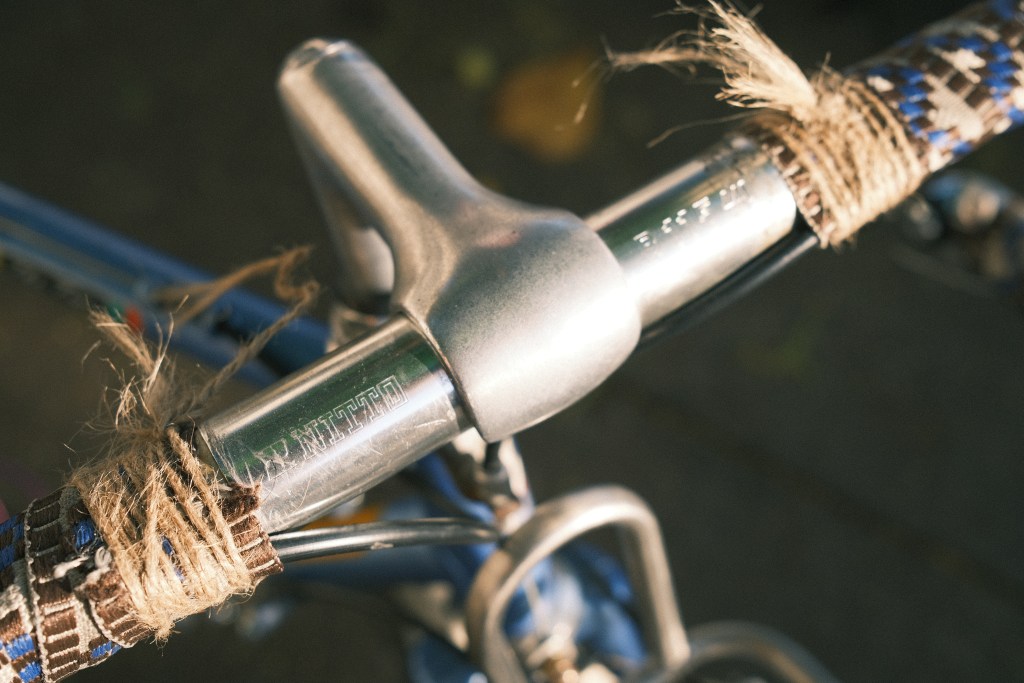
The Nitto Jaguar seatpost is NJS-stamped, and the aero stem was said to be Shimano Dura Ace. Meanwhile, the Brooks Swallow was a popular saddle for Tour de France in the 1930s.
For added bling, I attached the original fenders and swapped the Shimano Altus rear derailleur for a Suntour V-GT Luxe.

The quirks of the Fuji Olympic
I thought I already knew what I was getting into, given my experience with my Bridgestone Eurasia. However, the Fuji Olympic had its fair share of quirks. Thankfully, they were just that (instead of headaches).
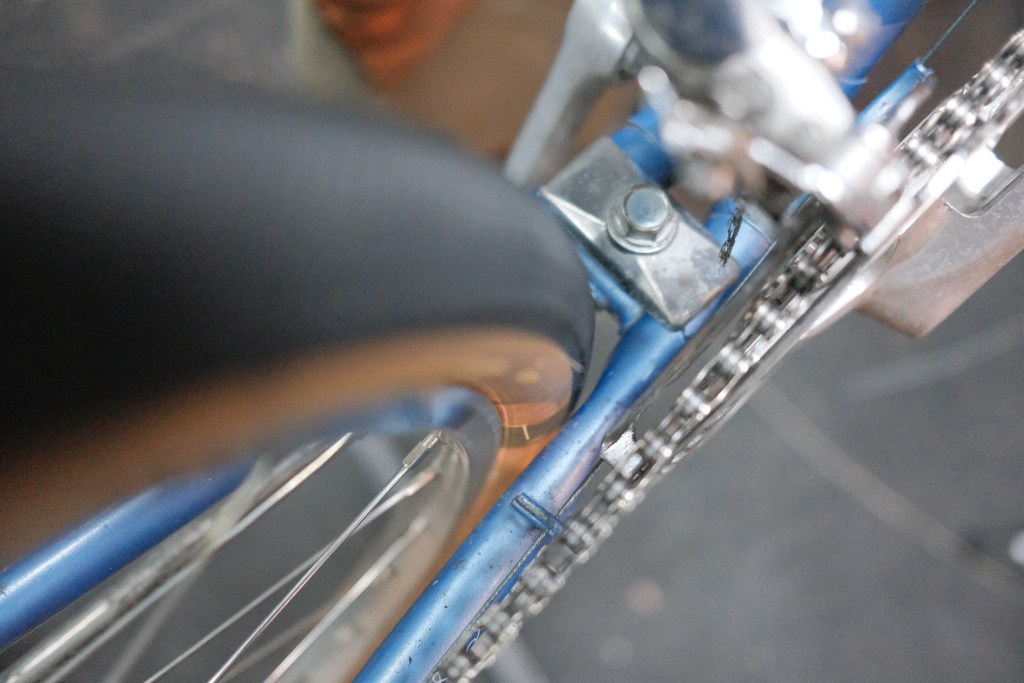
The frame was designed for 27” wheels (an older standard) but it was able to fit 700c rims. The two sizes were only 8mm apart in diameter, so the cantilever brakes would still work. It’s a bummer though that there isn’t enough clearance for 38mm at the rear. It could actually fit but any wobble or misalignment will cause the tire to rub against the frame.
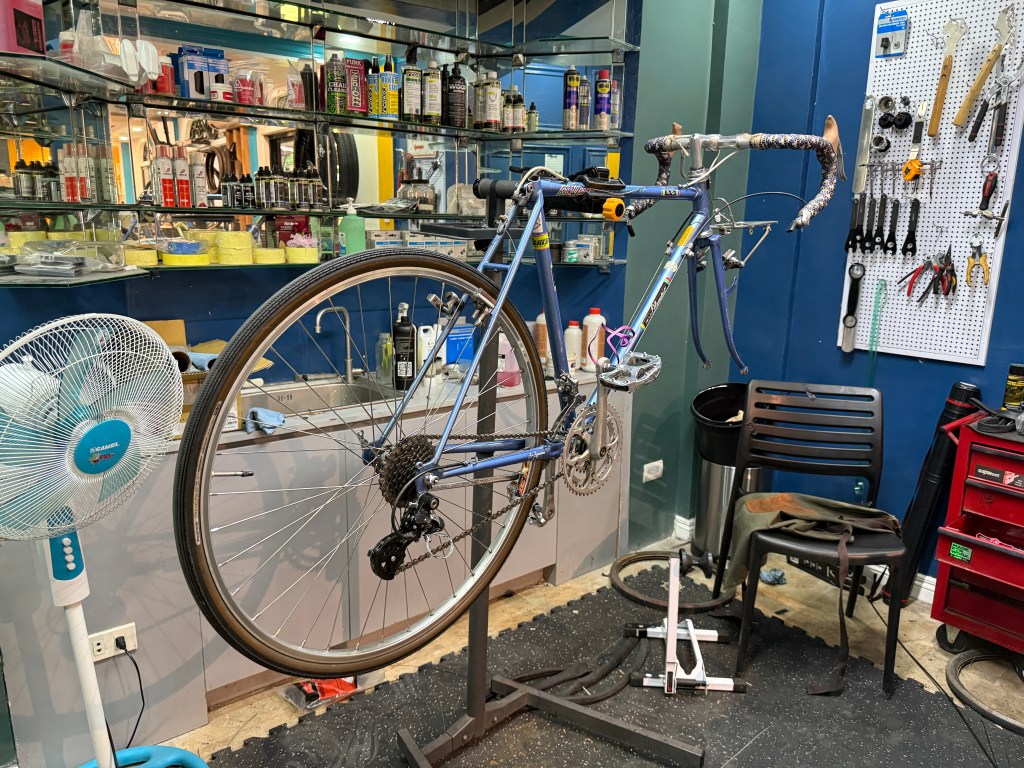
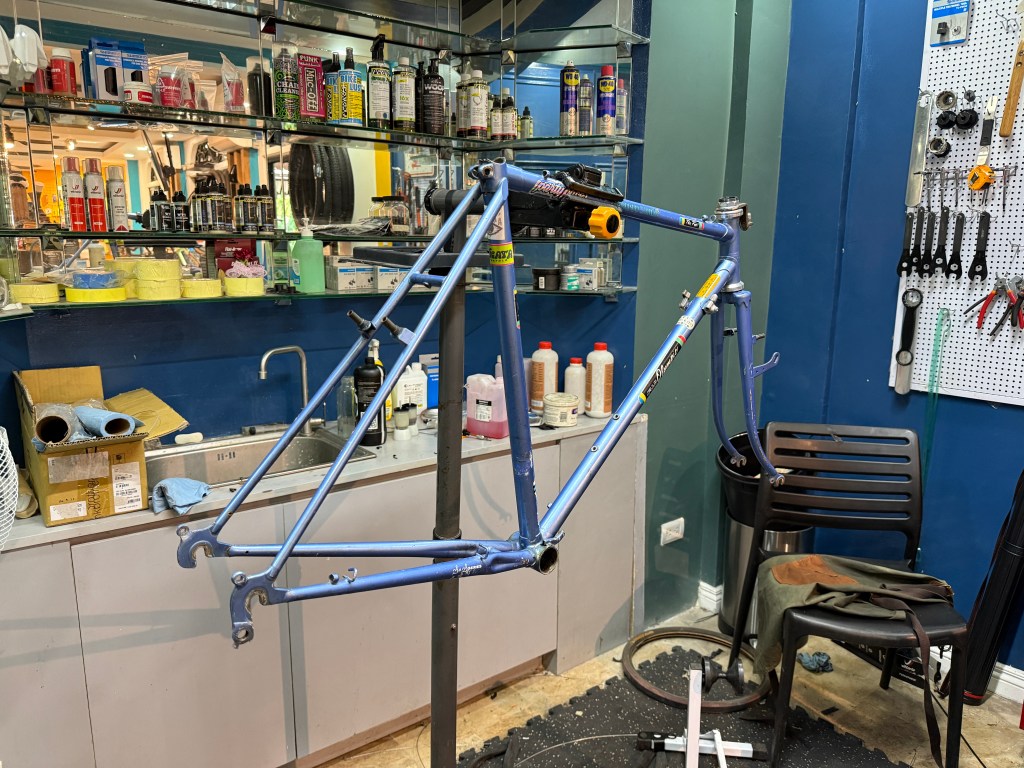

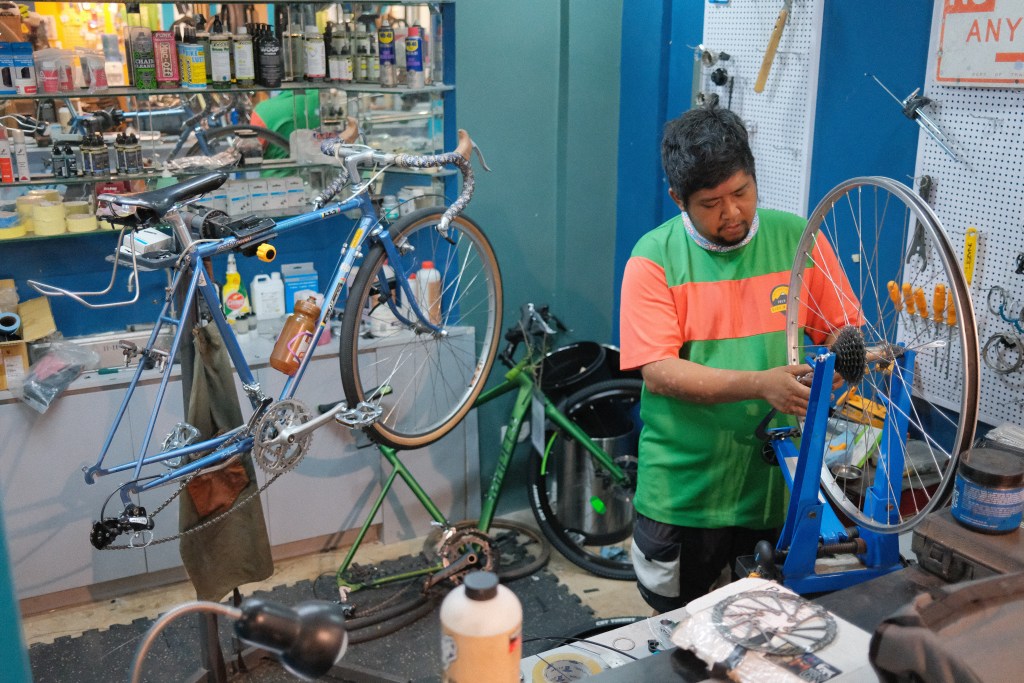
What caught me off-guard the most was the rear hub. Older frames that ran seven-speed drivetrains usually had a hub spacing of 126mm. But the rear wheel of the Fuji had a 130mm hub. That’s why putting it back was a two-man operation: one to pry open the steel frame, and the other to put in the wheel.
According to Eugene of Tambay Cycling Hub, this wasn’t good because the added stress would wear out the hub bearings much faster. That’s why I had the frame cold set by Ave Maldea to 130mm.
After doing that, I thought I could put in a 10-speed cassette, but that wasn’t the case. Apparently, there are two kinds of freehubs for Shimano Hyperglide cassettes that are used with 130mm hubs. Newer ones could take as much as 10-speed, but earlier freehubs were limited to only seven-speed.
If I really wanted more gears, then I’d have to purchase new hubs and get the wheels rebuilt. This was too much of a hassle and an expense for a beater bike. And if I were to push through with it, I might as well add disc brakes and thicker tire clearances, like with the Eurasia.
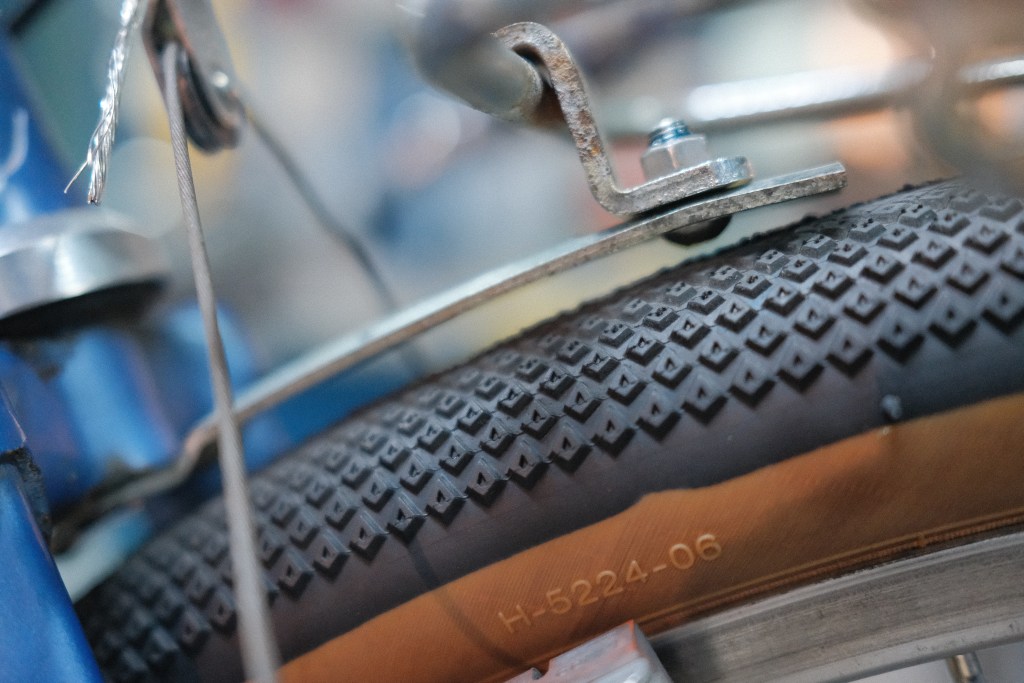
The bike came with a front rack, but it attaches differently. Whereas other bikes have a hole on the fork crown, the Fuji Olympic has a thread under the head tube, where the fender and front rack is attached to. Meanwhile, the rack stays attach directly to the posts for the cantilever brakes.
Attaching the fenders was simple (this limited tire clearance to 32mmm), but I couldn’t get the stock rack to work. The bracket flexes too much that it rubs against the front tire. I thought downsizing from 38mm to 32mm would work, but there was still some rub with enough load.

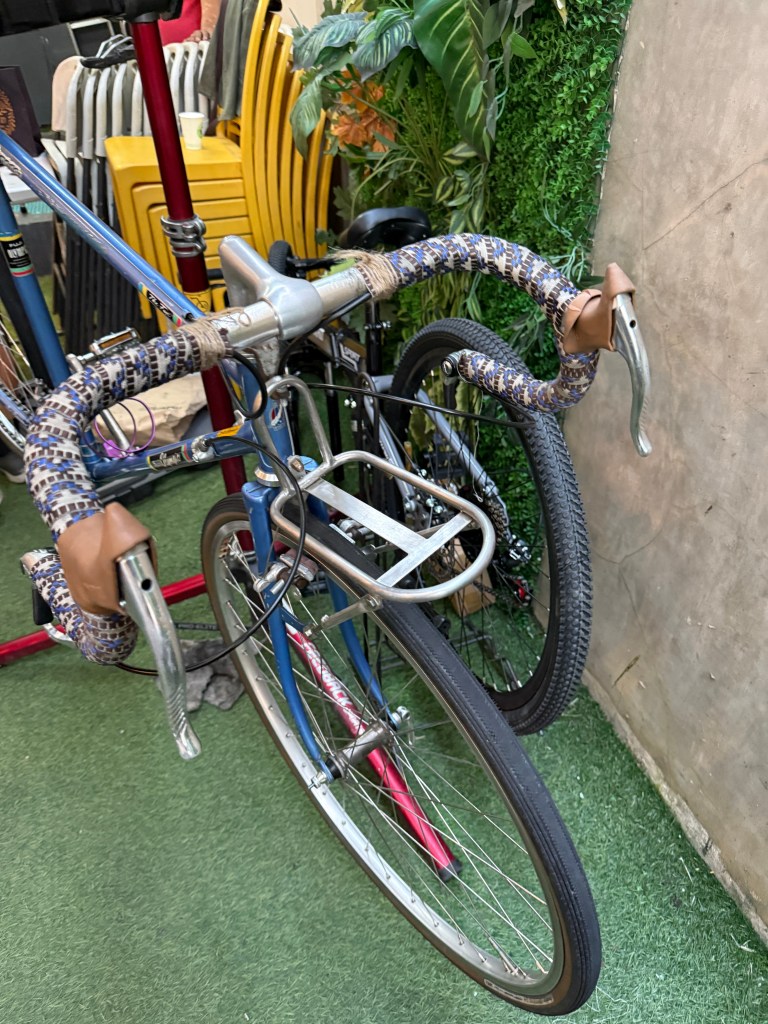
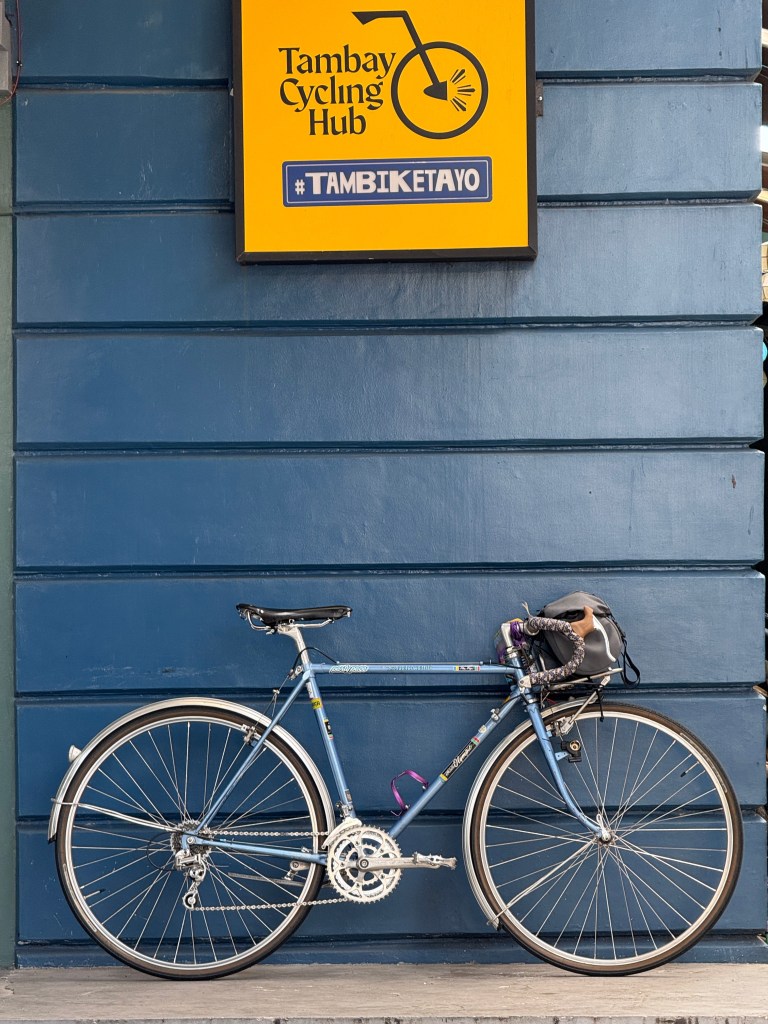
Since Mang Ave also drilled a hole on the fork crown in addition to the cold set, I could install a different front rack. I bought the one from Nyfti at Tambay Cycling Hub. The fit was awkward, but at least I could put a handlebar bag now without any worries.
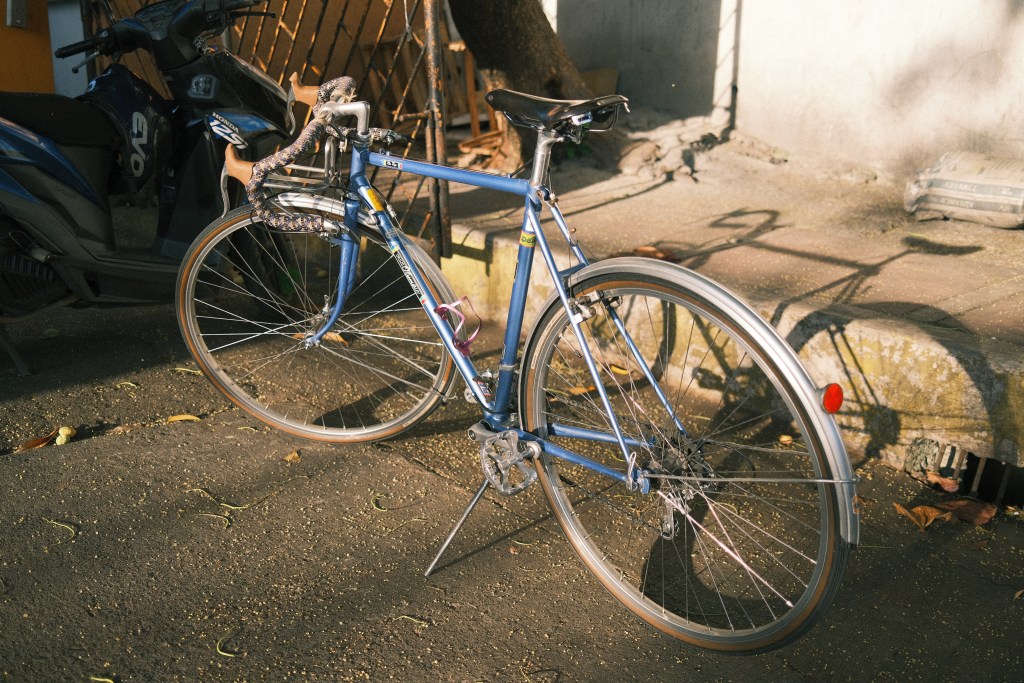


What on earth did I get the Fuji Olympic for?
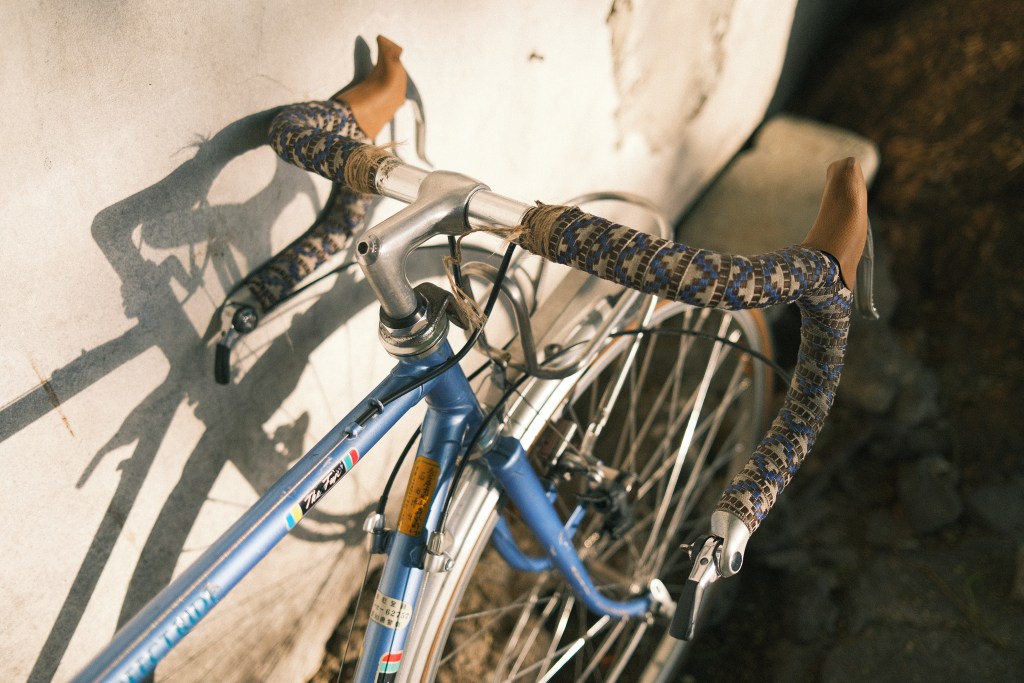
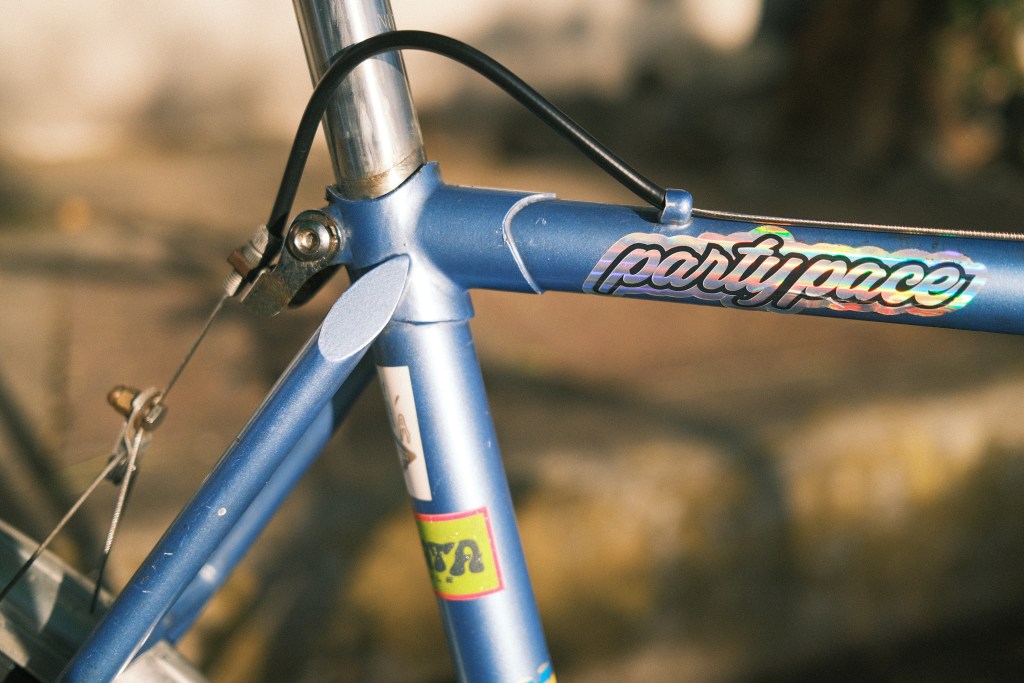
Nothing, really. I just wanted a nice, cheap bike that I wouldn’t take so seriously. But unlike the Riteway Sonoma, this Fuji Olympic is a bonafide rando bike—complete with the lugged frame, horizontal top tube, quill stem, and curved fork.
The Fuji Olympic is the crazy older sibling to my Bridgestone Eurasia. Whereas the latter is refined and elegant, the former is rough and rebellious, especially with the thin tires, cantilever brakes, and an aggressive cockpit.
It’s a road bike for when I want to let loose and go on a spirited ride. And it’s also a beater bike that I wouldn’t mind locking it beside a garbage bin. This should go without saying, but the Fuji is also a commuter bike (as with all my bikes). After all, what’s the point of owning a bicycle if you can’t ride it going somewhere?
Converting to alt bars
I intentionally kept the build open-ended, in case I wanted to pursue further modifications. After realizing I could go just as fast—if not faster—on my rebuilt Bridgestone Eurasia, I saw no point in keeping it as a road bike. So, I swapped the drops bars for alt bars with the Traction B56.
The end result was a mix between a randonneuring bike and a mamachari—a “randochari.” The rider’s posture was upright and relaxed, but the bike’s handling was agile and sporty. This made it distinct from the Eurasia and my Java Neo.
However, the problem with having nice bikes is the never-ending temptation to keep spending on budol. Had I pushed through, the Fuji Olympic would have also been converted by Mang Ave the same way as the Eurasia complete with a repaint from Mang Buboy.
Although there’s nothing wrong with this, it would completely changed the character and essence of my Fuji Olympic, from a beater bike that belongs by the trash to a shiny grail bike I wouldn’t be able to keep my eyes off. There was no need to have another Eurasia.
Ending the endless cycle of budol
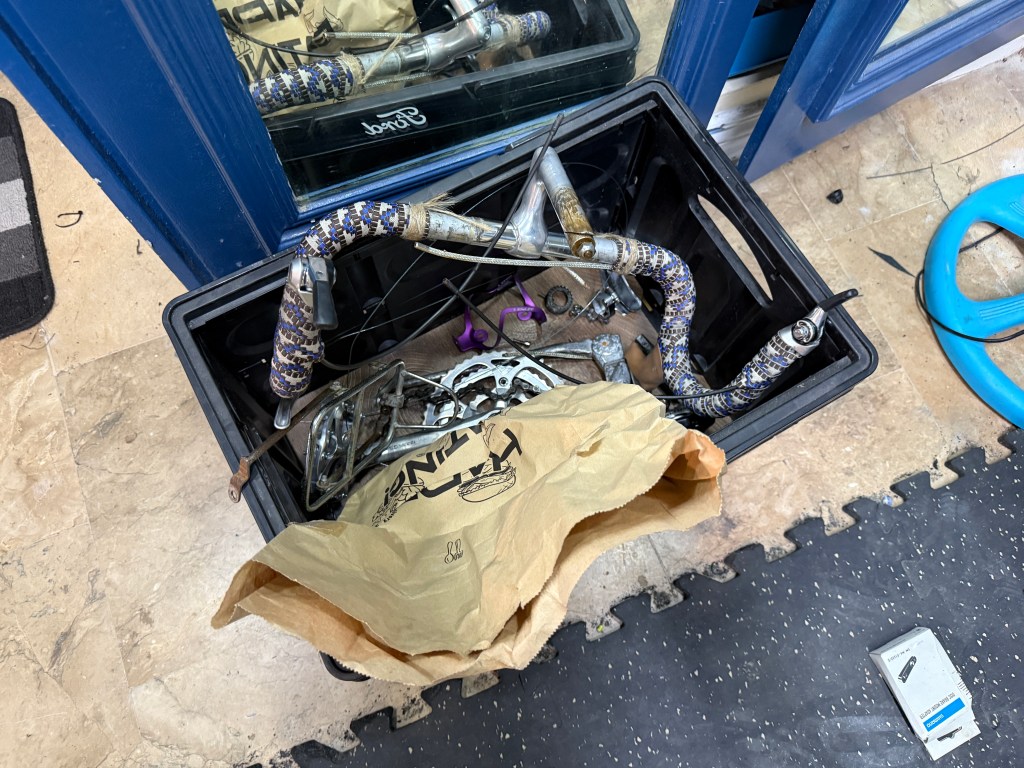
Seeing that the cycle of budol will inevitably continue, I decided to post the Fuji Olympic for sale. Selling this bike was a bit complicated because it had components that weren’t mine, such as Myta’s Soma Sutro quill stem and Dia Compe SS6 brake levers. On top of that, I still had the drop-bar cockpit.
To figure out which setup I should go with the Fuji, I posted a poll on my Instagram stories to see what was preferred. Apparently, more people liked it as an alt bike, rather than a road bike. So, I decided to leave the sweptback handlebars on the bike and swap the nice brake levers and bar-end shifters, before posting it for sale.
Compared to my other transactions, this one wasn’t a loss because I was able to sell the Brooks (along with some other parts). Despite the steal price, the saddle was worth a good fraction of the first cost of the bike. And even without the Brooks, the bike still held its value because of the tasteful build.
After I posted it on Facebook Marketplace and social media, it didn’t take long for me to get inquiries and engagement. Someone even tested the bike at night on the same day. The would-be buyer discovered my listing through Threads.
According to him, he was researching about friction shifting for his Surly Troll when the algorithm showed him my Fuji. He told me he’ll check out the bike the following day and we met at Tambay Cycling Hub. Almost 24 hours after posting, I sold the bike—ending this particular cycle of budol once and for all.
The time I spent owning the Fuji Olympic was brief, two months and a week to be exact. It wasn’t as eventful as some of my other builds, but I still enjoyed the rando bike. It reminded me once more that a bike doesn’t need to be expensive for it to have character.
The Fuji Olympic was a gold medal because it was a bike that punched above its weight. Its charm was preserved despite the many scratches, and it handled well with two completely opposite setups. This is a case where the bike’s price doesn’t reflect its true value.


Leave a Reply