
I was in Taiwan admiring the diversity of available transportation options, including e-bikes, when I saw that the Land Transportation Office (LTO) is pushing a ban on e-bikes and e-trikes on major roads starting December 1, but was moved to January 2, 2026 to iron out the regulations.
Regardless. It’s stupid timing. A stupid policy. And same old stupid thinking.
The ban on e-bikes on national roads is beyond insulting. It’s another reminder that our transport agencies remain deeply car-brained, even when the law already points in the opposite direction.
Nasa Batas Kasi…
The Electric Vehicle Industry Development Act, or EVIDA Law (Republic Act No. 11697), already recognizes and protects light electric vehicles.
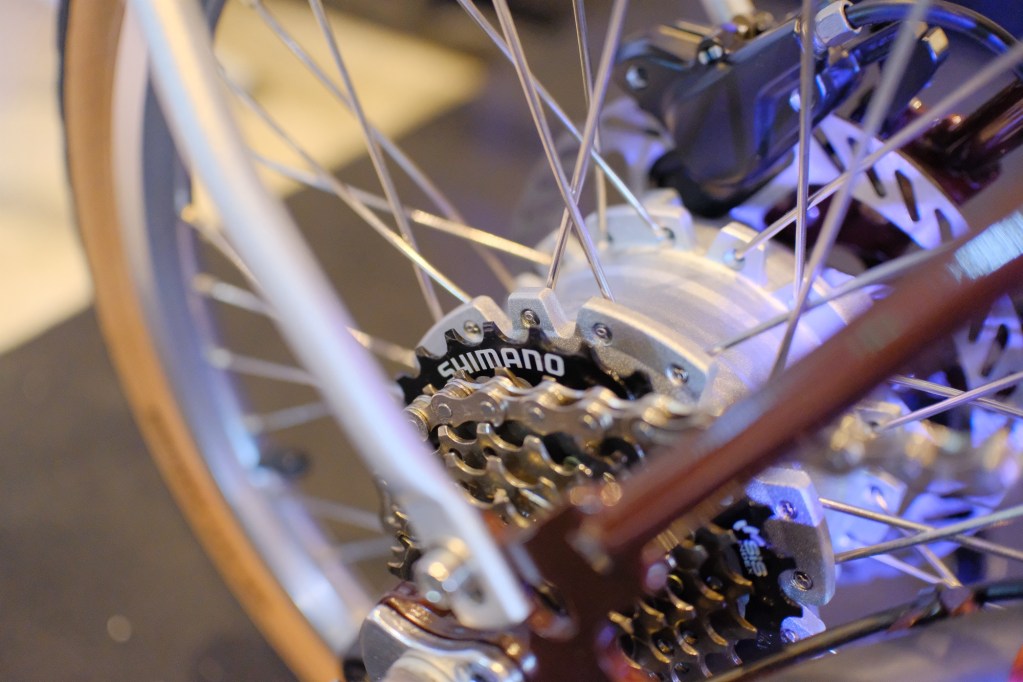
Under Section 3 (Definitions), electric vehicles are not limited to cars. The law explicitly includes electric bicycles, electric tricycles, electric motorcycles, and other light electric vehicles (LEVs). An e-bike is a bicycle with pedal-assist or a small motor, usually capped at low speeds and power.
An e-trike, on the other hand, is heavier, often used for cargo or passengers, and closer in size and behavior to a motorcycle or tricycle.
These are not the same thing, and lumping them together is either lazy or willfully ignorant.
More importantly, Section 5 (Declaration of Policy) states that it is government policy to “support the transition to cleaner energy and promote sustainable transportation” and “encourage the use of electric vehicles” as a response to congestion, pollution, and climate impacts. This shouldn’t be restricted to electric cars.
Furthermore, government agencies are explicitly required to coordinate and promote the adoption of electric vehicles through supportive, aligned policies. That’s in Section 19 (Role of Government Agencies). A ban on e-bikes, rolled out without meaningful consultation with the people who actually use them to get to work, to appointments, or just across the city, is an agency acting in isolation, defaulting to car-first thinking, and calling it “safety” after the fact.
You cannot say you want sustainable transport, then remove one of the most efficient and accessible mobility options from the very roads people need to travel on.
What’s happening now feels like an agency move that ignores both the spirit and the letter of the law.
The Safety Fallacy
And here’s the thing even non-cyclists should understand: The ban on e-bikes and e-trikes does not make roads safer. It just forces LEV users, many of whom rely on them because they can’t afford cars or have physical mobility issues, into conflict with pedestrians.
If the LTO were absolutely serious about road safety, we’d be talking about:
- Enforcing more speed limits on cars and other heavy machinery
- Having stricter rules and regulations for the distribution of drivers’ licenses
- Penalizing reckless driving that actually harms or kills people (beyond the 90-day suspension by DoTR)
- Heavily monitoring and punishing distracted drivers and those driving under the influence of alcohol or drugs
- Acknowledging that road danger is a design problem, not a vulnerable road user’s problem
And they’d be talking to actual bike commuters who use e-bikes on EDSA and the like.
The Ban on E-Bikes on National Roads is NOT a Solution
Taking LEVs out of the picture doesn’t fix anything. It just reinforces a transport system where moving without a car is treated as a nuisance, or worse, a mistake. This ban is putting the lives of vulnerable road users at risk for the benefit of heavy machinery.
Mandaluyong Acting on Its Own?

Mandaluyong City’s TPMD released a Facebook post last December 2, 2025, announcing a ban on LEVs in the city, way before any national implementation. This is not an official memorandum, and does more fearmongering, confusion, and misinformation than anything.
Social media is not a substitute for due process. Bans that affect daily mobility, livelihoods, and enforcement actions like arrests and impounding require properly published issuances with clear legal basis, scope, and timelines. Treating a Facebook post as enforceable policy undermines transparency and accountability, especially when penalties are involved.
Heck, I’m not even sure if the FB page is official.
Bureaucratic Failure is not a Basis for a Ban
If you think about it, *puts on conspiracy hat* it feels like the auto industry is trying to sell more cars via the government. The fact is that only about 10% of Filipino households own at least one car. That leaves a massive market opportunity to “induce demand” by taking away active mobility options.
Whether you believe this theory or not, the fact remains: If we can’t allow LEVs on major roads, then we’re admitting that roads were never meant for people, only for cars. That’s displacement, ableist, elitist, and chauvinist.
And that, my friends, is a policy failure, not a behavior problem.
Today they’ll come for e-bikes; maybe tomorrow they’ll come for manual bikes. And they wanted to, several times, in the past.
This ban on e-bikes and e-trikes is stupid. And the LTO and every government official supporting this ban should feel stupid. Because whenever we push people away from actual efficient vehicles and toward cars, we make Metro Manila more hostile to anyone who isn’t wrapped in two tons of metal.
I’m more connected to the streets than those bigwigs in LTO. I see who actually benefits from bans like this. And it’s definitely not commuters like me.
And I’m tired of pretending that’s acceptable.
Naninira ng Pasko eh.


