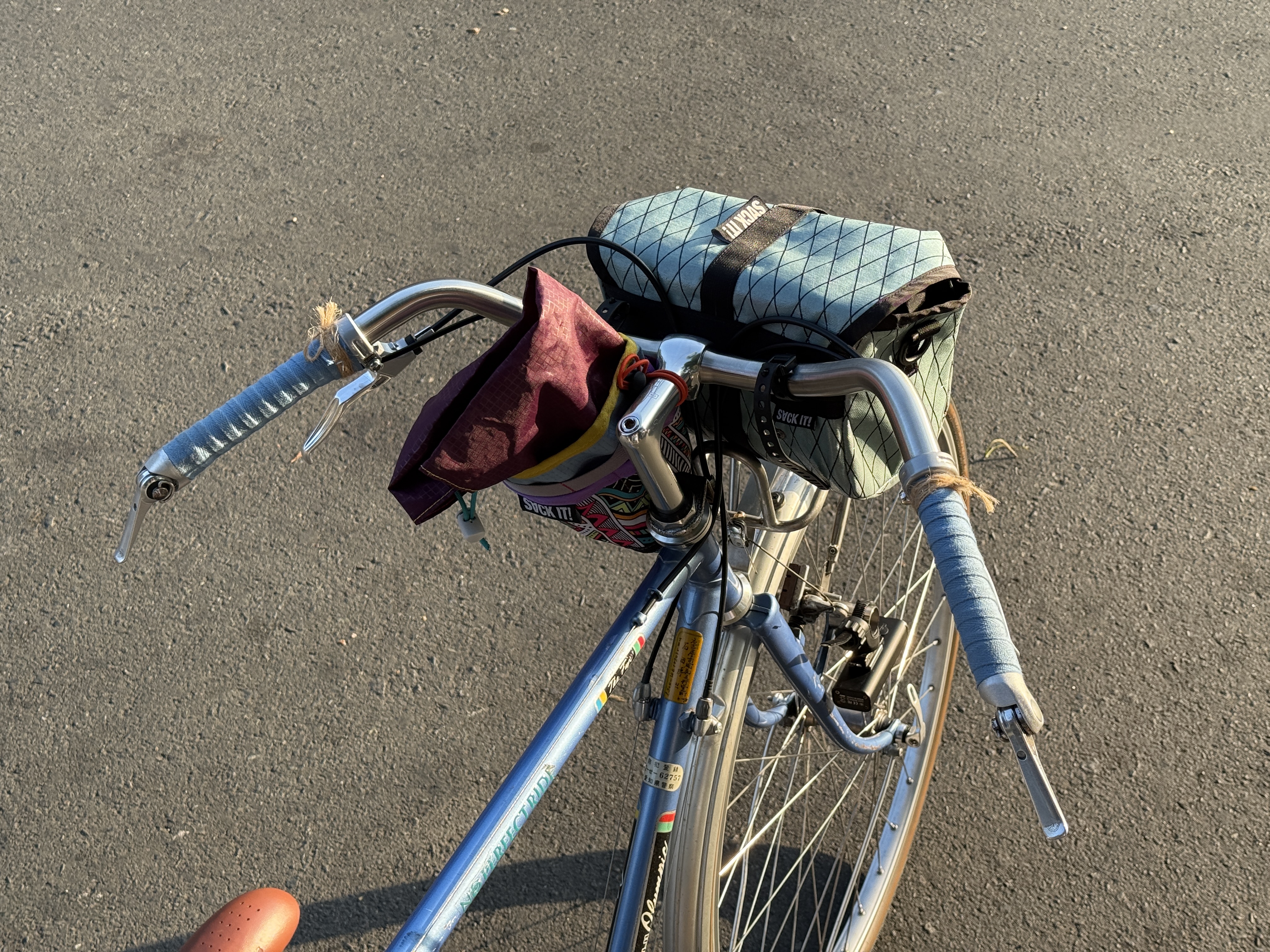
Many things affect the handling and comfort of your bike, and the handlebars are one of them. Drop bars are found on road bikes and gravel bikes, where aerodynamics is top priority. Meanwhile, flat bars are prominent on mountain bikes where riders need control for technical terrain. But if you just want a chill ride, then you should consider sweptback handlebars.
Unlike drop bars, which curve away from the rider, swept back handlebars bend toward the rider for a much closer reach. Not only does this make the riding posture upright, but it also puts the wrists in a more natural position. These kinds of handlebars are more commonly seen on mamacharis and Dutch bikes.


Options for swept back handlebars
My first experience of swept back handlebars was the Traction B00, which I put on my Bridgestone Eurasia for a time. I realized that ordinary cyclists can never go wrong with it because it’s easily the most comfortable kind of handlebars. After getting a Fuji Olympic, I thought of converting it to swept back handlebars to distinguish it from my drop-bar bike.
I wanted to order a Traction B00, but according to the distributor, the handlebars were unavailable and might not be restocked anymore. Traction Bikes suggested that I try the Traction B56, which they gave to me at no charge, so that I could write about it. Although the handlebars were free, I had to procure the other parts necessary to attach them to my bike.
There are other options also from brands such as Velo Orange, Surly, Soma, and Nitto. But based on my research, Traction Bikes is the most affordable at P1,300, which is why I went with it. The main difference between the B00 and the B56 is that the former has more back sweep, while the latter is narrower with more rise.

Converting from drop bars to swept back handlebars
Converting a bike from drop bars to swept back handlebars isn’t straightforward because they don’t use the same grips, brake levers, and shifters.
I borrowed Myta’s Dia Compe SS6 levers, and also her Soma Sutro stem (which was from Lucien), so that I didn’t have to remove anything from the original cockpit. The Traction B56 has a 25.4mm clamping diameter, so it’s compatible with classic quill stems.
Thankfully, the Traction B56 sweptback handlebars were compatible with my Rivendell Silver bar-end shifters. Since the shifter cables extended toward the grip, I had to wrap around it with cotton bar tape from Passé.
If you don’t use friction shifting, then you’ll have to make sure the shifters are compatible with the derailleurs. In general, Shimano drivetrains that are 10-speed and higher are not interchangeable. You can’t mix and match shifters and RDs from road bikes and MTBs.
Finding the right fit with swept back handlebars
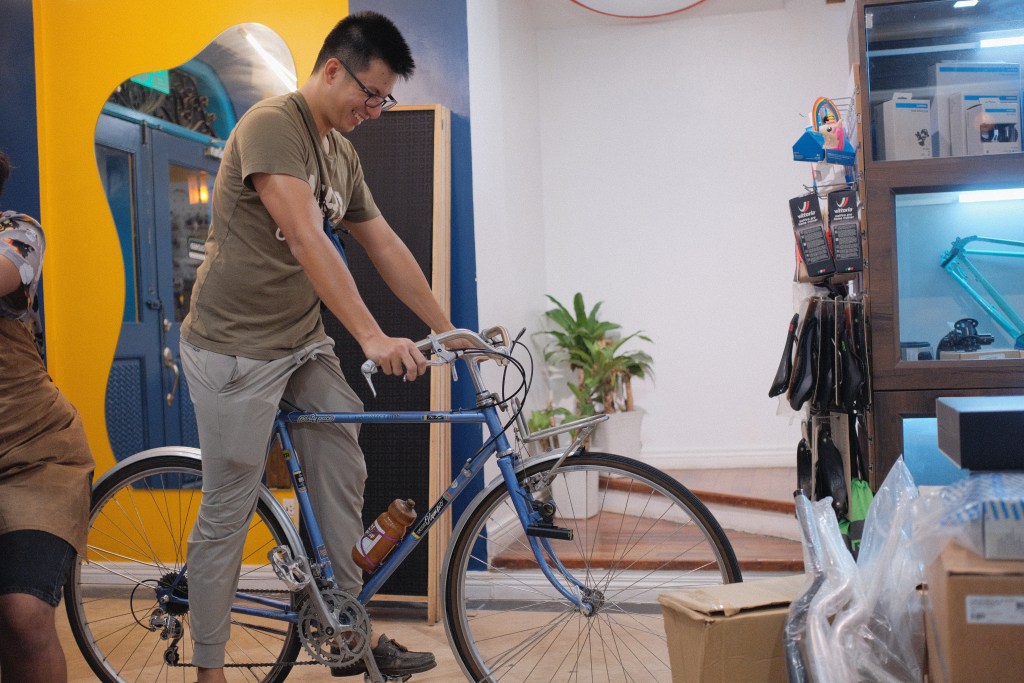
Another consideration when installing sweptback handlebars is the fit and handling of your bike. The handlebars will bring your hands significantly closer to your legs. You want to make sure the stem is long enough that you have enough room for steering and pedaling. Since my setup has bar-end shifters sticking out, I can’t make tight turns, such as when scooting around traffic.
The stack also matters because a low stem will still put you in a dropped position. Loosely speaking, you’ll want a French fit where the handlebars are at least level with the saddle. One advantage of having an upright posture is that you can better see your surroundings.
Since the handlebars are nearer to you, the steering also becomes more responsive. This is ok for full-size bikes like gravel bikes and touring bikes. But it’s not advisable for bikes that are already twitchy, like Bromptons, mini velos, and other small-wheeled bikes (trust me, I’ve tried).

Additional benefits of swept back handlebars
Sweptback handlebars have additional benefits that go beyond comfort. They mostly have to do with the advantages of flat-bar components. For one, flat-bar brake levers have better leverage than drop-bar levers. This means you don’t squeeze as hard for the same amount of braking power.
Generally, MTB parts are much, much cheaper than drop-bar components. In my experience, the 11-speed Shimano Deore M5100 costs around P2,000 while the Shimano GRX RD RX-812 goes for P5,000. Shimano MT200 hydraulic brakes are budget-friendly, but you’ll need to spend on Tiagra or GRX to get hydraulic brakes with drop bars.

What happened to my Fuji Olympic?
Before swapping the handlebars, my Fuji Olympic was aggressive and sporty. But with the combination of the Soma Sutro stem and the Traction B56 handlebars, the bike is as upright as a Brompton. Don’t be fooled, though, as the touring bike is still just as sporty and nimble. If anything, it’s more like a speedy mamachari.

Should you go for swept back handlebars?
I still have a few reasons why I still choose drop bars on my main bike. They look cool; squeezing through traffic is easier with them, and I like to ride fast. However, these are preferences and biases more than anything, especially the first one.
Personally, I think swept back handlebars like the Traction B56 and the Traction B00 should be standard on commuter bicycles. Not everyone goes racing or trail riding, so there’s minimal benefit to the handlebars used for those disciplines.
Sweptback handlebars are great because they allow the rider to have an upright and comfortable riding position. It’s no coincidence that you see them on many Rivendell builds. Comfort is king, and with swept back handlebars, your saddle will feel like a throne.


Leave a Reply