
You know how some people like to cut or color their hair or get a tattoo when they’ve just entered a new chapter in their lives? Yeah, that’s me, but instead of damaging my hair, I burned through my bank account and built a mini velo designed by Ave Maldea.
At the time of publishing, my mom has been gone for nearly a year. Right after I buried her in August, I kept myself distracted by building Lucien, my Blocks Lo-Fi steel touring bike. I had also moved out of Makati and began living alone. Nearly a year, several bike budols, and life adjustments later, I figured that I might need a bike that’ll ease up living on my own.
Meeting Ave Maldea
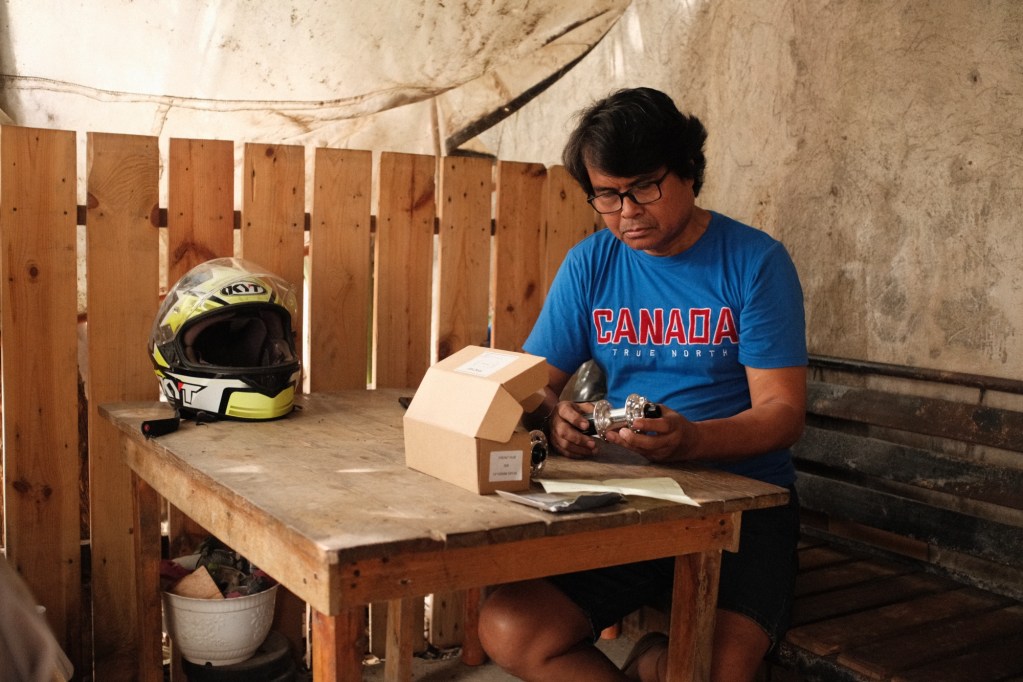
Around the time I moved to Kapitolyo, I accompanied Leandro to visit Avelino Maldea, or Ave Maldea, in Cainta, Rizal, and pick up his Bridgestone Eurasia that needed some repairs.
Mang Ave, as the bike community at large calls him, is a renowned framebuilder who makes steel bikes. He’s famous for building framesets with custom builds across different types, from fixies to touring bikes. Owning one of his frames feels like owning a gem from Philippine cycling history and culture; whatever frame you have, if it’s a Maldea, it’s a good one.
So when I came face to face with the man himself, something inside me whispered, “Maybe it’s time to build that other dream bike of yours.”
No one was stopping me from taking this opportunity. More than any carbon road bike, owning an Ave Maldea frame has crossed my mind more than once a month since 2024. And I knew what type of bike I wanted.
A mini velo.
The Mini Velo is a Perfect Fit
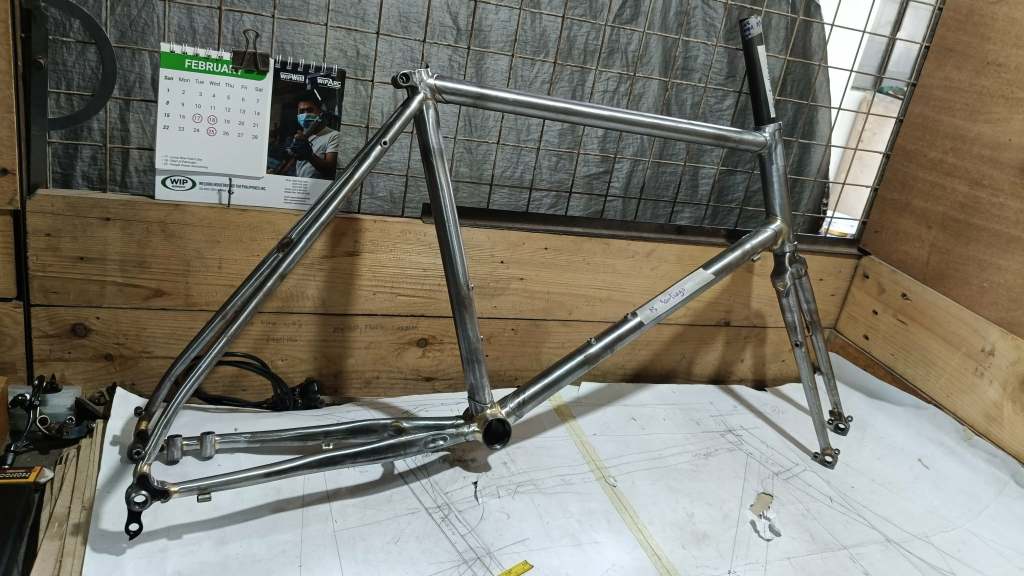
I envy tall people because they can easily fit on vintage bikes with straight top tubes. Sadly, though, as a smurf at 5’2″, I must settle for XS sizes (44-46) with sloped geometries. That’s how I went with Lucien.
And that’s why a custom mini velo was top of mind.
I initially wanted a cargo bike similar to the Tern Short Haul or any e-bike with a heavy-duty rear rack, but quickly realized that it might not be practical for my living situation. I needed something that I can easily carry up and down the stairs of my apartment complex, compact enough that I can store it inside my apartment, and strong enough to hold at most 10kg worth of laundry or groceries in a crate.
Twenty-inch wheels were a requirement because the parts are readily available. Since the bike was meant to be used regularly, I wanted a wheel standard that would be easy to maintain over the long term.
Aesthetically speaking, the bike must have a straight top tube and a lugged frame. Those were non-negotiables. Something distinct from Lucien, and yet distinctly Myta’s.
Finally, the steel needed to be light enough but durable. Columbus tubing was imperative.
And Ave Maldea delivered.
After a quick back-and-forth with Mang Ave on Facebook Messenger, I gave the down payment and other details—height, stack, reach, the type of handlebar I’d be using, wheel size, etc. He said that it’ll take him 8-12 weeks to finish. Good, I thought to myself, I have enough time to save up for the balance.
Well, he finished in six weeks. The total cost for the frame is P44,500.
The Paint Job by Mang Buboy
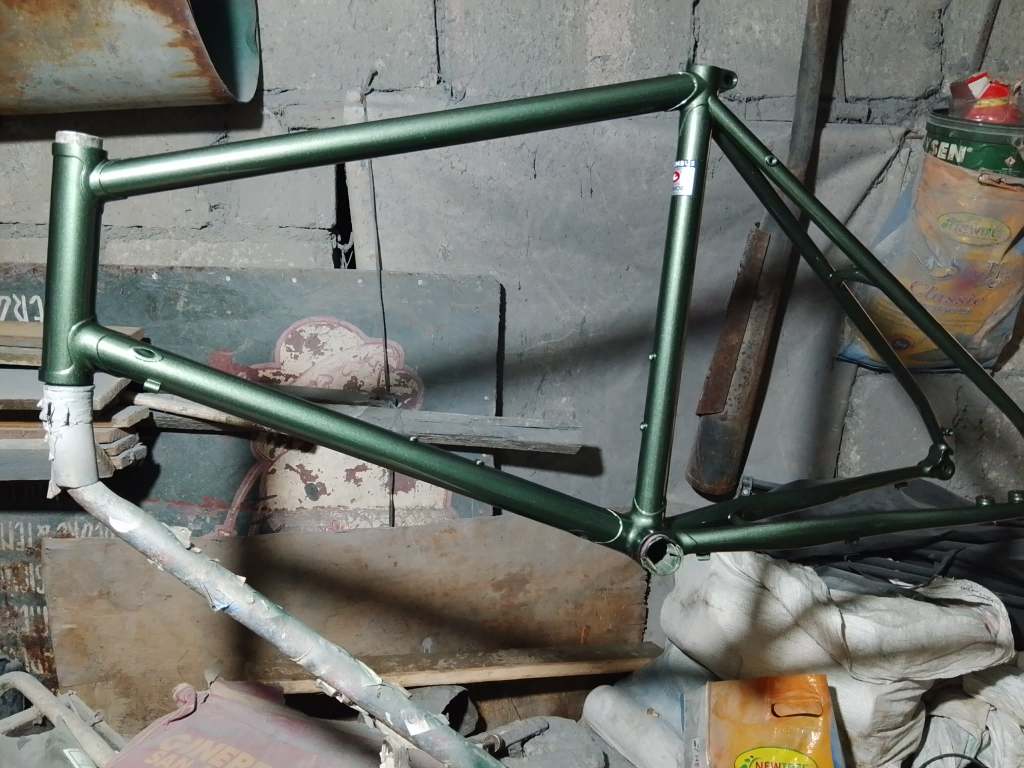
Between ordering the frame and eventual delivery, I had other things to do. The first was to start looking for parts, both second-hand vintage components in FB Marketplace and newer ones on Shopee and Blue Lug. Leandro and I also checked our respective parts bins to see if there was anything worth adding to the MV.
At the same time, I began talking with a highly recommended painter, Rodelio Mercado, or simply Mang Buboy, who also repainted the Eurasia. The conversation about color took a while because I got extremely picky with how I wanted to present the mini velo. I don’t like loud; I like subdued handsomeness. And green. I love green.
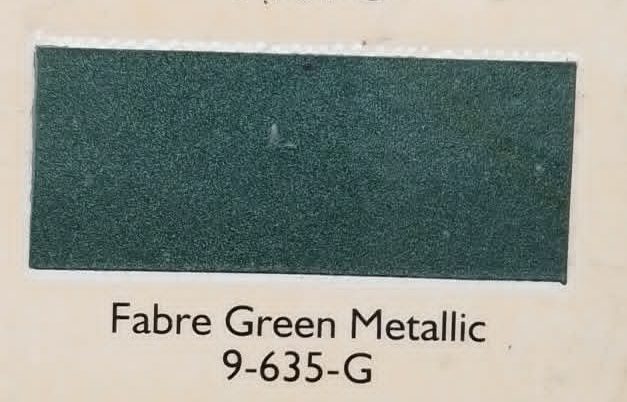
Mang Buboy sent me several swatches that were used on cars in the 1990s and early 2000s. My eyes immediately landed on Fabre Green Metallic. I considered another shade, but my eyes kept coming back to that one swatch. After consulting with Leandro, I forwarded my decision to Mang Buboy. Once the frameset was ready for pickup, he went to Ave Maldea’s place.
It took him a week to paint the frame.
The paint job cost P3,300, including pickup and delivery.
Now all that’s left is to build the bike.
Right?
Right?
A Bike Built Over Time


Finding parts is one thing; installing them is another.
Now that Ave Maldea’s and Mang Buboy’s jobs were done, the next part is to build the bike. But it wasn’t easy.
Given that I only got a frameset and a few odd parts for the cockpit and the drivetrain, I had to get a headset first. We were able to find a second-hand silver Velo Orange Grand Cru headset on FB Marketplace, but couldn’t install it at Tambay because they did not have a headset press long enough for a mini velo’s headtube. So off I went to Bikeary to have that done by Kuya Arnie.


A while later, Leandro fiddled with my Sugino Super Maxy crankset and took out the granny gear so that it’d have more space on the bottom bracket. He installed that and the crankset onto the BB shell, as well as the MKS Pretzels on the arms. The crankset is doing its work by exuding that “vintage city bike” feel.
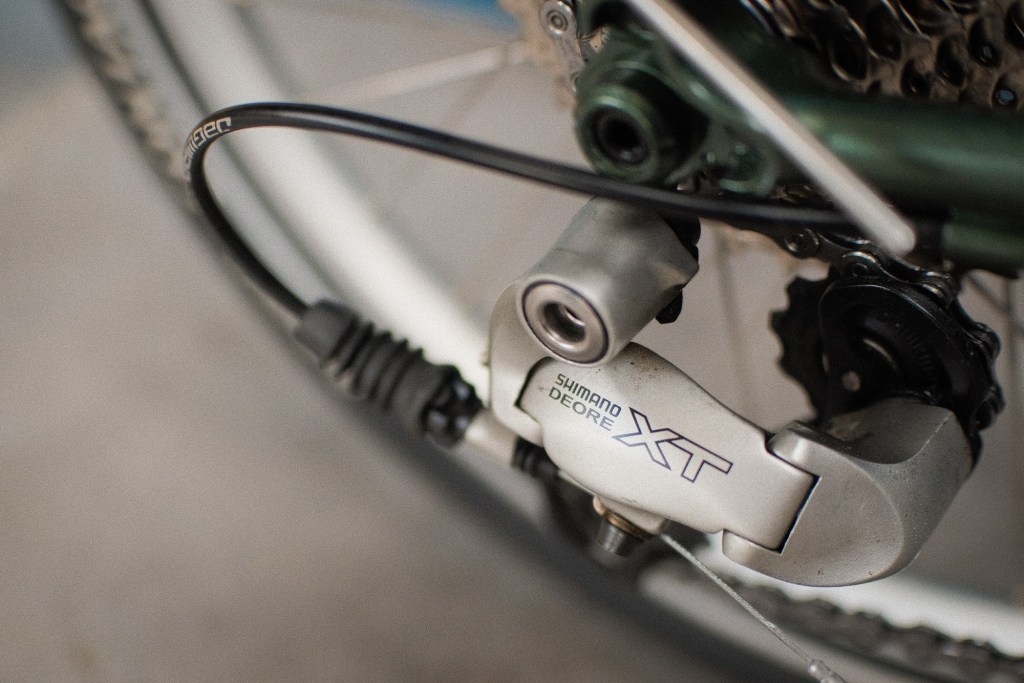
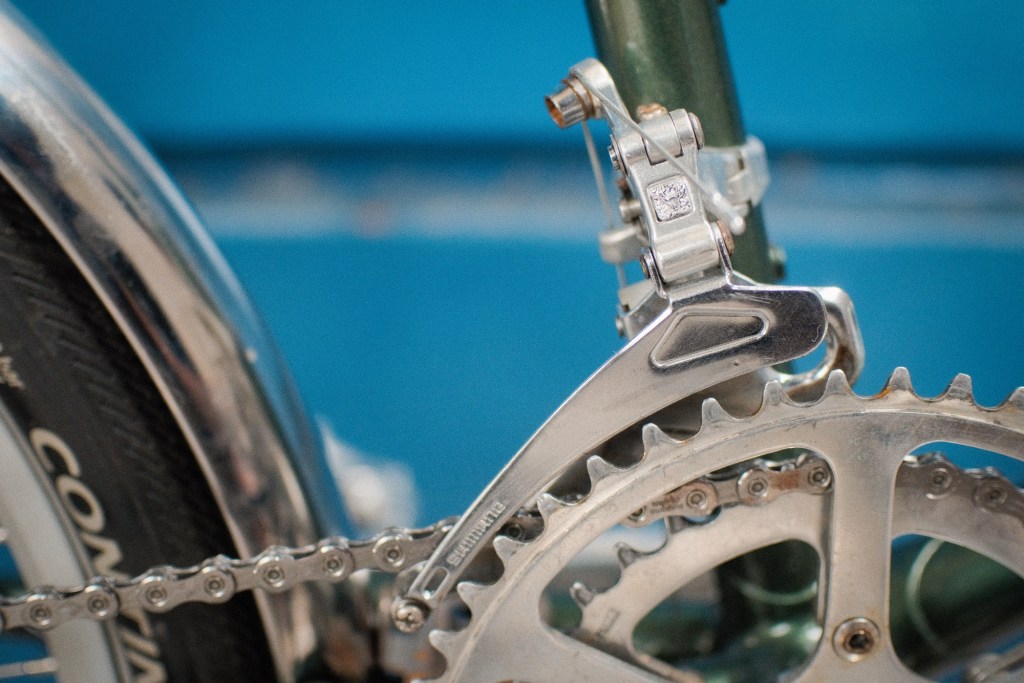
I installed the Shimano Deore XT rear derailleur, which we bought on FB Marketplace, along with the infamous Shimano “deerhead” front derailleur that came from Leandro’s parts bin. The 11sp chain was added toward the end of the build by Eugene.


The bike was finally starting to take shape. We primarily went with Leandro’s old riser bars, but I eventually purchased the Traction B56 swept-back handlebars from Pedal Pushers and Tarugata grips from FB Marketplace, connected to the rest of the bike with the Ritchey Classic C220 80mm stem from Built Cycles Makati.
The stars on the handlebars are the Rivendell friction shifters on dupe Paul Component Thumbies and the Dia Compe brake levers. The Brooks B17 sits on an UNO 27.2mm aluminum seatpost, safely clamped in by a 19mm seatpin. For nighttime visibility, I got a Kiley rear light from Bikeary and installed it underneath the saddle.
I inherited Leandro’s stem bags by Coyote Bikepacking Gear to store my phone, wallet, coin purse, keys, and a water bottle.


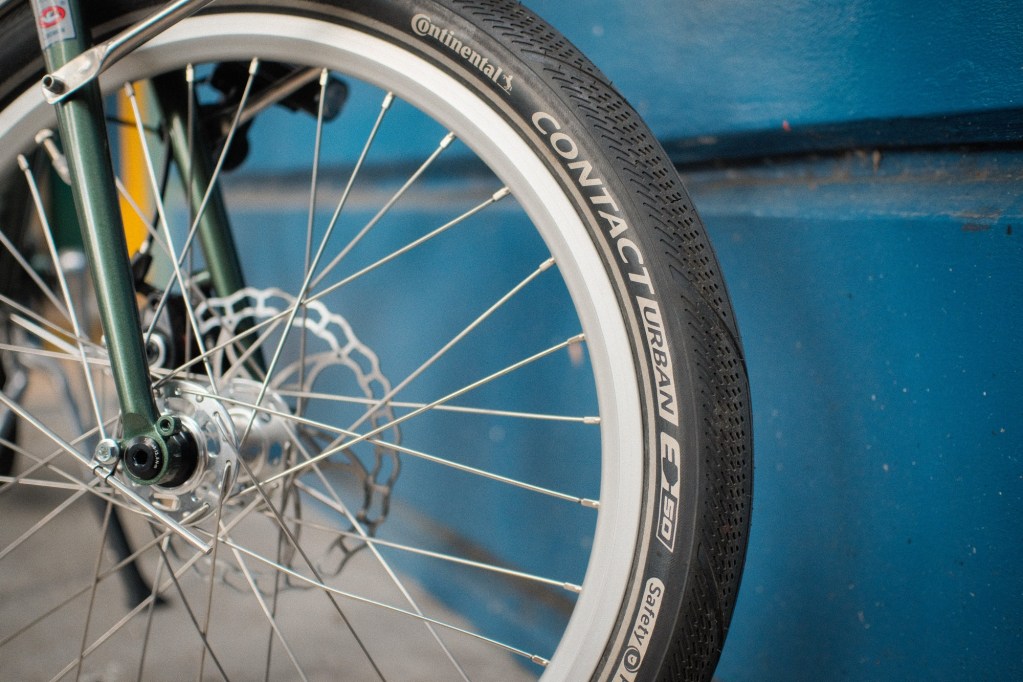
Like Lucien, Knox’s wheelsets are decked out with Traction Factorie hubs as the foundation for the build. I sourced the appropriate spokes through Bike Wrench PH‘s supplier. Delivery took more than three weeks, but Eugene was able to build the pair within one day, the same day that I assembled the rest of the bike.
The mini velo rolls on 20×2.00″ Continental Contact Urban tires, known for a low rolling resistance while retaining the benefits of a wider tire. The rims are from LitePro.
I installed the Ashima 160mm rotors and the ZTTO 11-36T 11sp cassette on the rear wheelset while bolting the TRP Spyre mechanical brakes, which I learned perform much better on bikes with flat or alt bars compared to bikes with drop bars.
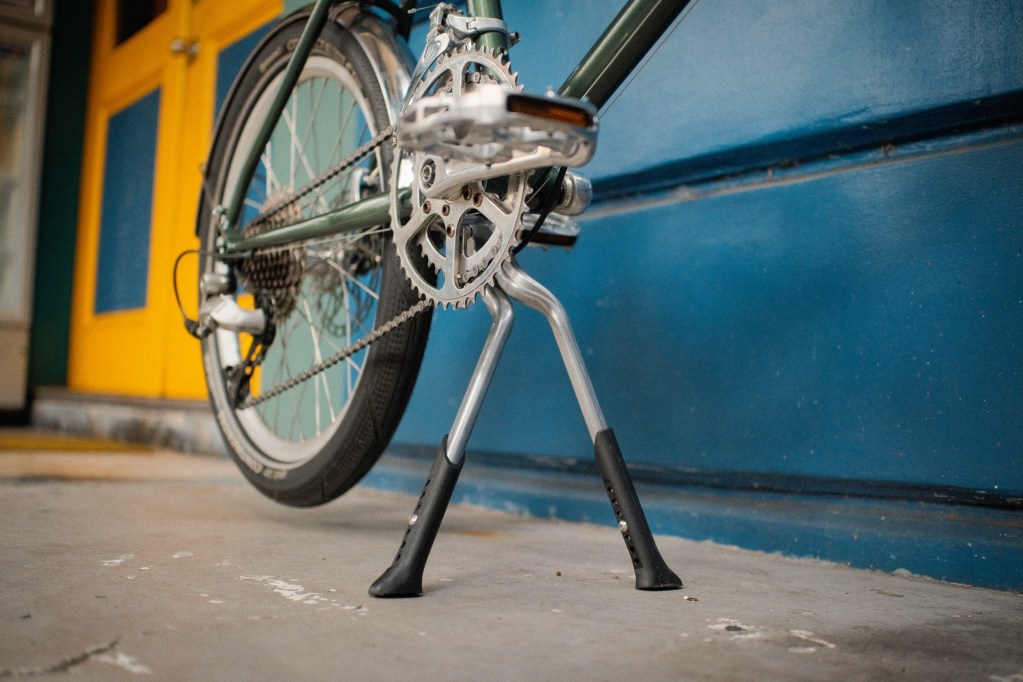
Eugene and Rey worked on the cabling installation, and a few days later, Liam helped with installing the knock-off VO fenders and dual kickstand.
Finally, to top things off, I had a 15″ wooden crate done for the MV and bought a cargo net and TPU straps on Shopee. Finally, after six months of getting this built… it’s finally done!

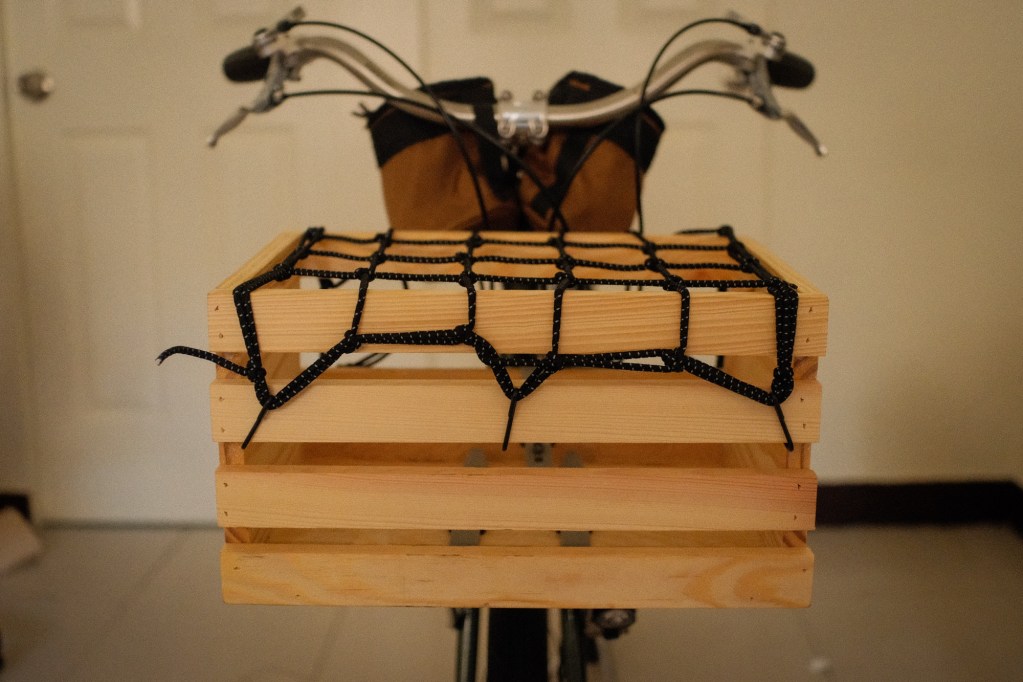

All in all, the parts and labor fees cost north of P40,000.
The total cost of the entire build, over six months, sits between P87,000-90,000.
Building a Bike While Building a Life


Even before completing the build, the mini velo already had a name: Knox. Derived from a Scottish word meaning “from a hilly place,” it felt fitting for a bike built around the realities of living in Kapitolyo. In short, Knox was made for where I am now. Both physically and emotionally.
Because he’s more than just a bike… I invested in a new chapter in my life.
Unlike Lucien, whom I built out of grief, Knox was built out of the need to move forward and plant my roots in a place I’m slowly calling ‘home.’
He’s not a reward for surviving a difficult year, nor is he proof that everything’s okay. Knox, along with Lucien, is going to be a constant companion for whatever comes next.


Leave a Reply