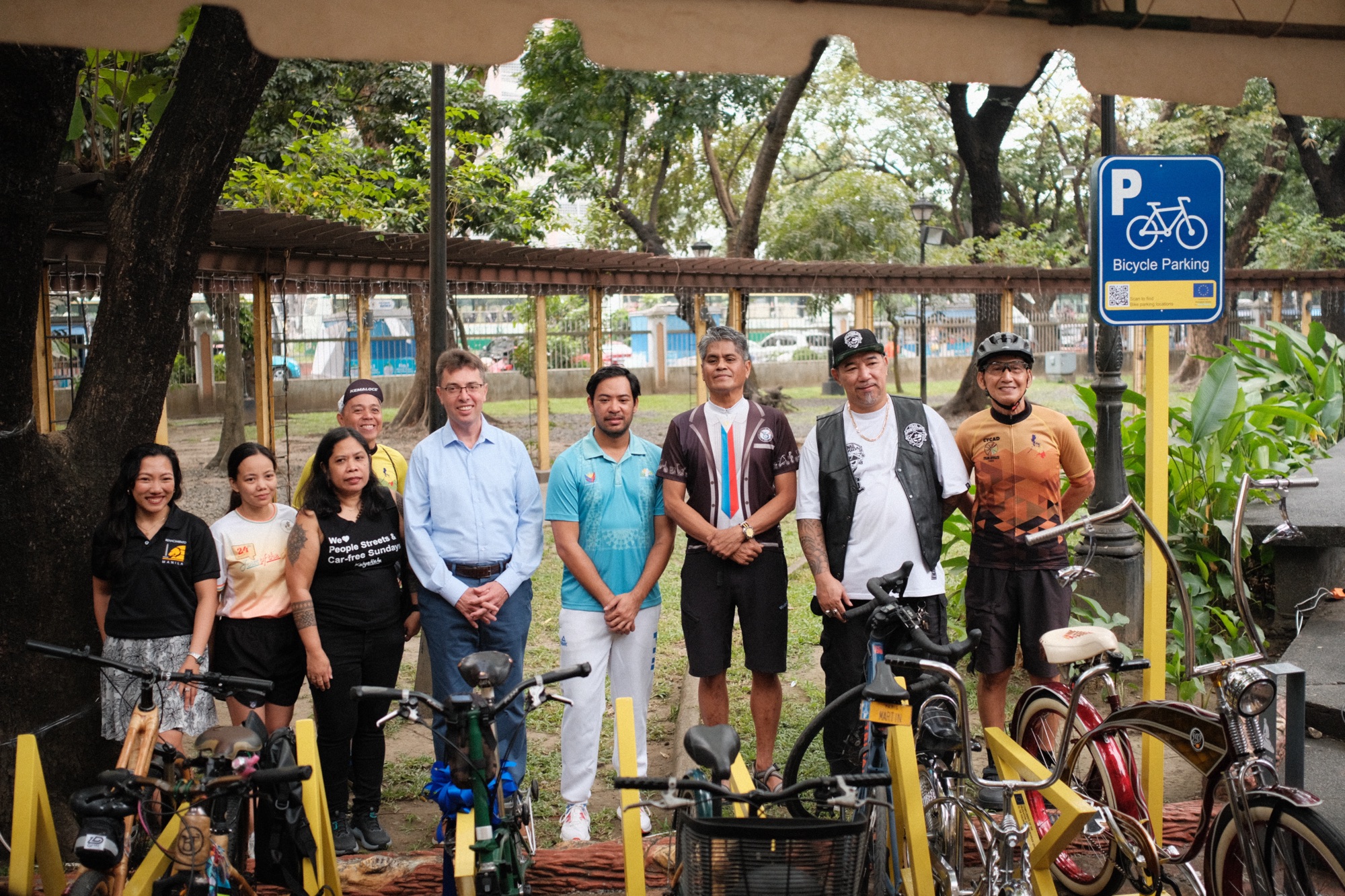
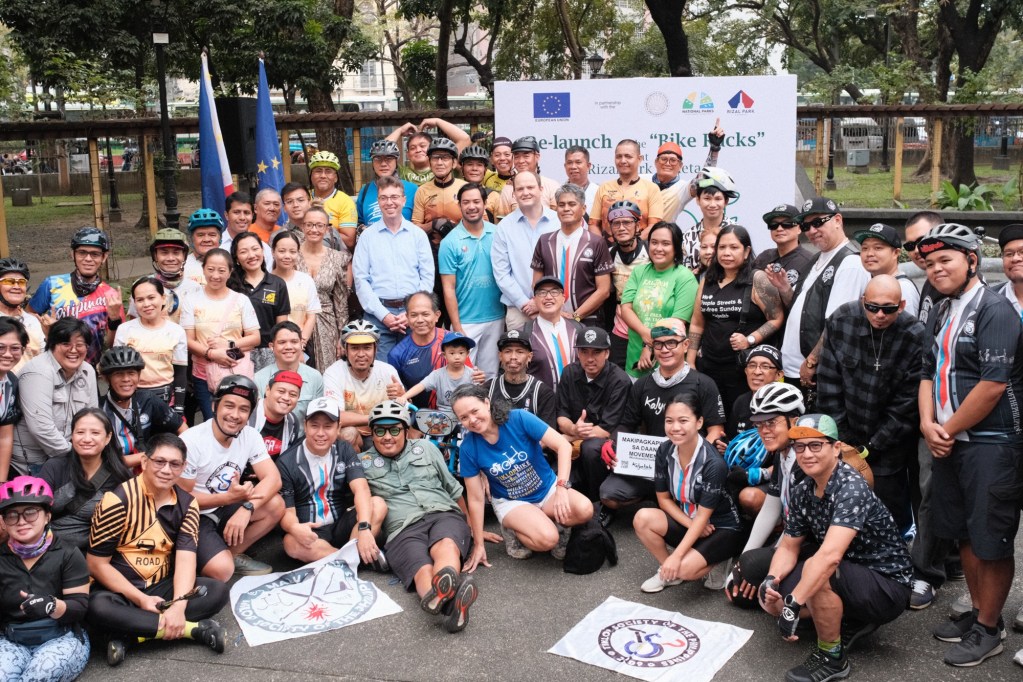
Last January 17, 2026, the Delegation of the European Union to the Philippines relaunched their sponsored bike racks in the European Garden of Rizal Park in Manila. Members of the diplomatic corps and cycling advocates gathered together and celebrated the added biking infrastructure in a public space.
These bike racks also solidify the EU’s commitment to sustainable development and climate action in the Philippines.

Why Celebrate Bike Racks?
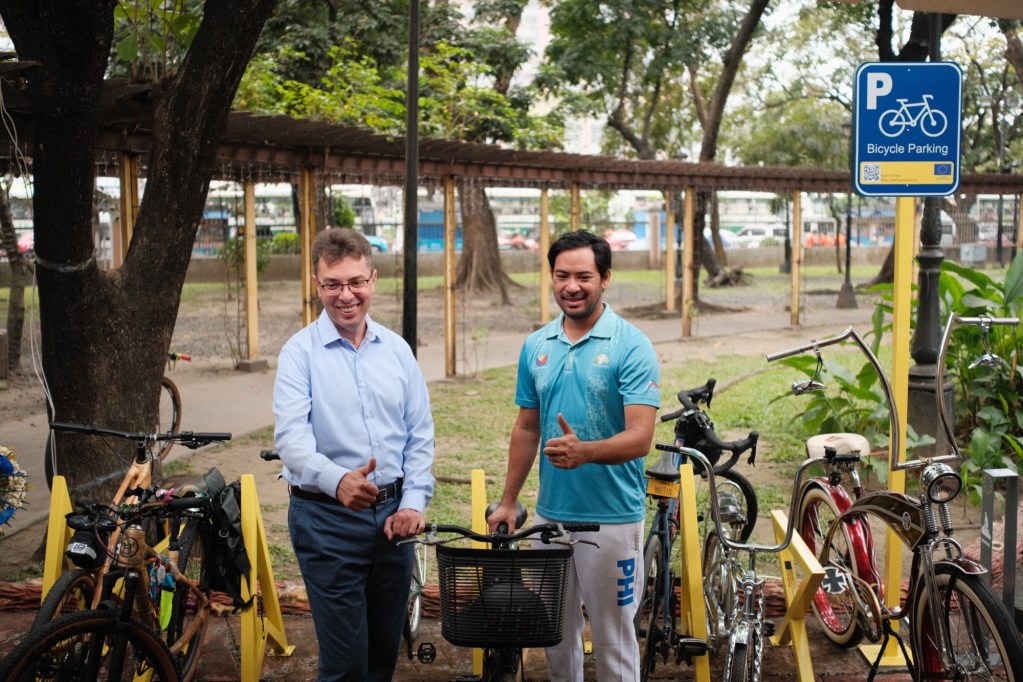
It might feel ridiculous to non-cyclists to celebrate the inconspicuous bike rack, but that’s the point. When bike racks are dismantled, property owners don’t announce it unless the bike community creates noise. So to bring people together to acknowledge this event feels like a win for the advocacy.
Bike racks are the most basic form of cycling infrastructure, aside from protected bike lanes, that should be found in all public spaces. Their presence encourages local travel without using the car. Imagine connecting with history and culture without having to think about parking far from Luneta.
Additionally, the presence of bike racks is a starting point for even bigger active mobility projects, especially in public places like Rizal Park.
It normalizes cycling as part of everyday life, and when more bikes are present, more people can come on their two-wheeled machines. Be it for recreational use or for daily bike commutes, the humble bike rack is a symbol of inclusivity in its own way.
Our fellow cycling advocates concur:
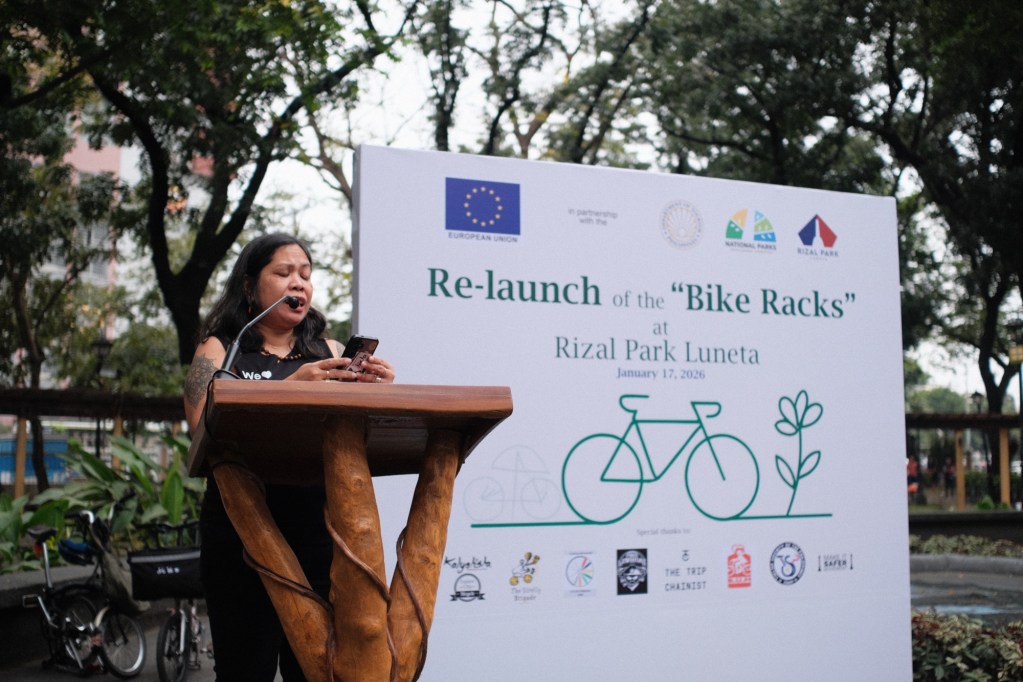
Mia Bunao of Kalyetista/Explore Your City on a Bicycle notes that bike racks create a sense of community.
Shirley de Guzman, representing Dr. Roselle Leah Rivera, of Firefly Brigade, Inc., made mention of how cycling can spark awareness for the climate crisis.


Pio Fortuno of Tiklop Society of the Philippines was delighted to see bike racks in Manila’s foremost historical landmark, thanks to the European Union in the Philippines.
We’re optimistic that public and private organizations are moving toward more inclusive ways of accessing public spaces.
“It is heartwarming to note that today we are all convinced that soft mobility, through public transport and bicycles, [are effective and affordable solutions] for achieving these objectives,” said EU Ambassador Massimo Santoro during his speech.
The bike racks in Rizal Park are a perfect representation to promote cycling as a viable, accessible mode of transportation, to help reduce carbon emissions and traffic congestion, improve air quality, and promote a more sustainable urban landscape and healthier lifestyle for Rizal Park visitors.
The rehabilitation of the bike racks in Rizal Park and Intramuros is an initiative of the EU Delegation to the Philippines in partnership with the National Parks and Development Committee (NPDC).
(Now, can we have bike parking in museums, too?)
Media Contact: Thelma.gecolea@eeas.europa.eu
Photos by Leandro Mangubat


Leave a Reply