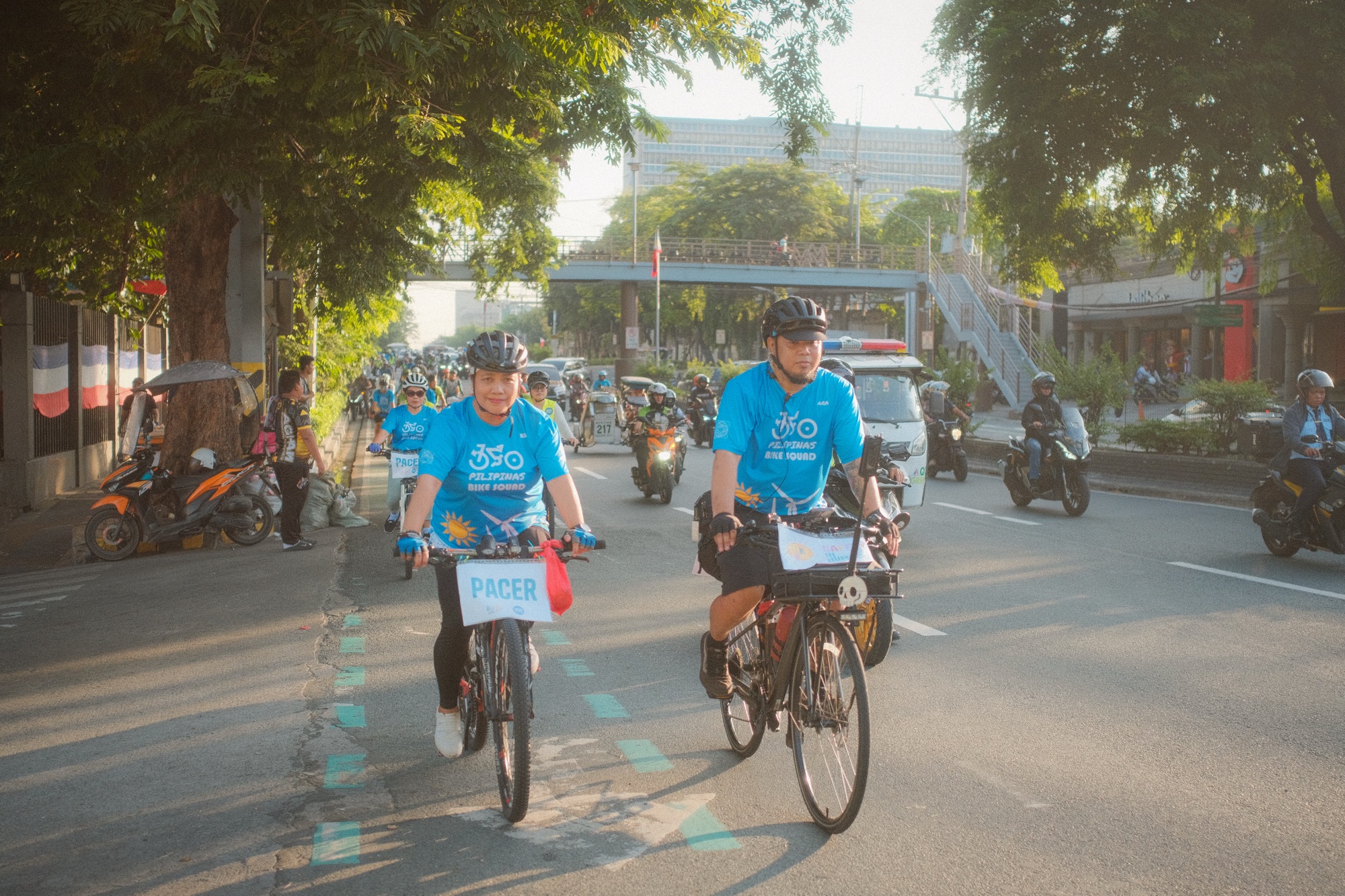
A bike bus is a chaperoned group of bike commuters who travel an established route around the same time. First documented in 1998 in Belgium, the bike bus movement has since exploded and is often used in North American neighborhoods in which children are led by an adult volunteer to bring them to school in the morning.
This concept is not foreign to seasoned Filipino bike commuters who brave the nation’s main thoroughfares, though presently, this is not the norm. But climate action group 350 Pilipinas wants to bring this into the forefront with the Workers’ Bike Bus.
The Ride Before Independence Day

Last June 11, 2026, some eighty bike commuters from both the public and private sectors joined 350 Pilipinas’ Workers’ Bike Bus. Held on the eve of our Independence Day, the activity is framed as a “modern-day independence movement in a nation where 94% of households do not own cars.”
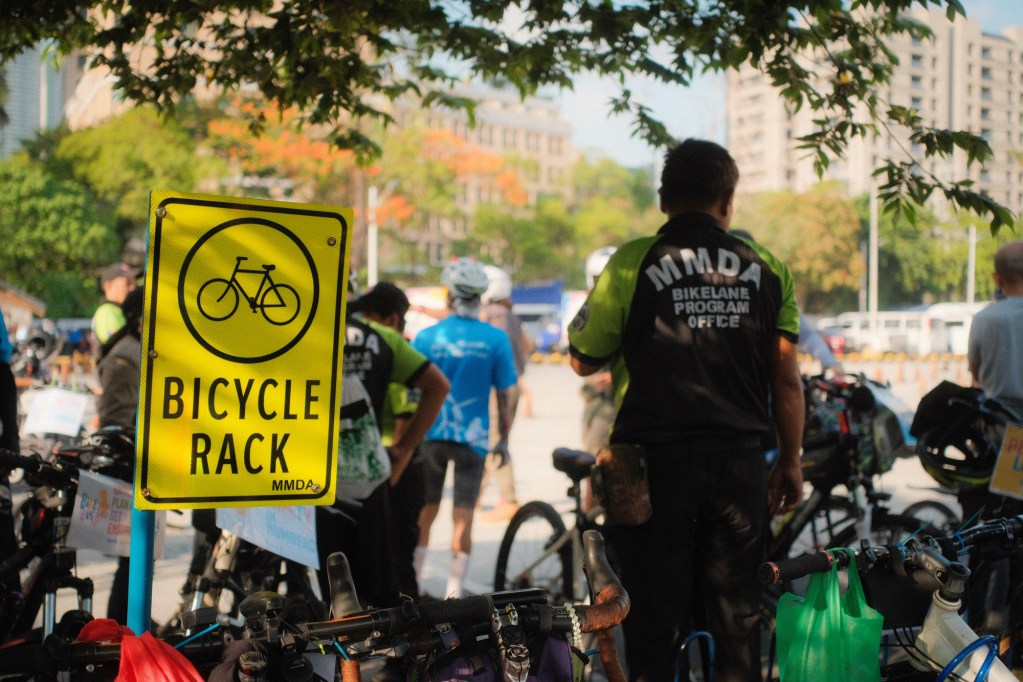
The group started in Quezon City Hall and rode some ten kilometers to MMDA’s End-of-Trip Facility in Pasig and showed motorists that there are indeed other road users, and that there is safety in numbers.
“Active transport is our ticket to economic independence,” said Amber Garma, national coordinator for the Mobility Awards.
Chiming in to the discussion is Jheny Dabu, 350 Pilipinas’ sustainable transport campaigner, saying that “Our roads will only be free when they are safe, inclusive, and built to move every single Filipino.”
Reimagining the Bike Bus for the Filipino Workforce
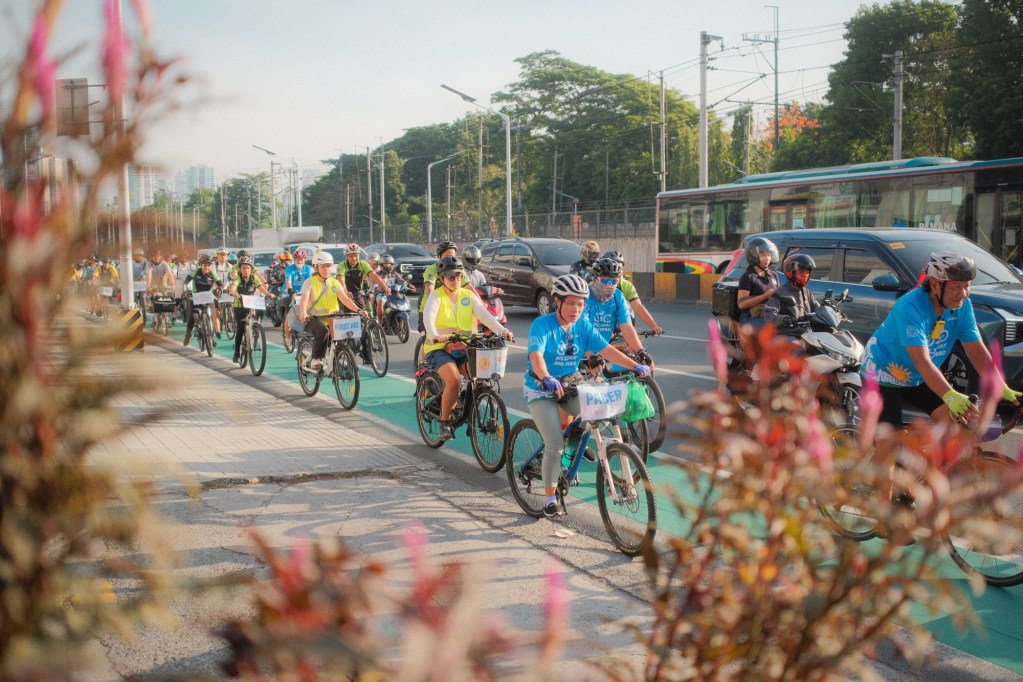
According to Nadia Cruz, the organization’s Communications and Multimedia Manager, “The effort aims to advocate for local government units and national agencies to invest in safer, more inclusive mobility by implementing proper infrastructure and allocating sufficient budgets for active transport.”
The Workers’ Bike Bus started out as a way for 350 Pilipinas to support bike-commuting colleagues to safely ride home together, as most of the team were women and members of the LGBTQIAP+ community.
Inspired by global bike bus initiatives, the organizers recognized the opportunity to start within workplaces, where many workers rely on bikes for their daily commute and livelihood. From there, the initiative hopes to gradually expand to different areas in society, especially for women, schoolchildren, and other vulnerable members of society.
Making a Habit Out of an Advocacy

Advocacy-related community rides are few and far between, and are often done on weekends when there are fewer cars. While these events do bring awareness to road users, seeing a big group of bike commuters consistently does make a difference.
That’s where the bike bus comes into play.
For one, it integrates into the work week and enhances the actual, everyday safety of bike commuting. By showing up at the same time, meeting at the same venue, and using the same route day after day, it builds confidence for newer bike commuters and helps everyone socialize outside of work. But more importantly though, it shows motorists that cycling isn’t a leisurely hobby, but a normal and efficient way of traveling across cities.
Additionally, as there are only 2.75% observed women cyclists, recorded by the Mobility Awards, joining a group cycling along major arteries like EDSA can boost a female rider’s confidence despite poor road infrastructure. The bike bus then provides a moving safe space for women, enabling them to bike farther and more frequently.
Barriers to Active Mobility

The reality is, though, that most bike commuters do not work and live in the same city. Many travel at least 10 kilometers, round-trip. A chief barrier to active mobility lies in the current gap between local efforts and national agency coordination.
“While some cities have already laid the groundwork,” Cruz said, “Challenges remain in how national agencies can support greater interconnectivity, bike infrastructure, and sustainable cities.
“The implementation of both soft and hard infrastructure enables people to access a wider range of transportation options.”
Hard infrastructure refers to the physical networks, such as protected barriers that keep motorists separate from bike commuters. On the other hand, soft infrastructure encompasses the policies, institutional support, public education, and community programs that make cycling culturally and socially viable.
Bike Commuters Want More Bike Buses Around Metro Manila
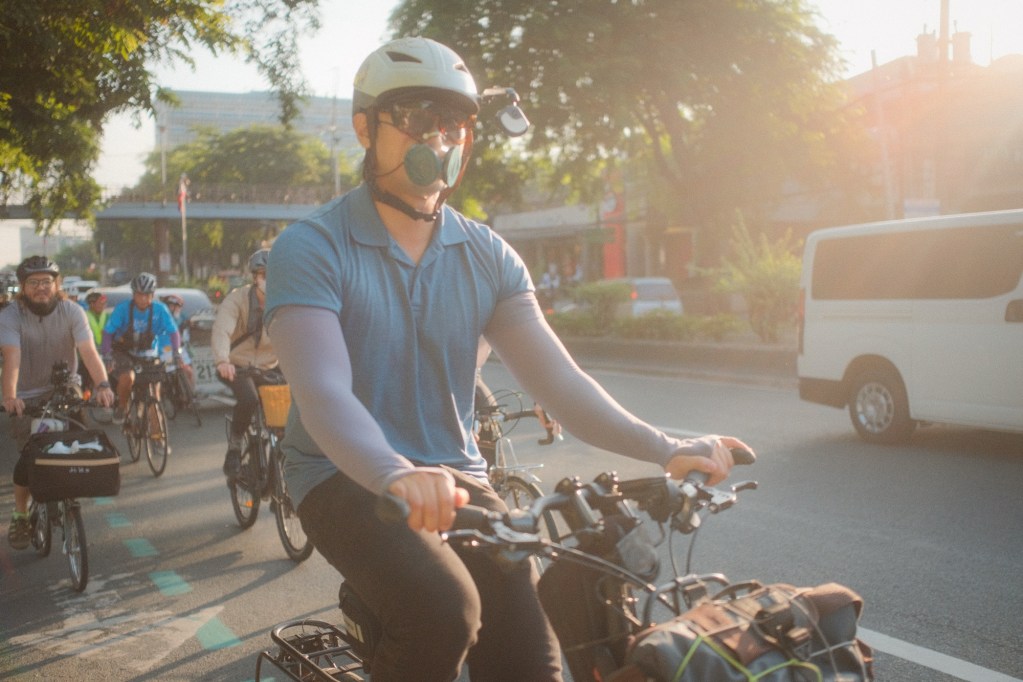
Bike commuters, especially those who ride solo most of the time, pointed out that the collective presence of a bike bus offers a shield against the rush hour traffic that plague major transit nodes in Metro Manila.
Wilhansen Li of Sakay.ph said, “When we rode together as a bike bus, motorcycles still cut us off occasionally, but it was a lot more rare [sic]. I didn’t feel harassed. Biking as a group really gives us safety and energy.”
Happy Pedal Project‘s Coi Castillo mentioned that the bike bus “commands a different level of respect. It forces other commuters and motorists on the road to acknowledge us, and more importantly, it sends a clear, undeniable message to government agencies that we are here and we need proper space.”
Daniel and Soju, who work night shift and decided to join the morning rush hour ride, added to the discussion. “[We] absolutely agree that we need more of these initiatives around Metro Manila. But we need them to function like real buses… with fixed, predictable time schedules that people can rely on. There is undeniable safety in numbers.”
Can LGUs and the Private Sector Follow Suit?
This effort leaves us with one question: how do we scale this model from a passionate community campaign into a mainstream transportation solution?
While a handful of cities, like Quezon City, have already laid the initial groundwork by creating localized bike lanes, the region’s fragmented governance creates a major roadblock. For the rest, however, they should have a definitive, systemic shift away from a decades-long reliance on private vehicles. Urban planning then must pivot toward active mobility and public transport.
The private sector should also step up. The ultimate goal of this initiative is for workplaces, or, at the very least, central business districts, to formally institutionalize support for bike-commuting employees through concrete corporate policies and financial incentives, such as providing end-of-trip facilities (showers and secure bike parking), or offering micro-subsidies for bike purchases and maintenance.
We must not stop at a couple of bike buses or one organization. What 350 Pilipinas has started must become a continuous platform to advance urgent conversations on active mobility, push for stronger public transportation networks, and advocate for more diverse, equitable, and inclusive transport options for every worker in Metro Manila and beyond.
Kudos to 350 Pilipinas for this initiative!


Leave a Reply