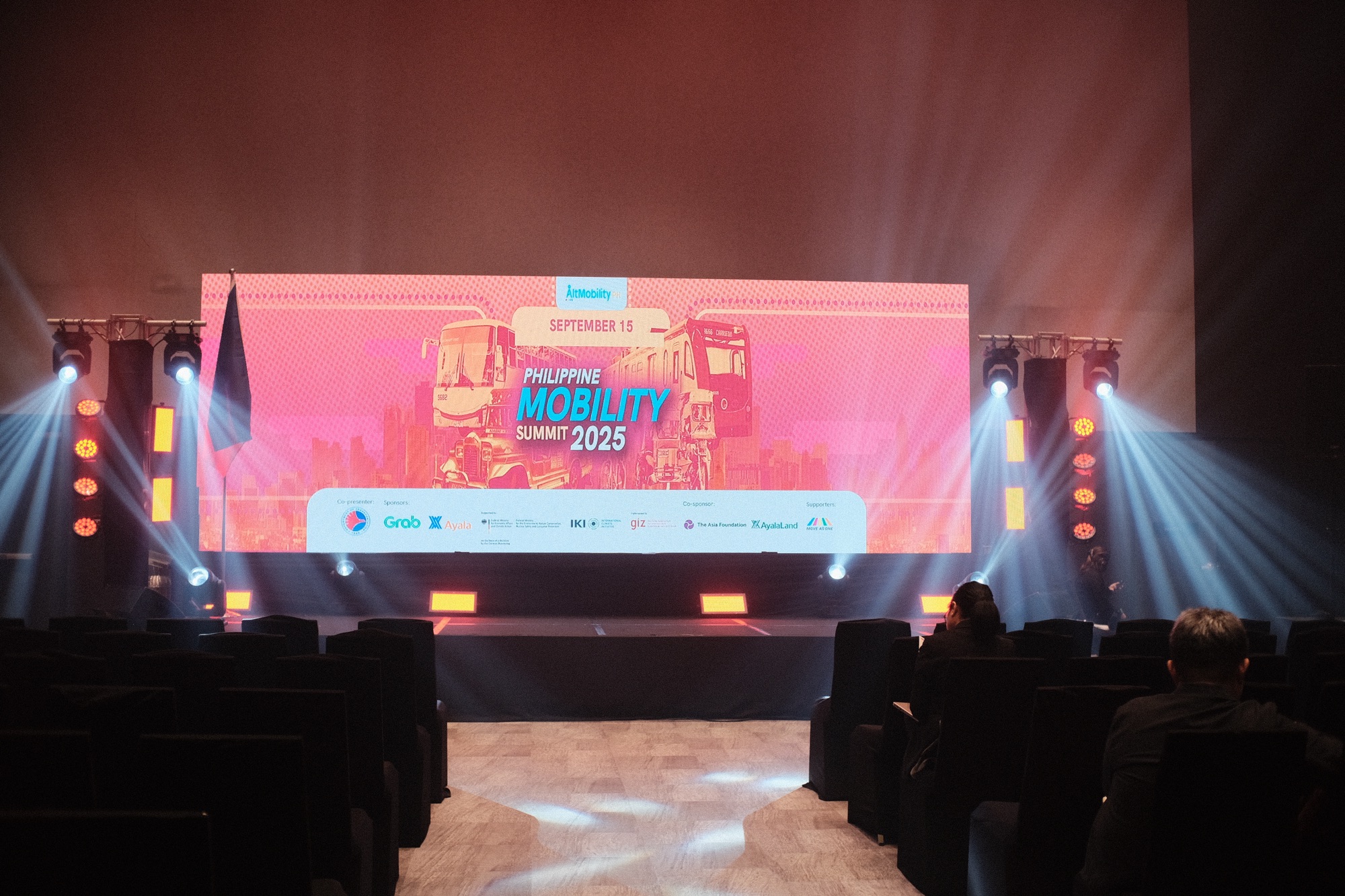
The Philippine Mobility Summit addresses Metro Manila’s mobility challenges through a co-design framework. This framework encourages multi-sectoral stakeholders, including government, civil society, academe, and the private sector, to collaborate in prioritizing focus areas, developing solutions, and identifying areas for collaboration.
Held last September 15, 2025 at SPACE in ONE Ayala, Makati, the summit was co-presented by AltMobility PH, with sponsors including Grab, Ayala, IKI, and GIZ, and co-sponsors The Asia Foundation, AyalaLand, and Move As One Coalition.
The State of Mobility in the Philippines


Mobility in the Philippines is less about moving freely and more about surviving systems that were never designed for people. In Metro Manila, cycling remains dismissed as a hobby rather than a legitimate mode of transport, despite its potential to ease congestion, cut emissions, and provide affordable mobility.
Walking is just as neglected. Cracked sidewalks, gaping curbs, blocked routes, and lack of seating amenities make even short trips unsafe and more tiring. For millions who rely on public transportation, the experience is one of long lines, overcrowding, and inefficiency, proof that mobility here is still treated as a burden rather than a right.
As a pedestrian and bike commuter, I see both the human cost and the missed opportunity: lives lost in crashes, hours wasted in traffic, and health compromised by the elements. The state of mobility in the Philippines is not simply a technical issue of traffic management. It is a question of dignity, safety, and who gets to claim space in our roads, rails, air, and water.
I, for one, am happy that the Philippine Mobility Summit has created space to confront these hard truths and imagine a future where streets and systems finally put people first.
Highlights
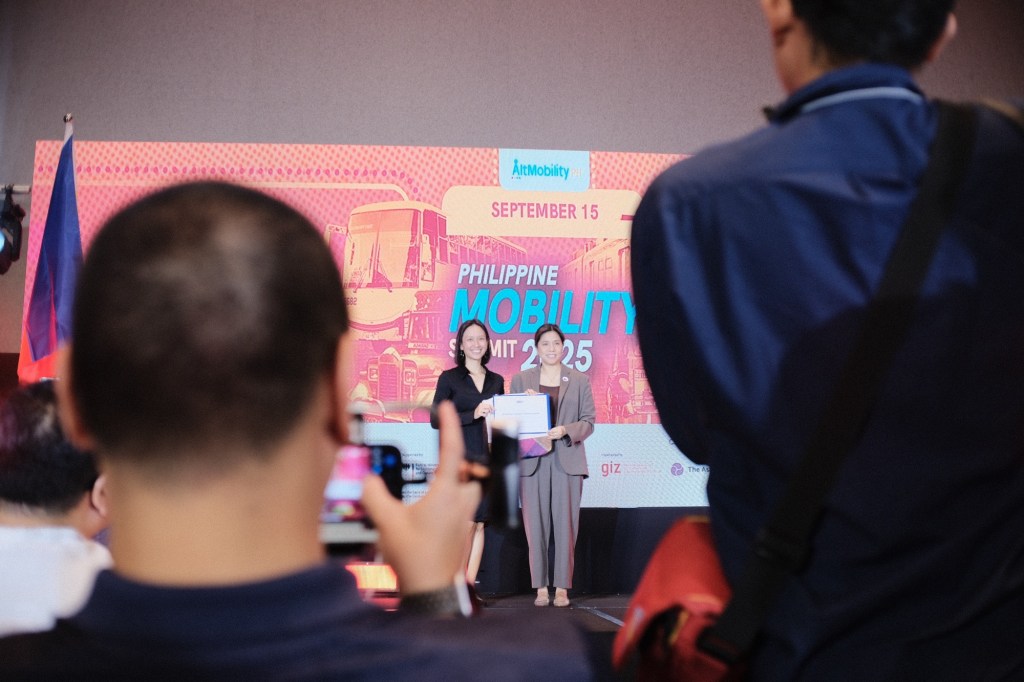
The Department of Budget and Management Secretary Amenah Pangandaman, the only female Muslim member of the current cabinet, opened the Summit by framing mobility as a question of inclusivity: about giving people access to live better lives. She called for cooperation across sectors and reaffirmed government’s commitment to “reimagine how we move as a nation.”
Following her speech, a video recording of Olympian EJ Obiena narrated a deeply personal talk on sacrifice, discipline, and patience, drawing parallels between sport and transport. His mantra, “The good get up,” resonated as a call to persist through long, uneven journeys of reform.

DOTR’s Supervising Transportation Development Officer Lucas Mangulabnan then introduced the Accessibility and Inclusion Reference Group (AIRG), meant to bring persons with disabilities, seniors, children, and caregivers, among others, into the policy design process. This co-design approach, which builds projects hand-in-hand with the very people who will use them, promises to be an ongoing, back-and-forth process, shaping policies and infrastructure through lived realities rather than assumptions.
During the Q&A session, the audience pressed for clarity on whether this would expand beyond rail to roads, maritime, air, LGUs, and even the private sector.


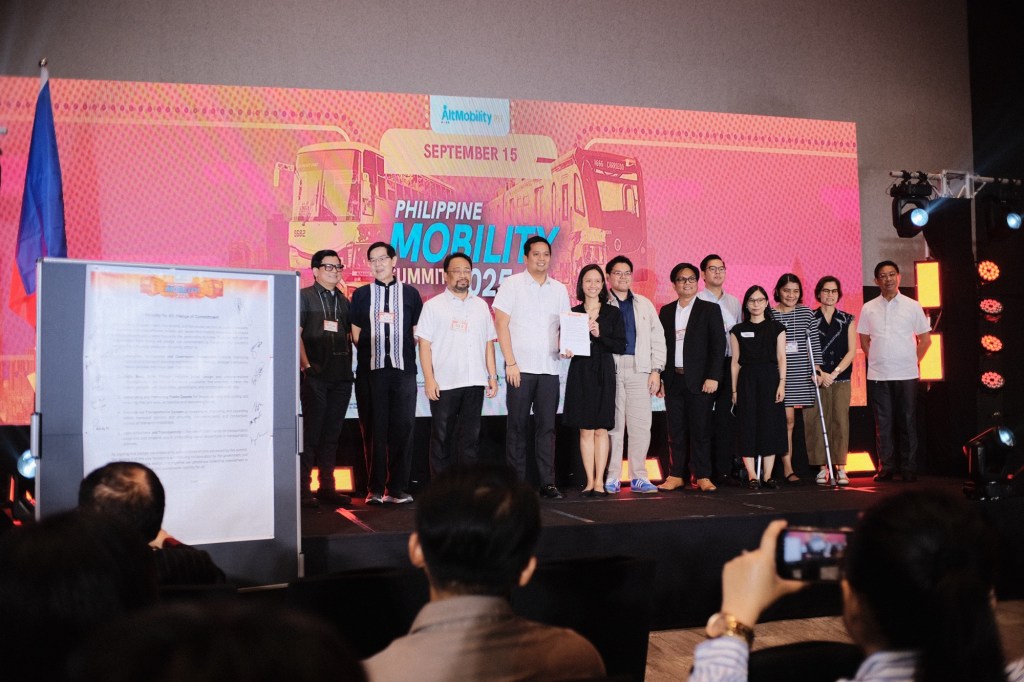
After lunch, participants joined breakout sessions on Active Transport, Public Transport, and Public Spaces, tackling institutional frameworks, road safety, climate, sustainability, financing, and policy. Their outputs were later presented in plenary before being formalized in signed Breakout Agreements, turned over to the Department of Transportation.
Once the breakout sessions ended, AltMobility PH Director Patricia Mariano and DoTR USEC Mark Steven Pastor, along with other stakeholders from the public and private sectors, signed the Breakout Agreements, which were handed over to the Department of Transportation. The winners for the EDSA Re-Design Contest were also announced.
During the closing remarks, USEC Pastor said that the Philippine Mobility Summit “symbolizes the growing strength of a movement that is shaping the future of transport and mobility in our country,” and that the “road ahead is obviously long, and setbacks are inevitable. [But] We will eventually succeed and we should never lose sight of the small but meaningful victories along the way, because they take the path to greater change.”
Pastor ended with a note to “continue this journey together…” and to “remain bold in our aspirations, resilient in the face of challenges, and united in our commitment to build a transport system that truly serves the Filipino people.”
Conclusion
The Philippine Mobility Summit forces us to confront what we already know: mobility in this country has long been poorly planned. For decades, the roads that “connect” our country have been prioritizing cars, while those who walk, bike, or depend on public transport are left out of the discussion.
The result is the Filipino’s dangerous, undignified daily grind, from cracked sidewalks and incomplete bike lanes, to endless queues at the bus terminal or MRT Stations.
Against this bleak reality though, we see a sliver of hope: the possibility that lived realities might finally be taken seriously in policymaking. The introduction of co-design through the Accessibility and Inclusion Reference Group is a step in the right direction, but it will mean little if it stays confined to rail or remains another policy that never makes it past paper. Real change will depend on whether these commitments survive the bureaucracy, the politics, and the car-centric culture that continues to dominate decision-making.
Mobility should not be about how fast cars move, but how safe and dignified people can travel. What the Philippine Mobility Summit succeeded in is creating space to name these failures openly, and to push, however imperfectly, for streets that finally put people first.
But, damn, we have a long way to go.


Leave a Reply